
Fukiya Furusato Village
Historic village · Takahashi, Okayama
 by www.okayama-kanko.jp
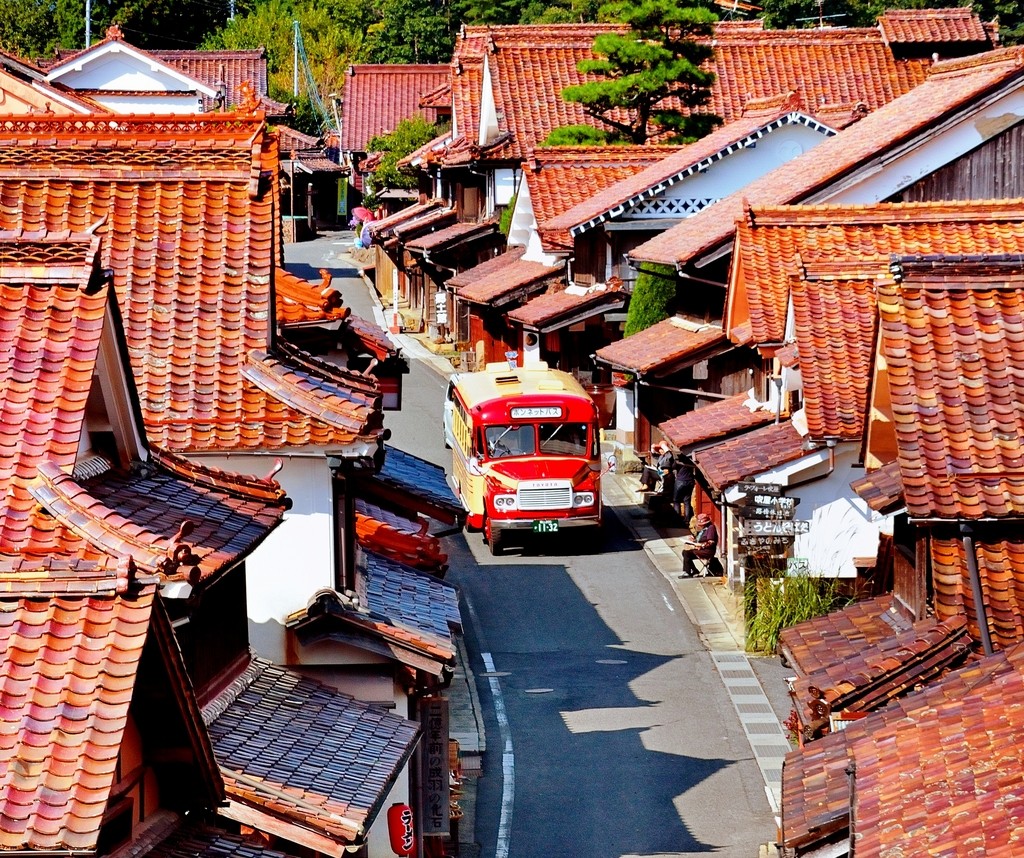
Fukiya Furusato Village is a historic townscape deep in the mountains of Takahashi, Okayama, where every roof is covered in red Sekishu tiles and the walls are white plaster or the deep red of bengara. From the late Edo period through the Meiji era, Fukiya thrived on copper mining and on producing bengara, a red iron-oxide pigment. Coming upon this bright red town far from any city feels like discovering a hidden village.
Good to know
- Japanese name
- 吹屋ふるさと村
- Address
- 岡山県高梁市成羽町吹屋In Japanese, to show a taxi driver or type into a map app.
- Nearest station
- Bitchu-Takahashi Station (JR Hakubi Line)
- Access
- About 1 hour by bus from Bitchu-Takahashi Station
- Closed
- Open every day
- Admission
- Free (some facilities charge admission)
Hours and prices can change. Check the official website before you go.
A town built on red pigment
The wealthy merchants who made their fortunes from bengara built the handsome houses that still line the streets, and the whole district now shows how prosperous the town once was. It is designated a national Important Preservation District for Groups of Traditional Buildings, and the uniform red tiles and walls make it one of the most photogenic old townscapes in the region.
Places to visit
The Former Katayama Family Residence is a national Important Cultural Property and offers a look inside a merchant family's home. Fukiya Elementary School is said to be the oldest wooden elementary school building in Japan, and you can see inside. The Fukiya Furusato Village Folk Museum occupies a converted Meiji-era merchant house.
At the Bengara-kan you can learn how the pigment was made and how its history shaped the town, and pick up crafts and souvenirs colored with bengara.
Seasons and walking
Take your time walking through the center of the village; the red buildings feel like a step back in time. The surrounding mountains offer pleasant walks, with cherry blossoms in spring and colorful leaves in autumn, a fine backdrop for photos of the red roofs.
Getting there
From Bitchu-Takahashi Station on the JR Hakubi Line, the bus takes about an hour. By car, it is about an hour from the Kayo interchange on the Okayama Expressway, and parking is available. The village itself is free to visit, but some facilities charge admission.
Nearby
Featured in these guides
Recently viewed
More in Okayama
 Okayama CastleCastle
 Okayama Korakuen GardenJapanese garden
 Kurashiki Bikan Historical QuarterHistoric district
 Katsuyama Historic TownscapeHistoric district
 Maneki Neko MuseumArt museum
 Bizen Osafune Japanese Sword MuseumMuseum
 Kanba Falls Nature ParkWaterfall park
 Kibitsu ShrineShinto shrine
 Ushimado ShrineShinto shrine
 Ikeda ZooZoo
 Kodai Taiken no Sato MahorobaCampground
 Iwai FallsWaterfall