Hitachi Seaside Park (Nemophila Fields)
Flower park · Hitachinaka, Ibaraki
 by https://www.jalan.net/
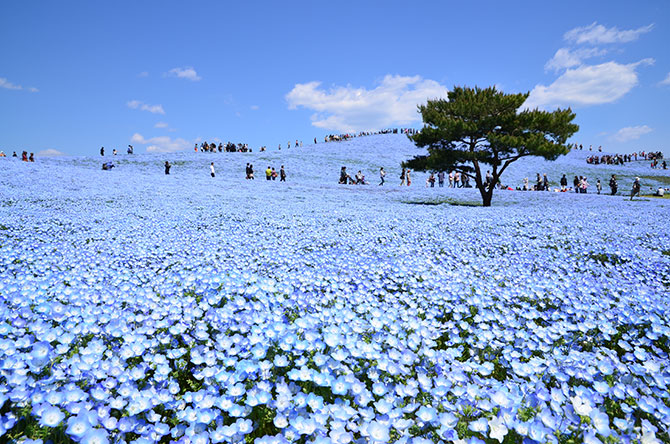
Hitachi Seaside Park in Hitachinaka, Ibaraki, is a national park of about 190 hectares with huge flower fields that change through the year. It is best known for Miharashi Hill, where from late April to late May about 4.5 million nemophila flowers turn the slope a soft sky blue. Walking among them feels like strolling through the air, and the view is a favorite Instagrammable scene.
Good to know
- Japanese name
- 国営ひたち海浜公園 ネモフィラ畑
- Address
- 茨城県ひたちなか市馬渡大沼605-4In Japanese, to show a taxi driver or type into a map app.
- Nearest station
- Katsuta Station (JR Joban Line)
- Access
- About 15 minutes by bus from Katsuta Station
- Hours
- 9:30–17:00 (varies by season)
- Admission
- Adults (high school and up) ¥450, seniors (65 and over) ¥210, junior high and younger free
Hours and prices can change. Check the official website before you go.
Nemophila on Miharashi Hill
Miharashi Hill covers about 3.5 hectares. When the nemophila bloom, the whole hill is blue from top to bottom, and the tulip garden is in full bloom at the same time, so spring visits can take in both.
The flowers here are a common variety called Insignis Blue, the same kind sold at garden centers. Look for white nemophila too: a variety called Insignis White grows in front of the Terrace House and in the Tamago no Mori (Egg Forest) area.
Flowers through the year
The park is worth a visit in other seasons as well. Daffodils and tulips bloom in spring, nemophila and roses in early summer, and zinnias in summer. In autumn, the round kochia bushes turn bright red, and fields of cosmos add more color.
How the fields are grown
The park sows its nemophila every year around November, with seeds spaced about 20 cm apart. Compost is mixed into the soil before sowing, and extra water and fertilizer are given only when growth calls for it.
If you would like to grow nemophila at home, seeds sown in autumn need protection from winter cold, so buying young plants in early spring is easier. The plant likes dry conditions and needs few nutrients, so it does not need frequent watering or feeding.
Getting there
From Katsuta Station on the JR Joban Line, take a bus to the park, about 15 minutes. Opening hours change with the season, so check before you go.