Ise Grand Shrine (Naiku)
Shinto shrine · Ise, Mie
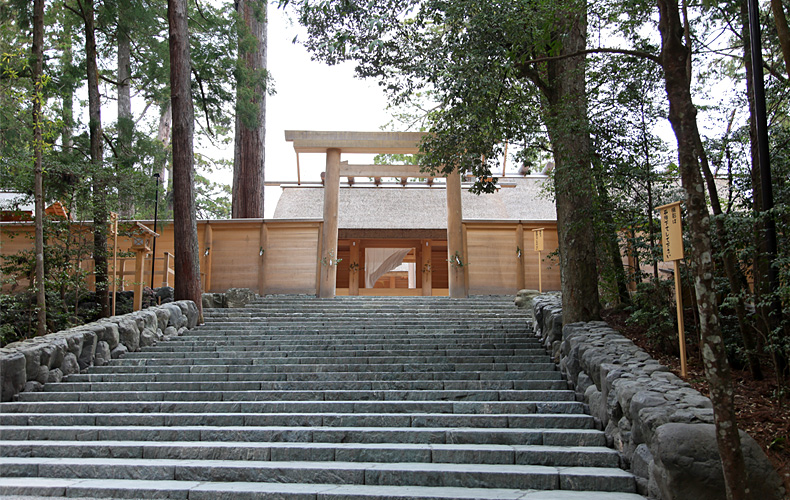 by http://www.isejingu.or.jp/about/naiku/
The Naiku, or Inner Shrine, of Ise Grand Shrine stands beside the Isuzu River in Uji, Ise. It enshrines Amaterasu, the sun goddess and ancestral deity of the imperial family, and emperors have worshipped here through history. Tradition says Amaterasu was first worshipped at the imperial palace, but about 2,000 years ago, in the reign of Emperor Sujin, an epidemic killed many people, and to calm it she was moved out of the palace to Ise.
Good to know
- Japanese name
- 伊勢神宮内宮
- Address
- 三重県伊勢市宇治館町1In Japanese, to show a taxi driver or type into a map app.
- Nearest station
- Isuzugawa Station (Kintetsu Toba Line)
- Access
- About 10 minutes by taxi from Isuzugawa Station
- Hours
- 5:00–17:00 (October–December), 5:00–18:00 (January–April, September), 5:00–19:00 (May–August)
- Closed
- Open every day
- Admission
- Free
- Official website
- isejingu.or.jp/about/naiku
Hours and prices can change. Check the official website before you go.
Uji Bridge and the approach
The wooden Uji Bridge is the entrance to the sacred grounds. It is 101.8 meters long and 8.4 meters wide, with the Isuzu River flowing below, and a large torii gate 7.44 meters tall stands in front of it. This is the classic photo spot before visiting. The posts standing in the river next to the bridge, called kiyokegui, protect it from driftwood during floods.
Turn right after crossing to reach the Shin-en garden, a wide path where seasonal rituals take place, with cherry blossoms in spring and colored leaves in autumn. Further on, at the stone-paved Mitarashi on the bank of the Isuzu River, you can purify your hands in the river itself.
The main sanctuary
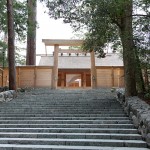
The path continues through tall, green forest to the main sanctuary, Kotai Jingu, where Amaterasu is enshrined with the sacred mirror Yata no Kagami. It is especially sacred, so photos are allowed only up to the bottom of the stone steps. Pray by bowing twice, clapping twice and bowing once more.
Every 20 years the shrine buildings are rebuilt and the deity moved to the new sanctuary in a ceremony called Shikinen Sengu, a tradition with 1,300 years of history. The sacred horses rest in their stable, and chickens, messengers of the gods linked to the legend of Amaterasu hiding in a cave, roam the grounds freely.
Tips for visiting
Tradition says to visit the Geku (Outer Shrine) before the Naiku. Keep to the right, and do not eat, smoke or bring pets on the grounds. The shrine is busiest from January 1 to about January 7, on weekends and during Golden Week; weekdays and early mornings from 5:00 are calmer.
Okage Yokocho, a street of food and souvenir shops, is right outside the Uji Bridge. From JR or Kintetsu Ise-shi Station, the shrine is about 15–20 minutes by bus or taxi, or 10–15 minutes from Kintetsu Ujiyamada Station.
Nearby
 Okage Yokocho869m
 Meoto Iwa (Wedded Rocks)8.3km
 Ise Sea Paradise8.4km
 Toba Aquarium11.3km
 Shima Spain Village (Parque Espana)15.0km