
Kanda Myojin
Shinto shrine · Chiyoda, Tokyo
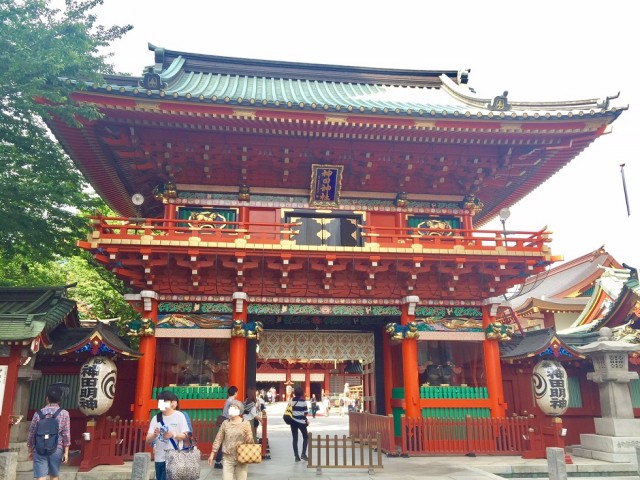 photo by @snaplace_insta
Kanda Myojin is a Shinto shrine in central Tokyo, famous for the Kanda Festival and for celebrity bean throwing at Setsubun. Its roots go back about 1,300 years, yet it embraces modern pop culture: it appears in the anime Love Live! and draws fans of works set around nearby Akihabara. In spring its cherry blossoms make it a popular hanami spot. Despite the name, it is closer to Akihabara and Ochanomizu than to Kanda.
Good to know
- Japanese name
- 神田明神
- Address
- 東京都千代田区外神田2-16-2In Japanese, to show a taxi driver or type into a map app.
- Nearest station
- Ochanomizu Station (JR, Tokyo Metro)
- Access
- 5 minutes' walk from Ochanomizu Station (JR Chuo and Sobu Lines, Tokyo Metro Marunouchi Line); 7 minutes from Shin-Ochanomizu Station (Tokyo Metro Chiyoda Line)
- Hours
- Open 24 hours (shrine office 9:00–17:00)
- Admission
- Free
- Official website
- kandamyoujin.or.jp
Hours and prices can change. Check the official website before you go.
History
The shrine began in 730 as Kanda no Miya. Later the warrior Taira no Masakado was buried here and came to be worshiped as a deity; one story says he was enshrined to calm an epidemic that followed his burial. He is regarded as a god of winning, so people come to pray before contests, and today for success in business and love. Legend even says devotees should not visit Naritasan Shinshoji, where prayers for his defeat were once offered.
The shrine moved to its present site in 1616. The current buildings were rebuilt after the Great Kanto Earthquake of 1923; made of reinforced concrete, they survived the air raids of World War II. They are registered as national Tangible Cultural Properties.
Things to see
Look for the stone monument to Zenigata Heiji, a detective from period dramas. He never existed, but fans visit the monument, and Inspector Zenigata of Lupin III is modeled on him. The shrine often collaborates with anime and manga, and it has more than 50 official characters based on motifs found around the grounds. Each character's profile says where its motif is, so choosing a favorite and hunting for it is a fun way to explore.
The characters also appear on goshuincho (stamp books), alongside a classic design with a phoenix. Goshuin stamps are given from about 9:00 to 16:00, so do not arrive at the last minute.
Souvenirs and treats
Popular picks include Myojin cookies, a set of three flavors themed on sake, rice and salt; omairi mame, blessed roasted soybeans and miso peanuts; and an original ginger ale made with grated ginger, which you can drink on benches in the grounds. Amanoya, a shop founded in 1846, serves amazake made only from rice and its own koji, with no sugar or alcohol, hot or cold. Shibasaki natto, made with large soybeans, is another traditional souvenir.
Nearby
 Akihabara Gachapon Kaikan311m
 Akihabara370m
 Yushima Tenmangu Shrine636m
 Tokyo Waterworks Historical Museum654m
 Meiji University Museum666m
 Kyu-Iwasaki-tei Gardens858m
Recently viewed
More in Tokyo
 Aqua Park ShinagawaAquarium
 Tokyo TowerObservation tower
 Meiji JinguShinto shrine
 Senso-jiBuddhist temple
 National Museum of Nature and ScienceScience museum
 Tokyo SkytreeBroadcasting tower
 Roppongi HillsShopping complex
 Odaiba Marine ParkWaterfront park
 Shinjuku Gyoen National GardenGarden
 Rikugien GardenJapanese garden
 Showa Kinen ParkPark
 Tokyo JoypolisIndoor theme park