
Senso-ji
Buddhist temple · Taito, Tokyo
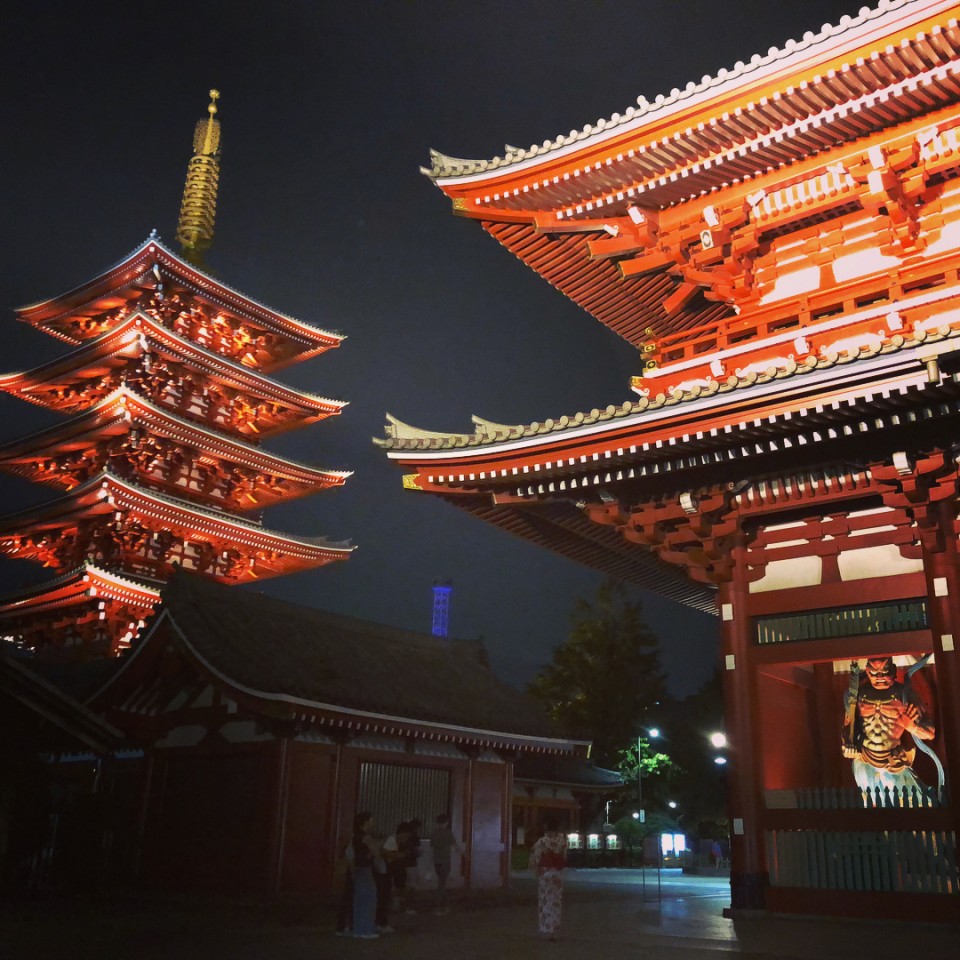 photo by @tatsu5123
Senso-ji in Asakusa is said to be the oldest temple in Tokyo and draws around 30 million visitors a year. Locals call it Asakusa Kannon after its principal image, the Bodhisattva Kannon. The giant red lantern of Kaminarimon Gate, the smoking incense burner and the lively approach make it one of the most photographed places in the city, and entry to the grounds is free.
Good to know
- Japanese name
- 浅草寺
- Address
- 東京都台東区浅草2丁目3−1In Japanese, to show a taxi driver or type into a map app.
- Nearest station
- Asakusa Station
- Access
- About 5 min walk from Asakusa Station (Tokyo Metro Ginza Line)
- Hours
- 6:00–17:00 (April–September), 6:30–17:00 (October–March)
- Admission
- Free
- Official website
- senso-ji.jp
Hours and prices can change. Check the official website before you go.
History
According to the temple's founding story, in 628 two fishing brothers, Hinokuma Hamanari and Hinokuma Takenari, pulled a statue of Kannon from the Miyato River, today's Sumida River. Their master, Hajino Nakatomo, became a monk and turned his home into a temple to honor it. Senso-ji once belonged to the Tendai school and became the head temple of the Sho-Kannon sect after World War II. It is the only stop in Tokyo on the Bando 33 Kannon pilgrimage and the first stop on the Edo 33 Kannon pilgrimage.
Highlights around the grounds
Kaminarimon Gate, with its huge red lantern, is the classic photo. At the main hall, people wave smoke from the large incense burner over their bodies, since the smoke is said to help heal whatever part it touches.
Facing the main hall, head to the left to find a stone bridge over a stream with carp, a quiet and little-known spot for photos. To the left of Hozomon Gate is the Nade-botoke, a golden statue you rub where you want relief. Nearby, Kume no Heinai-do is a small hall where people leave love letters to pray for romance.
Goshuin and omikuji
Goshuin stamps are given from 8:00 to 17:00 at Yogo-do hall. You can receive one for Kannon and one for Daikokuten, one of the Seven Lucky Gods, and stamp books are sold there too. Senso-ji's omikuji fortunes are famous for giving 'bad luck' results often, because the temple keeps the traditional ratio while many others have reduced it. A bad fortune is meant as a warning, not a curse, so many visitors try it just for fun.
Getting there
Asakusa Station is served by the Tokyo Metro Ginza Line, Toei Asakusa Line, Tobu Skytree Line and Tsukuba Express, all about a 5-minute walk away. Driving is not recommended because of traffic. Each year on July 9 and 10, more than 100 stalls selling bright orange ground cherry plants fill the grounds, along with wind chimes.
Nearby
 Asakusa Hanayashiki226m
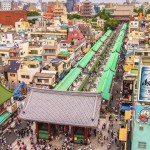 Nakamise Shopping Street321m
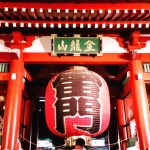 Kaminarimon Gate384m
 Imado Shrine800m
 Kappabashi Kitchen Town826m
 Sumida Aquarium1.3km
Featured in these guides
 Tokyo Sightseeing by Area: 40 Classic Sights and Lesser-Known Spots from Asakusa to Odaiba40 placesTokyo has much more to see than Skytree, Tokyo Tower and Asakusa. This guide works through six of the city's main…
 Things to Do in Tokyo Early in the Morning: 28 Places by Area28 placesNight buses are a cheap way to get to Tokyo, but they usually pull into Tokyo Station and other terminals very early…snaplaceTokyo in April: 20 Places for Cherry Blossoms, Azaleas and Spring Festivals, Plus What to Wear20 placesApril in Tokyo brings warm sunshine and the urge to get outside. Cherry blossoms open early in the month, then azaleas…
 Tokyo in May: 20 Places to Visit for Spring Flowers, Festivals and Fresh Greenery20 placesMay is one of the most pleasant months to visit Tokyo. Golden Week brings events all over the city, roses, azaleas and…
Recently viewed
More in Tokyo
 Aqua Park ShinagawaAquariumTokyo TowerObservation tower
 Meiji JinguShinto shrineTokyo SkytreeBroadcasting tower
 Roppongi HillsShopping complex
 Odaiba Marine ParkWaterfront park
 Shinjuku Gyoen National GardenGarden
 Rikugien GardenJapanese garden
 Showa Kinen ParkPark
 Tokyo JoypolisIndoor theme park
 Nippara Limestone CaveLimestone cave
 Ueno ZooZoo