
Meiji Jingu
Shinto shrine · Shibuya, Tokyo
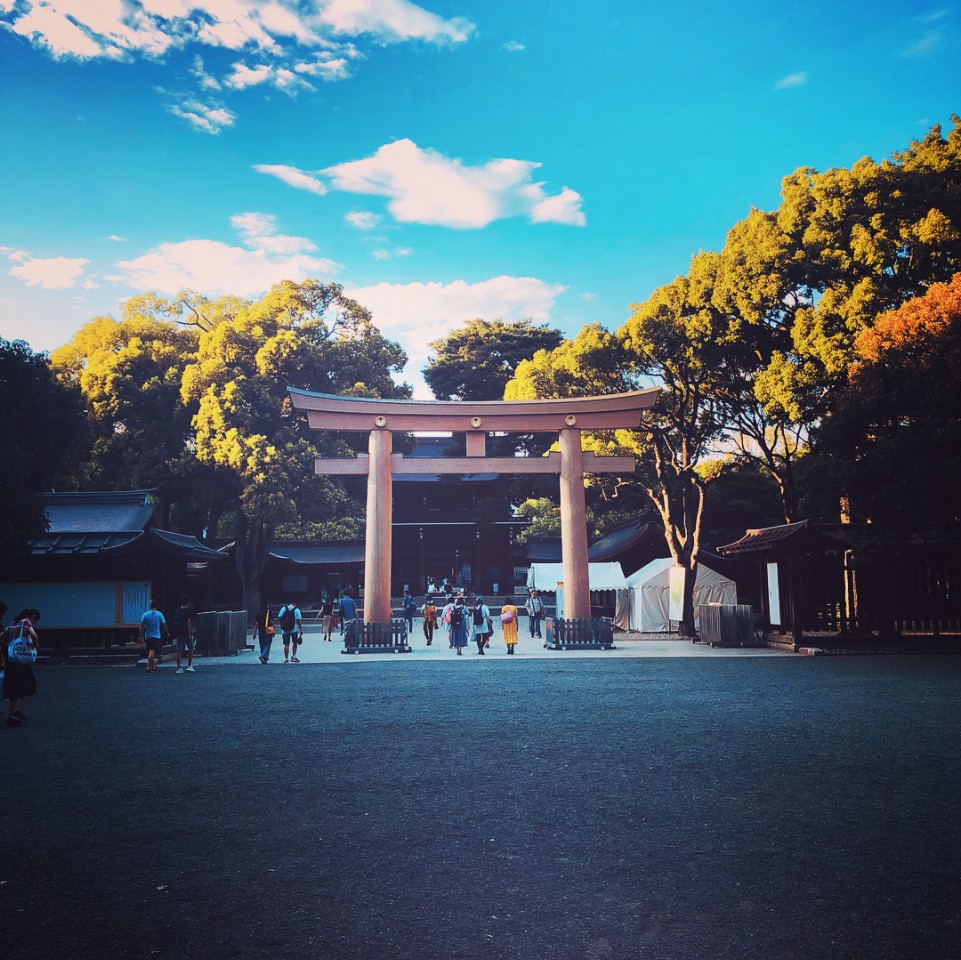 photo by @shuhei__s
Meiji Jingu is a large Shinto shrine dedicated to Emperor Meiji and his empress, set in a deep forest right next to Harajuku Station. It is said to draw more visitors over the New Year holidays than any other shrine in Japan. Step off the busy streets of Harajuku and Shibuya, and within minutes you are walking under tall trees on wide gravel paths, a contrast that makes it a favorite with visitors and photographers alike.
Good to know
- Japanese name
- 明治神宮
- Address
- 東京都渋谷区代々木神園町1−1In Japanese, to show a taxi driver or type into a map app.
- Nearest station
- Harajuku Station (JR Yamanote Line)
- Access
- About 1 min walk from Harajuku Station
- Hours
- 6:00–18:00 (varies by season)
- Admission
- Free
- Official website
- meijijingu.or.jp
Hours and prices can change. Check the official website before you go.
History and the forest
Emperor Meiji died in 1912 and the empress in 1914, and there was a strong public wish for a place to honor them both. The shrine was officially announced in 1915, and the enshrinement ceremony was held in 1920. Yoyogi was chosen partly because of a poem by Emperor Meiji praising how quiet the area was.
The grounds cover about 700,000 square meters. Volunteer youth groups came from all over Japan to help build them, and the forest was carefully planned to grow into a natural, self-sustaining forest over 100 years. Today many birds, insects and other animals live there.
What to see
In front of the main hall stand the Meoto Kusu, a pair of camphor trees seen as a symbol of a happy marriage, reflecting the close bond between the emperor and empress. Kiyomasa's Well is known as a power spot; people say it is best visited before evening and not in the rain. Farther from the south entrance is the Kameishi, a turtle-shaped stone said to bring health and long life if you touch it.
Goshuin stamps are given at the Kaguraden hall, and there is one design. Lines are long at New Year and during big holidays but usually short at other times. The shrine also offers a wide range of omamori charms.
Entrances and tips for visiting
There are three entrances. The south entrance, near Harajuku Station and Meiji-jingumae Station, is the traditional approach. The north entrance is handy from Yoyogi Station, and the west entrance serves Sangubashi Station on the Odakyu Line, though that route reaches the main hall without passing under any torii gates. Some people walk up from Shibuya, enter from the south, leave by the north and keep walking to Shinjuku.
Allow more than an hour to see the grounds properly. The shrine opens early, and quiet mornings are the best time for photos; you may even spot raccoon dogs or squirrels. On snowy or foggy days, photographers gather early. For a quick meal, the Bunka-kan building has a restaurant and a snack corner serving udon and soba.
Nearby
 Kiyomasa's Well (Kiyomasa no Ido)213m
 Takeshita Street636m
 Yoyogi Park684m
 Brahms no Komichi (Brahms Path)822m
 Laforet Harajuku989m
 Kiddy Land Harajuku1.2km
Featured in these guides
 Things to Do in Tokyo Early in the Morning: 28 Places by Area28 placesNight buses are a cheap way to get to Tokyo, but they usually pull into Tokyo Station and other terminals very early…snaplaceTokyo in April: 20 Places for Cherry Blossoms, Azaleas and Spring Festivals, Plus What to Wear20 placesApril in Tokyo brings warm sunshine and the urge to get outside. Cherry blossoms open early in the month, then azaleas…
 Tokyo in May: 20 Places to Visit for Spring Flowers, Festivals and Fresh Greenery20 placesMay is one of the most pleasant months to visit Tokyo. Golden Week brings events all over the city, roses, azaleas and…
 Tokyo in January: 19 Places to Visit for New Year, Winter Lights and Warm Indoor Fun19 placesJanuary in Tokyo starts with New Year: shrine and temple visits, the first sunrise of the year and New Year sales…
Recently viewed
More in Tokyo
 Aqua Park ShinagawaAquariumTokyo TowerObservation tower
 Senso-jiBuddhist temple
 National Museum of Nature and ScienceScience museum
 Tokyo SkytreeBroadcasting tower
 Roppongi HillsShopping complex
 Odaiba Marine ParkWaterfront park
 Shinjuku Gyoen National GardenGarden
 Rikugien GardenJapanese garden
 Showa Kinen ParkPark
 Tokyo JoypolisIndoor theme park
 Nippara Limestone CaveLimestone cave