
Koishikawa Korakuen Garden
Japanese garden · Bunkyo, Tokyo
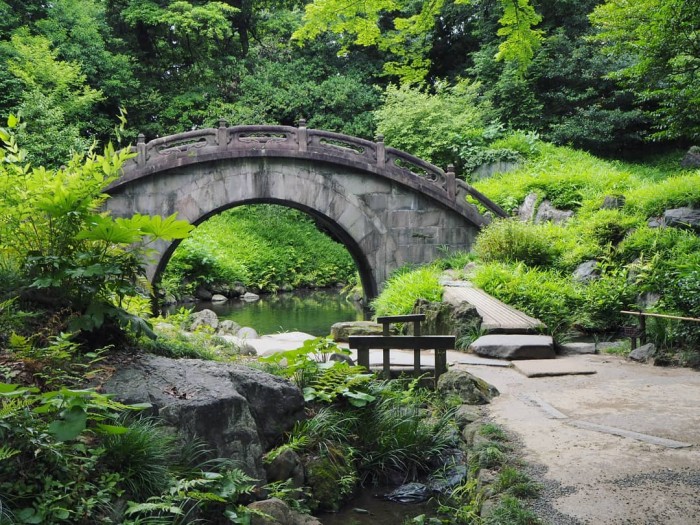 photo by @mamy._.m
Koishikawa Korakuen is a stroll garden with man-made hills and ponds, created in the Edo period at the Edo residence of the Mito branch of the Tokugawa family. For its beauty and historical value it holds two national titles, Special Historic Site and Special Place of Scenic Beauty. It is one of Tokyo's best-known gardens for cherry blossoms and autumn leaves, and a rich patch of green in the middle of the city.
Good to know
- Japanese name
- 小石川後楽園
- Address
- 東京都文京区後楽1-6-6In Japanese, to show a taxi driver or type into a map app.
- Nearest station
- Iidabashi Station
- Access
- About 8 min walk from Iidabashi Station (JR Chuo-Sobu Line); 2–3 min from exit C3 of Iidabashi Station (Toei Oedo Line); 8–10 min from Iidabashi or Korakuen Station (Tokyo Metro)
- Hours
- 9:00–17:00, last entry 16:30
- Admission
- Adults ¥300, 65 and over ¥150, junior high students and younger free
Hours and prices can change. Check the official website before you go.
A daimyo garden and its name
This is a daimyo garden, built for a feudal lord to enjoy by looking and by walking. It is designed to be strolled, with views that change as you move around, and its hills and ponds borrow from famous landscapes in China. Lord Tokugawa Mitsukuni, drawn to Confucian thought, named it after consulting a Chinese scholar. The name comes from a saying that a good leader worries before the people do and enjoys himself only after they have: korakuen means the garden of enjoying afterward. Only nine places in Japan carry both of its national designations; Hama-rikyu Gardens is the other one in Tokyo.
Flowers through the year
The garden is best known for its weeping cherry, whose long branches spread freely, and for autumn color. At the peak, crowds are heavy and entry can be limited, and there are not many cherry trees overall. Early summer brings irises in the iris field, and hydrangeas. Mitsukuni is said to have loved plum blossoms, and a plum grove sits deep in the garden. In summer, water lilies and lotus spread over the ponds; come soon after opening to see the flowers.
In winter, yukitsuri ropes protect the pines, and on snowy days the garden is quiet and at its most beautiful. Skyscrapers rise behind it as borrowed scenery. The ponds are also a well-known place for photographing kingfishers.
Getting there and a view from above
The garden has only one entrance. The closest approach is exit C3 of Iidabashi Station on the Toei Oedo Line, about 2–3 minutes away. From the JR east exit it is about 8 minutes over a large pedestrian bridge, and from the Tokyo Metro stations at Iidabashi or Korakuen it is 8–10 minutes. Afterward, walk to the Bunkyo Civic Center, where a free observation lounge on the 25th floor looks down on the garden.
Nearby
 Space Museum TeNQ379m
 Japanese Baseball Hall of Fame and Museum515m
 Tokyo Dome515m
 Tokyo Dome City529m
 Tokyo Daijingu549m
 LaQua558m
Featured in these guides
 20 Quiet Hidden Gems in Tokyo for a Relaxed Trip, with Two Easy Day Plans20 placesTokyo's famous sights are often crowded, and long days on foot can wear you out. If you would rather take things…
 Tokyo in September: 17 Places to Visit for Moon Viewing, Autumn Flowers and Rainy Days, Plus What to Wear17 placesSummer may be over, but Tokyo still has plenty to offer in September. The end of summer often brings rain and typhoons…
Recently viewed
More in Tokyo
 Aqua Park ShinagawaAquarium
 Tokyo TowerObservation tower
 Meiji JinguShinto shrine
 Senso-jiBuddhist temple
 National Museum of Nature and ScienceScience museumTokyo SkytreeBroadcasting tower
 Roppongi HillsShopping complex
 Odaiba Marine ParkWaterfront park
 Shinjuku Gyoen National GardenGarden
 Showa Kinen ParkPark
 Tokyo JoypolisIndoor theme park
 Nippara Limestone CaveLimestone cave