
Kyu-Furukawa Gardens
Garden · Kita, Tokyo
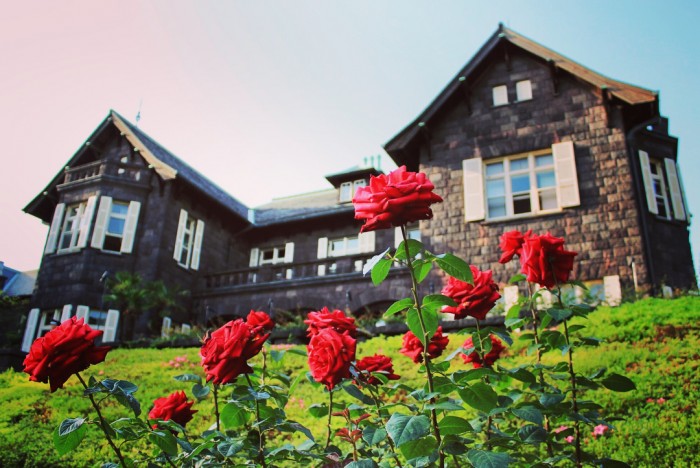 photo by @aichaaaaan24
Kyu-Furukawa Gardens is a metropolitan garden in Kita, Tokyo, known for its romantic Taisho-era Western-style mansion and its rose garden. In spring and autumn the roses are in full bloom around the old house, and the scene feels like something out of a storybook. Below the roses lies a traditional Japanese garden, so you can enjoy Western and Japanese styles in a single walk. It is a nationally designated Place of Scenic Beauty.
Good to know
- Japanese name
- 旧古河庭園
- Address
- 東京都北区西ヶ原1-27-39In Japanese, to show a taxi driver or type into a map app.
- Nearest station
- Kami-Nakazato Station, Nishigahara Station
- Access
- About 7 min walk from Kami-Nakazato Station (JR Keihin-Tohoku Line) or Nishigahara Station (Tokyo Metro Namboku Line); 12 min from Komagome Station (JR Yamanote Line); 18 min from Asukayama (Toden Arakawa Line); Kita City community bus (Oji-Komagome route) to the Kyu-Furukawa Teien stop
- Hours
- 9:00–17:00, last entry 16:30
- Closed
- December 29–January 1
- Admission
- Adults ¥150, 65 and over ¥70; elementary school children and younger, and junior high students living or studying in Tokyo, free
- Official website
- tokyo-park.or.jp/park/format/index034.html
Hours and prices can change. Check the official website before you go.
Three gardens on one slope
The garden makes clever use of the land. The mansion stands on a hill to the north, a Western-style garden of rose beds fills the slope below it, and a Japanese garden spreads across the low ground at the bottom. The whole site covers about 30,000 square meters.
The land was first bought by the statesman Mutsu Munemitsu. His second son was adopted into the family that founded the Furukawa business group, and the property passed to the Furukawas. In the Taisho era, the third head of the family built the mansion and Western garden, both designed by Josiah Conder, the architect of the Rokumeikan. The Japanese garden, by the master gardener Ogawa Jihei VII, was completed in 1919. The house and garden survived the war undamaged, and the site opened as a metropolitan park in 1956.
Roses and light-ups
About 100 varieties of roses, some 199 bushes, grow on the slope. They bloom twice a year: in spring from mid-May to late June, and in autumn from mid-October to late November. During the rose festivals, the roses, the mansion and the Japanese garden are lit up after sunset, a good chance to photograph the garden in a completely different mood. Blooming can come early in hot years, so check the official site before you go.
Tips for visiting
The mansion, now the Otani Museum, can only be seen inside on guided tours that need to be booked in advance through the Tokyo Metropolitan Park Association. The garden has no parking, so come by public transport. From Komagome Station, a community bus runs to the Kyu-Furukawa Teien stop, right by the gate.
Nearby
 Asukayama Park1.0km
 Rikugien Garden1.1km
 Togenuki Jizo (Koganji Temple)1.2km
 Sugamo Jizo-dori Shopping Street1.3km
 Yanaka Ginza2.4km
 Namja Town2.8km
Featured in these guides
Recently viewed
More in Tokyo
 Aqua Park ShinagawaAquarium
 Tokyo TowerObservation tower
 Meiji JinguShinto shrine
 Senso-jiBuddhist temple
 National Museum of Nature and ScienceScience museum
 Tokyo SkytreeBroadcasting tower
 Roppongi HillsShopping complex
 Odaiba Marine ParkWaterfront park
 Shinjuku Gyoen National GardenGarden
 Showa Kinen ParkPark
 Tokyo JoypolisIndoor theme park
 Nippara Limestone CaveLimestone cave