
Hatsushima Island near Atami: Lemon Photo Spots, Resort Gardens and Mt. Fuji Views
16 places · Japanese version
Hatsushima is a small island about 10 km off Atami in Shizuoka, and the closest outlying island to the Tokyo area. Take the shinkansen to Atami in about 45 minutes, then a short ferry ride, and you are in a place with a laid-back, southern resort feel. The island has clear water for diving and snorkeling, a street of restaurants run by local fishermen, a lighthouse and a park full of flowers. Here are its best photo spots, from new lemon-themed sets to views of Mt. Fuji across the sea.
About the island
Many of the island's leisure facilities are in PICA Hatsushima, a resort with the Asian Garden R-Asia, SARUTOBI, a treetop athletic course, Shima no Yu, an open-air bath right at the edge of the shore, a terrace restaurant and a campground. Together with the fishermen's restaurants and the island park, there is enough to fill a full day.
Lemon photo spots
Atami is said to be the place where lemons were first grown in Japan, and that inspired a set of lemon-themed photo spots on Hatsushima. The first three are inside the Asian Garden R-Asia, which charges admission. A set ticket combining the round-trip ferry and garden entry is sold.
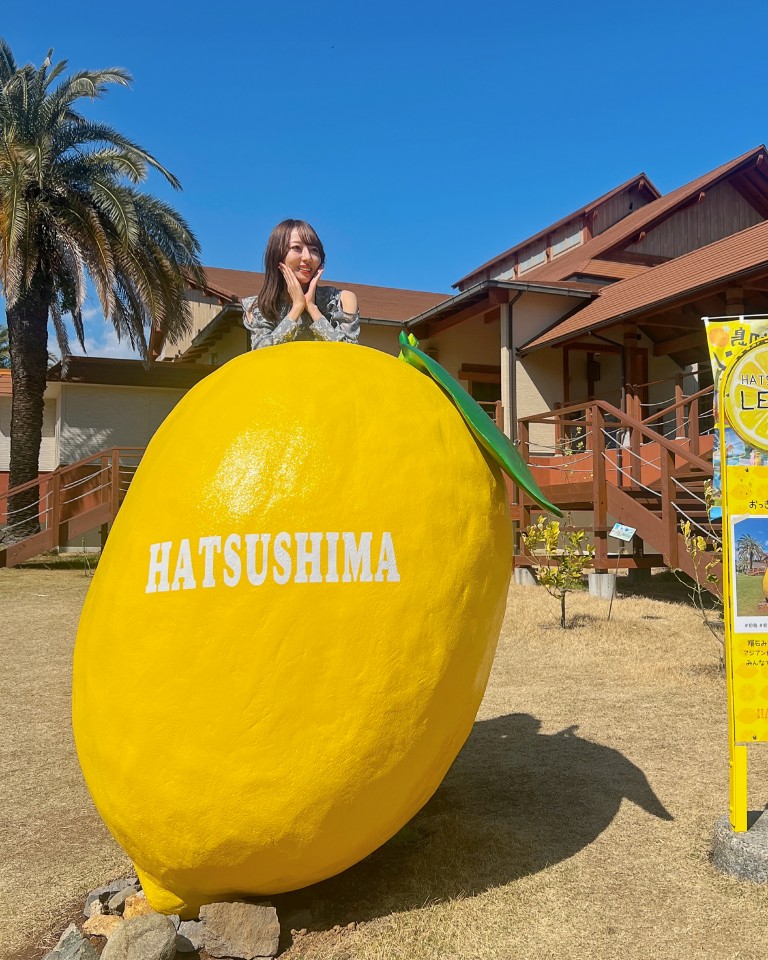
Big Lemon Meteorite Asian Garden R-Asia
A giant lemon that seems to have crashed into the garden like a meteorite, and hard to miss. There are steps behind it, so you can pose as if you are bursting out of the lemon for a fun, slightly silly shot.
Lemon Gate to the Sky Asian Garden R-Asia
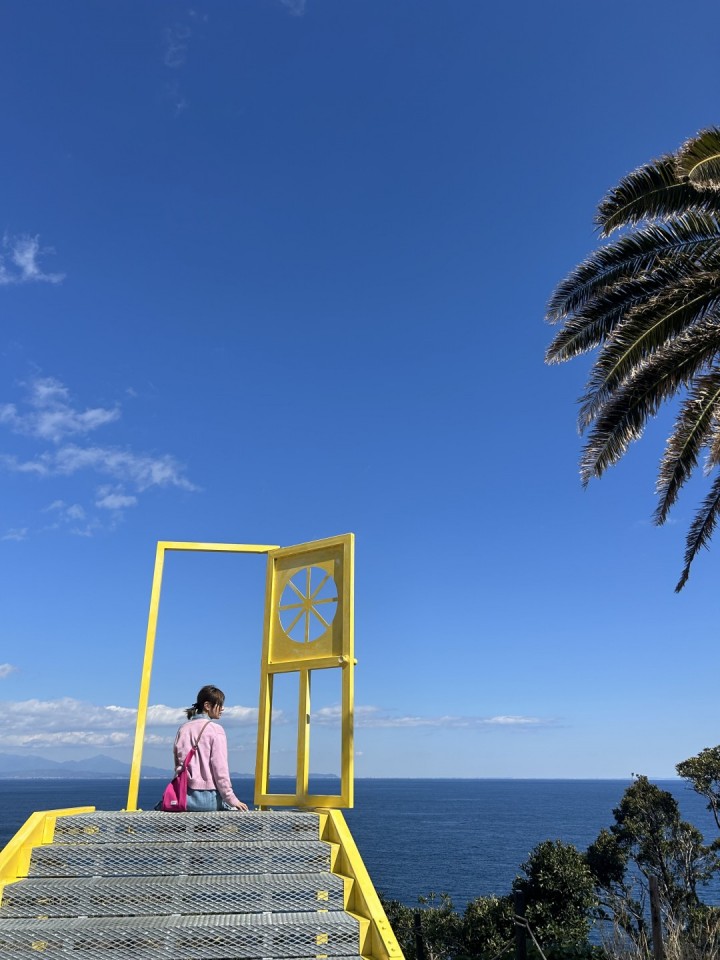
A yellow staircase that seems to lead up into the sky, topped by a yellow gate. On a clear day the bright yellow stands out against the blue sky and the island scenery, making for a striking photo.
Lemon Paradise Asian Garden R-Asia
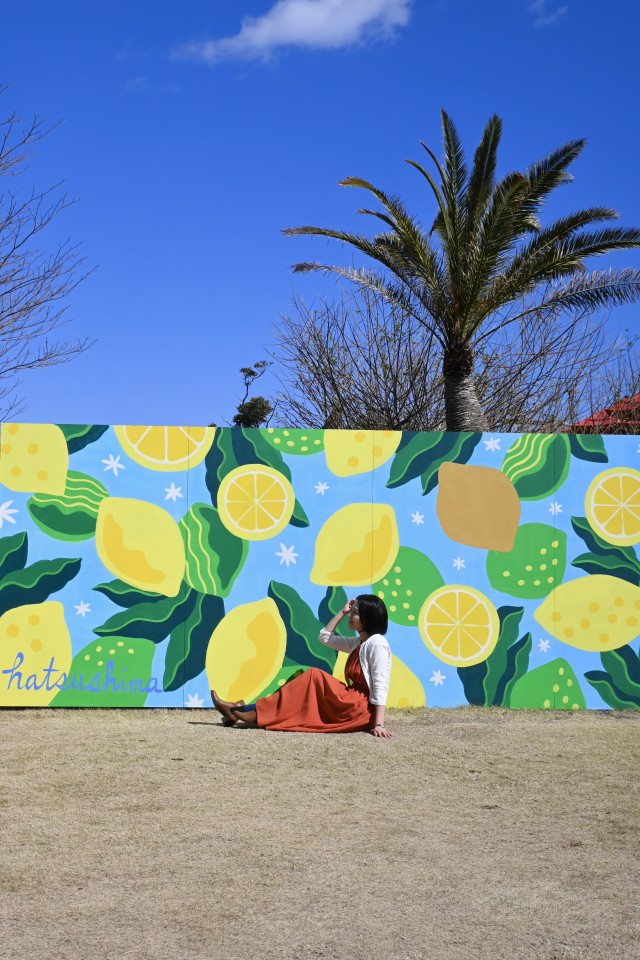
A large wall painting covered in lemons painted in crisp, bold colors. It is the work of an artist popular with young people, and it makes an eye-catching backdrop for portraits.
Yellow Mailbox On the way to R-Asia
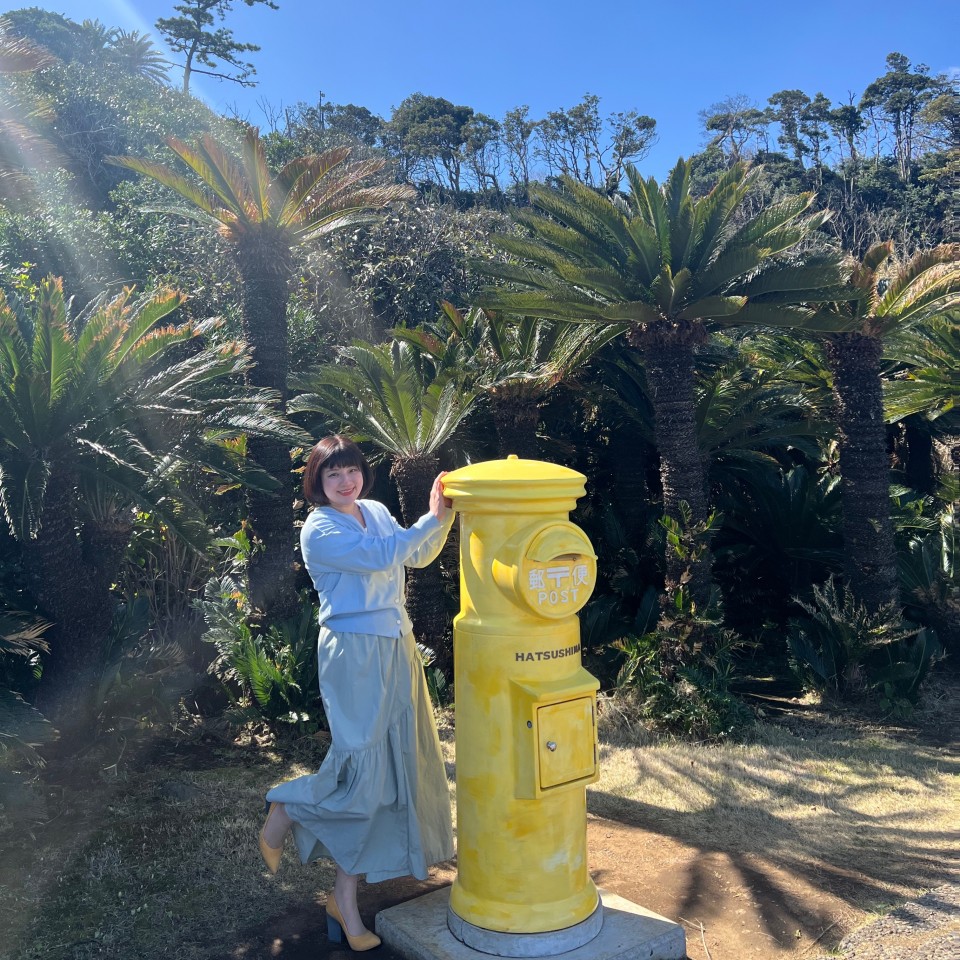
A lemon-yellow mailbox stands among lush subtropical plants on the path leading to the Asian Garden R-Asia. Taking a photo with this cheerful mailbox is said to bring happiness. Note that it is only for photos: you cannot post mail here.
Hatsushima Station Sign Hatsushima
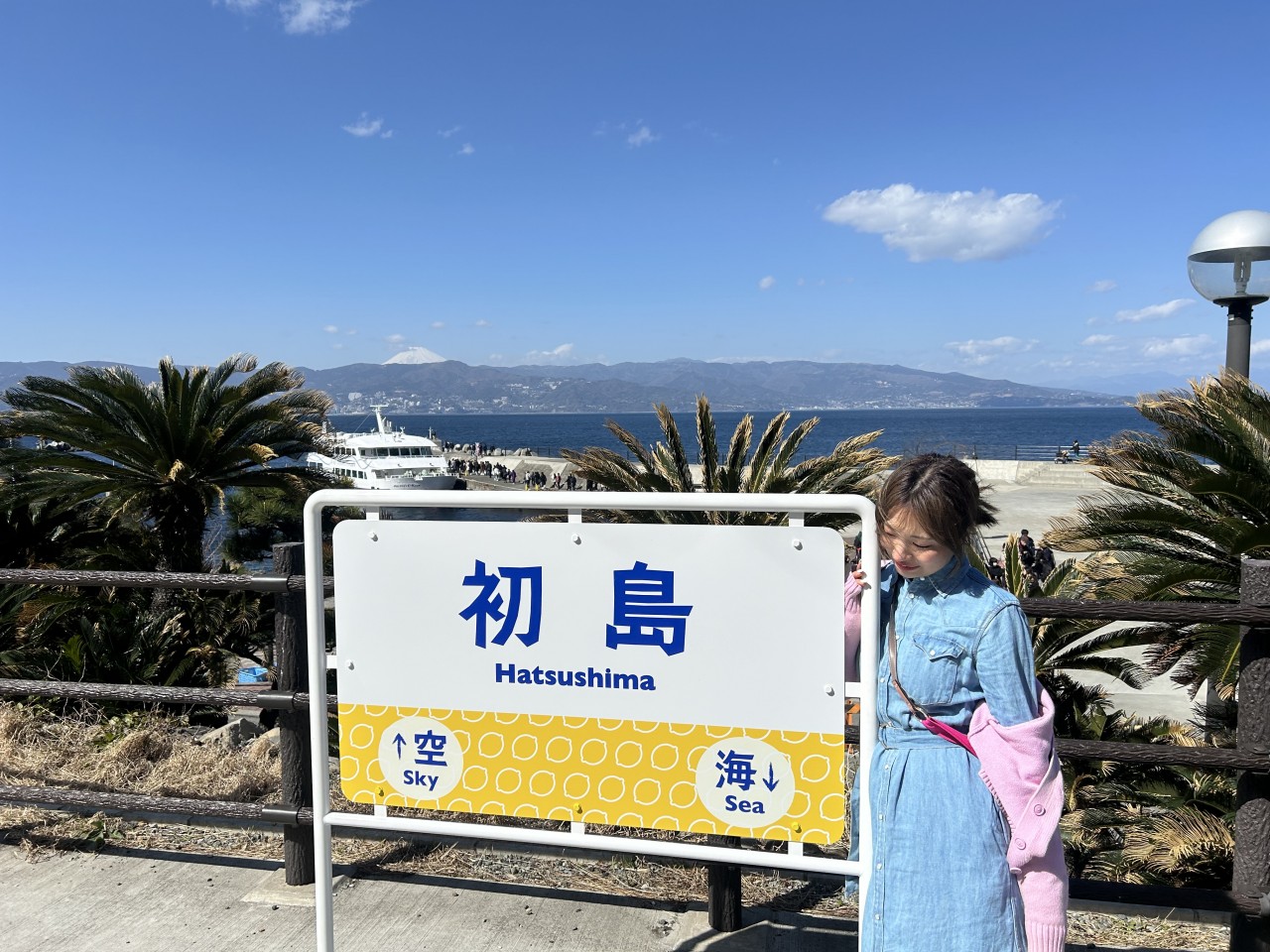
A cute sign in the style of a train station name board, with lemon illustrations as an accent. It stands against the blue sky and sea, so it makes a good souvenir photo of your trip. With the right timing and weather, you can fit the ferry or Mt. Fuji into the frame too.
Resort time at the Asian Garden R-Asia
The Asian Garden R-Asia is a resort-style garden where hundreds of kinds of subtropical plants grow under a wide blue sky, around green lawns.
Sky, Sea and Swing Asian Garden R-Asia
A swing set among palm trees, facing nothing but sea and sky. Swinging here with a view you rarely get in the city is the moment that makes the trip feel like a real getaway, and it photographs beautifully.
ENAK Terrace Restaurant Asian Garden R-Asia
This terrace restaurant inside the garden has an exotic, faraway mood. Try a seafood barbecue with fresh fish and shellfish, or Asian food and drinks. Like the photo spots, the menu leans into lemons, with lemon dishes, sweets and colorful drinks that are as fun to photograph as to eat.
Hammocks on the lawn Asian Garden R-Asia
Hammocks are scattered all over the garden's lawns. Sit or lie back and let island time slow you down. You can bring takeout food and drinks from the ENAK terrace restaurant and eat here.
Souvenir photos with the island's name
PICA Hatsushima Sign On the way to R-Asia
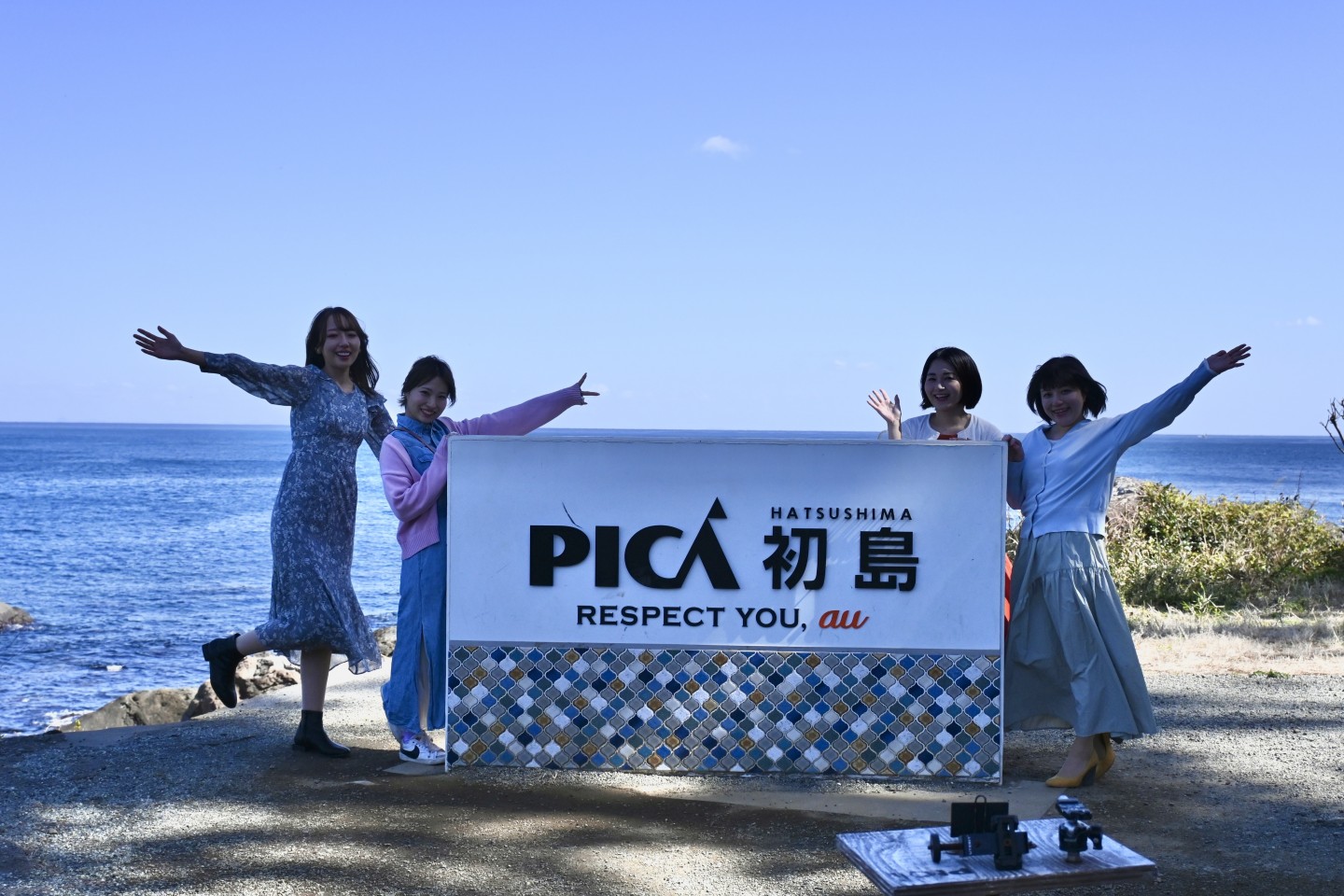
This sign stands on the road to the Asian Garden R-Asia, with the sea of Hatsushima behind it, so the setting is lovely. A small stand has been placed nearby to make self-timer photos easy.
Welcome to Hatsushima Hatsushima Port
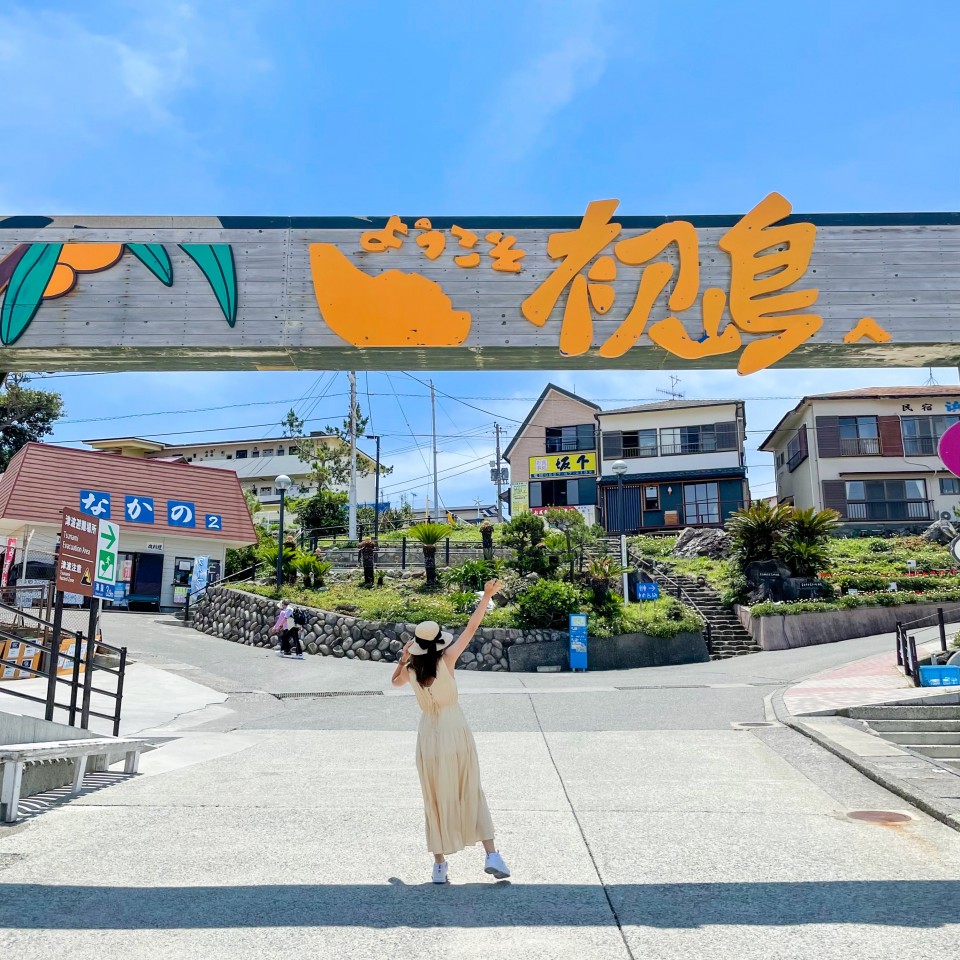
The first thing you see when you step off the ferry at Hatsushima Port is this lettered sign. Its orange letters pop against the blue sky, a classic first photo of the day.
ATAMI HATSUSHIMA Hatsushima
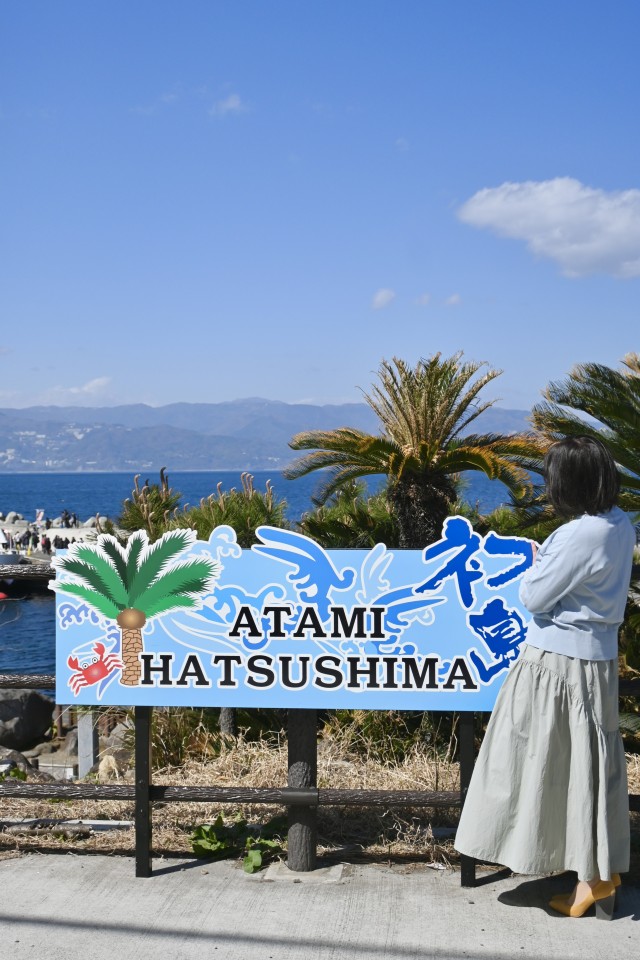
A photo spot decorated with palm trees and other island motifs and the words ATAMI HATSUSHIMA, so there is no doubt where the picture was taken. Depending on the weather you may see Mt. Fuji, and if your timing matches the ferries, ships coming and going. The Hatsushima Station Sign is right next to it.
Mt. Fuji from Hatsushima
Several places on the island give good views of Mt. Fuji across the sea. These two are especially good for photos.
The road by the Squid Toilet Hatsushima
A public toilet shaped like a squid and painted light blue and pink is one of the island's little-known landmarks. The road right in front of it is a great place to photograph Mt. Fuji and the sea, with a slightly nostalgic feel.
The slope up to Hatsushima Park Hatsushima
If you have the energy for a climb, take the steep road from Hatsushima Port up toward Hatsushima Park. From the slope you look out over the beautiful sea to Mt. Fuji. The mountain is clearest on days when the air is crisp and clean.
Seasonal flowers
With its fairly mild climate, Hatsushima has flowers in every season. From mid-January to the end of February, early-blooming Atami and Kawazu cherry trees flower, mainly in Hatsushima Park, so you can enjoy cherry blossoms a little earlier than usual.
Rape blossoms bloom in Hatsushima Park from January to March. They grow over a wide area, so you can take photos that look as if you are standing in a sea of yellow, and from mid-January to late February the pink cherry blossoms add to the color.
Mimosa peaks from March to April in the Asian Garden R-Asia, where the trees are heavy with bright yellow flowers. From April to June, look for the king protea in Hatsushima Park, the national flower of South Africa and a rare sight in Japan.
By the sea and on the ferry home
Sea life mural Hatsushima
While you wait for the ferry back, stroll along the seaside. A large mural by artist Miki Tomioka shows the sea creatures and plants found around Hatsushima in vivid colors, and its size makes it easy to stop and stare.
Fishermen's shop street Hatsushima
Shops run by the island's fishermen line the waterfront. Outside, look for art made from used turban shells, a scene you will only find here. It is a good last place to take photos with the sea before you leave.
The ferry to Atami Hatsushima Port to Atami Port
The ferry has big windows and soft sofas for a relaxing ride. For something livelier, go out on the deck and feed the gulls: hold a snack out with your fingers and wait. They gather most as the ship slows near Atami Port, and the upper deck is the best spot. Food is not sold on board, so buy it at the port first.
Getting there
From the Tokyo area, first head to Atami. The shinkansen Kodama gets there in about 45 minutes. From JR Atami Station, take the bus from stop 7 bound for Atami Port and get off at Atami Port, about 15 minutes. On weekends, holidays and in long vacation periods the roads get busy and the ride can take longer.
Ferries from Atami Port to Hatsushima run several times a day in each direction and take about 20 to 30 minutes. The timetable differs on weekdays, weekends and busy seasons, and boats can be crowded in summer and on holidays, so check the schedule on the official website before you go.
The places on a map
Hours, prices and events change. Check each place's official website before you go.
More travel guides
 Tokyo Sightseeing by Area: 40 Classic Sights and Lesser-Known Spots from Asakusa to Odaiba40 placesTokyo has much more to see than Skytree, Tokyo Tower and Asakusa. This guide works through six of the city's main…
 Nagoya: 40 Best Places to Visit, from Nagoya Castle and Atsuta Jingu to Osu40 placesNagoya is one of Japan's biggest cities, yet many visitors don't know how much it has to see. Alongside its famous…
 Chichibu: 40 Best Places to Visit, from Nagatoro River Boats and Mitsumine Shrine to Moss Phlox and Icicles40 placesChichibu, the largest city in Saitama Prefecture, is about 90 minutes from central Tokyo. Most of the area is national…
 Niigata Prefecture: 40 Best Places to Visit, from Classic Sights to Hidden Gems40 placesNiigata Prefecture stretches a long way from north to south, and each area has its own scenery, climate and food. The…
 Nagasaki Prefecture: 40 Best Places to Visit, from Unzen Hot Springs to Hirado and Nagasaki City40 placesNagasaki grew up as a port open to the outside world, and the culture of those days still shapes its streets, churches…
 Fukuoka Prefecture: 40 Places to Visit in Kitakyushu, Chikuho and Around Fukuoka City40 placesFukuoka Prefecture is roughly divided into four areas, Kitakyushu, Chikuho, Fukuoka and Chikugo, and each has its own…