
Kennin-ji Temple
Zen temple · Higashiyama, Kyoto
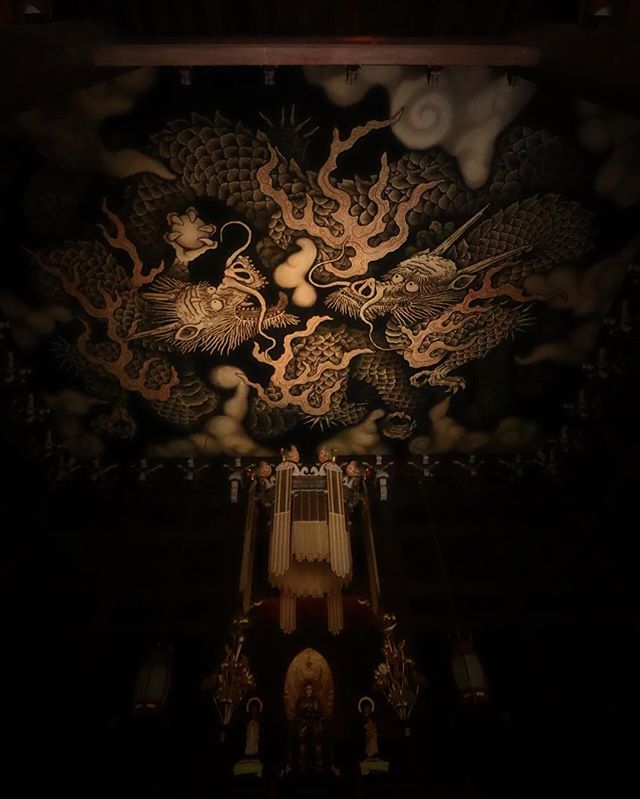 photo by @masatomo0519
Kennin-ji is a Zen temple east of the Kamo River, close to Yasaka Shrine. It is famous for the Wind God and Thunder God screens, a National Treasure, and holds many other cultural properties. Raked white gravel gardens, a moss garden framed by maples and a huge dragon painting on the ceiling make it a rewarding visit, with centuries of Japanese culture packed into a compact space.
Good to know
- Japanese name
- 建仁寺
- Address
- 京都府京都市東山区小松町598In Japanese, to show a taxi driver or type into a map app.
- Nearest station
- Gion-Shijo Station (Keihan Main Line)
- Access
- About 10 minutes on foot from Gion-Shijo Station
- Hours
- 10:00–16:30 (last entry 16:00)
- Admission
- Adults ¥500, junior high and high school students ¥300, elementary school students ¥200
- Official website
- kenninji.jp/index.html
Hours and prices can change. Check the official website before you go.
History and buildings
The temple was founded in 1202 with the support of the shogun Minamoto no Yoriie, with the famous Zen master Eisai as its first abbot, and was modeled on a temple in Song China. Eisai is also credited with bringing tea to Japan. The temple was damaged by fire and war several times and rebuilt each time.
Several buildings were moved here from elsewhere. The Imperial Messenger Gate on the south side, an Important Cultural Property, is said to come from a residence of the Taira clan. The main abbot's hall, also an Important Cultural Property, was moved from Ankoku-ji temple in Hiroshima and keeps the style of the Muromachi period.
Gardens
In front of the abbot's hall lies Daiouen, a wide dry landscape garden of white gravel. Seen from the west side, sand ripples spread around small rocks and the stillness stands out. From the east side, the same rocks look like distant islands. Visitors line the veranda to take photos.
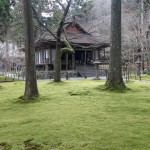
Chouontei is a garden of moss, stones and trees, with four rocks on a mound of moss surrounded by maples, so it changes with every season. A traditional tea garden path leads to the tea room.
Paintings not to miss
The Wind God and Thunder God folding screens by Tawaraya Sotatsu are the highlight. The original is kept at the Kyoto National Museum, and a replica is on display, but it still impresses. The abbot's hall is lined with ink paintings of plum branches, dragons and the seasons. On the ceiling of the Dharma Hall, the Twin Dragons painted by Koizumi Junsaku in 2002 coil around each other, one with its mouth open and one closed.
Autumn is the best season, when the maples turn red around the gardens. Sutra copying can be arranged at the temple shop. Yasaka Shrine is nearby, and from there you can walk to Kiyomizu-dera by way of Sannenzaka.
Nearby
 Yasui Konpiragu Shrine212m
 Rokudo Chinno-ji Temple272m
 Kamo River (Kamogawa)448m
 Cafe Soiree515m
 Yasaka Koshin-do522m
 Hanamikoji Street542m
Featured in these guides
40 Best Places to Visit in Kyoto, Picked by Locals: Famous Sights and Hidden Gems40 placesKyoto is packed with historic buildings, and visitors from all over Japan and abroad come to see them. The best-known… Kyoto in November: 20 Autumn Leaf Spots, Festivals and Special Openings, Plus What to Wear20 placesNovember is one of the best months to see Kyoto. The weather is mild, the autumn leaves reach their peak, and temples…
Recently viewed
More in Kyoto
 Kitano TenmanguShinto shrine
 Nanzen-jiZen temple
 Fushimi Inari TaishaShinto shrine
 Mikane ShrineShinto shrineJishu ShrineShinto shrine
 Shimogamo ShrineShinto shrine
 Heian ShrineShinto shrine
 Kyoto AquariumAquarium
 Kifune ShrineShinto shrine
 Yasaka ShrineShinto shrine
 Kurama-deraBuddhist temple
 Sanzen-inBuddhist temple