
Kyoto in January: 18 New Year Rituals, Warm Indoor Stops and Kyoto Cuisine
18 places · Japanese version
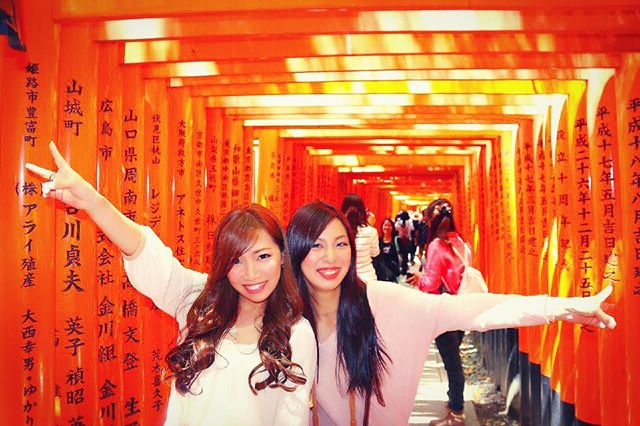
January is a cold month in Kyoto, and it has fewer events than busy November. In return, the New Year brings many rituals at shrines and temples where people pray for good health in the year ahead, from archery and court football to bowls of rice porridge and simmered daikon. Some are little known and pleasantly uncrowded. Spend less time outdoors than you would in warmer months, plan warm indoor stops, and enjoy a hot Kyoto meal. Here are 18 ideas, plus tips on the weather and what to wear.
January weather and what to wear
The average temperature in Kyoto in January is around 5 degrees Celsius. In early January it averages about 6 degrees, and mornings and evenings can drop to around 2 degrees. In late January many days stay at just 1 or 2 degrees.
Dress warmly even for daytime sightseeing: a thick jacket, warm socks and disposable heat packs. A windproof jacket is useful for walks in the morning or at night, and in late January a scarf and gloves are a must. Colds and flu are common at this time of year, and the change between heated rooms and the cold outside can wear you down, so stop at a cafe for a hot drink now and then. Before you go out, check for restaurants, shops and indoor spots near each sight so you can warm up easily.
New Year rituals at shrines and temples
Many of these events take place on the same date each year. Times and details can change, so check the official websites before you go.
Fushimi Inari Taisha Fushimi
One of Kyoto's best-known sights, Fushimi Inari is visited for business success, family safety and safe travel. Every year on January 12 it holds the Hosha-sai, an archery ritual to drive away evil and bring good things in the new year. Archers aim at a small target about 25 meters away, and the crowd cheers and applauds each shot. It is about 5 minutes on foot from Fushimi-Inari Station on the Keihan Line.
Sennyu-ji Temple Higashiyama
Every year on Coming of Age Day in January, Sennyu-ji holds the Senzan Shichifukujin Meguri, a walk around the temples of the Seven Lucky Gods to ward off misfortune. It draws many women in kimono and families. A highlight is the large Shaka statue at Kaiko-ji, called Migawari Shaka, said to protect against illness and injury from the neck up. The full route takes time, so stop at a souvenir shop or two to warm up.
Jonangu Shrine Fushimi
Jonangu was built to keep the country at peace and protect the capital. Every January it holds Yudate Kagura: a large cauldron of hot water is purified with salt and sake and bamboo leaves are dipped in it. Shrine maidens shake the wet leaves over the crowd, and being sprinkled is said to keep you healthy. It is a little-known spot and rarely crowded. It is about 15 minutes on foot from Takeda Station.
Rokuharamitsu-ji Temple Higashiyama
Rokuharamitsu-ji has been damaged by fire and rebuilt many times, and it is known for an eleven-faced Kannon statue carved by the monk Kuya. From January 1 to 3 every year it serves Obukucha, a tea that Kuya is said to have given to the sick and injured. People drink it to pray for good health in the new year. It is about 7 minutes on foot from the Kiyomizu-michi bus stop.
Gokonomiya Shrine Fushimi
Gokonomiya is known as a shrine that wards off evil, though its origins are unclear. On January 7 it serves nanakusa-gayu, rice porridge with the seven herbs of spring, to pray for good health, a custom said to go back to the Edo period. It starts in the morning, so if you come by bus, check the times in advance. It is about 5 minutes on foot from Momoyama Station.
Myoshin-ji Temple Hanazono
Every year from mid-January, Myoshin-ji holds a gathering to welcome the new year with azuki bean porridge. You can watch restaurant hostesses serving and the tea ceremony up close while you eat. Kyoto dishes come with a hot soup, just right for the cold, so it suits anyone curious about Kyoto cuisine or the way of tea. It is about 10 minutes on foot from Myoshinji Station.
Kitano Tenmangu Kamigyo
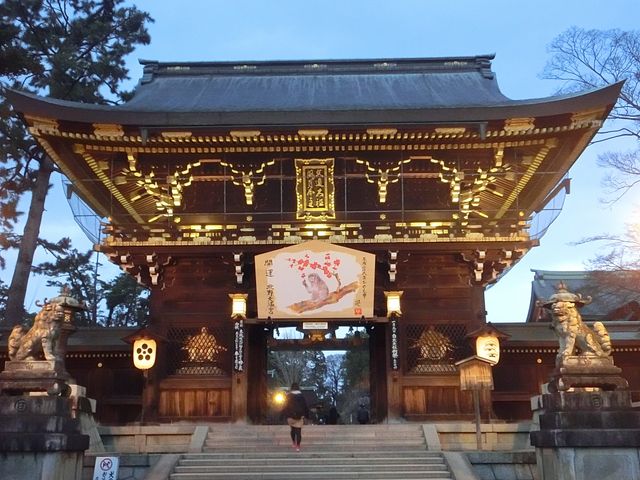
Kitano Tenmangu enshrines Sugawara no Michizane, the god of learning, and is especially busy in exam season. From January 2 to 4 it holds the Fude-hajime-sai, the first writing of the year: writing tools said to have belonged to Michizane are offered before the gods, and people pray to improve their calligraphy. It is a good visit if you practice or simply like calligraphy. The shrine is right by the Kitano Tenmangu-mae bus stop.
Yasaka Shrine Gion
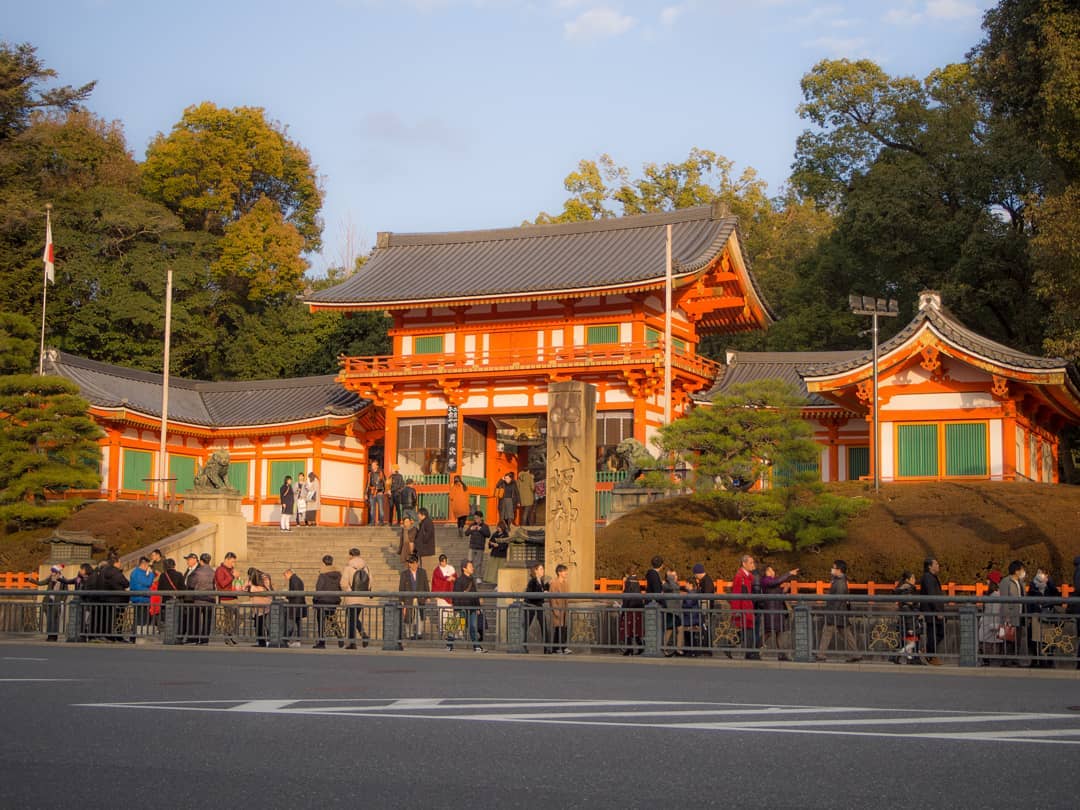
Known to locals as Gion-san, Yasaka Shrine holds the Karuta Hajime-shiki on January 3, when women dressed as karuta princesses and children play karuta, the traditional poem card game. Only pressing a card counts, not sweeping it away, which makes the play look a little tricky, but the rules are part of the fun. The shrine is right by the Gion bus stop.
Sanjusangendo Higashiyama
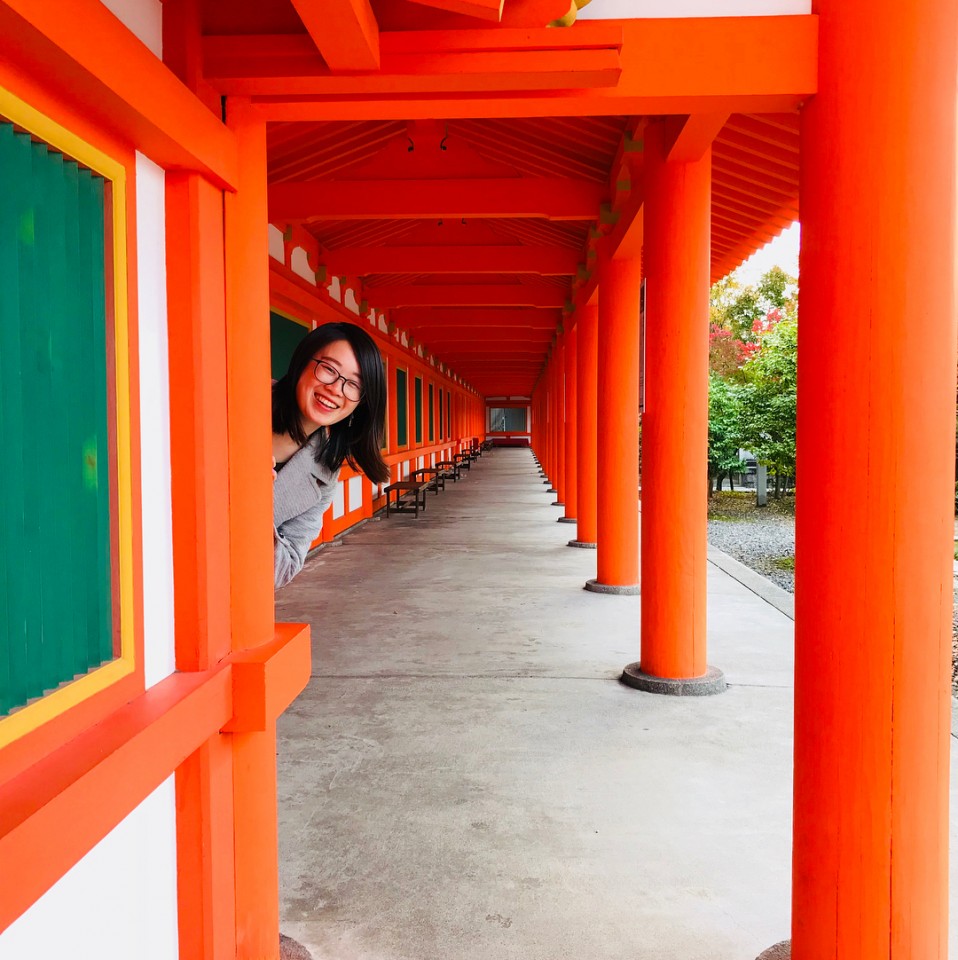
In mid-January, targets are set up at the main hall of Sanjusangendo, a National Treasure, for the Toshiya archery event. Skilled archers compete, and the shots draw cheers and applause. Afterward, go inside to see the seated thousand-armed Kannon, a National Treasure, and the 1,000 standing Kannon statues, Important Cultural Properties. The temple is right by the Higashiyama-Shichijo bus stop.
Hojuji Temple Higashiyama
Hojuji is a Tendai temple said to have been founded by Fujiwara no Tamemitsu to pray for his late wife and daughter. Every year in mid-January it holds Daikon-daki, simmered daikon radish served to pray for good health, and visitors receive a talisman against misfortune. The event is not widely known, so you can take your time. Check the date in advance. It is about 10 minutes on foot from Shichijo Station on the Keihan Line.
Kamigamo Shrine Kita
Kamigamo Shrine, which honors the deity of the Kamo clan, is one of Kyoto's famous sights. Every year in mid-January it holds the Busha Shinji, in which arrows are shot at a target about 1.8 meters across to drive away evil spirits for the new year. The ritual is an old tradition recorded in the Nihon Shoki, one of Japan's oldest chronicles. It is about 15 minutes on foot from Kitayama Station on the Karasuma subway line.
Shimogamo Shrine Sakyo
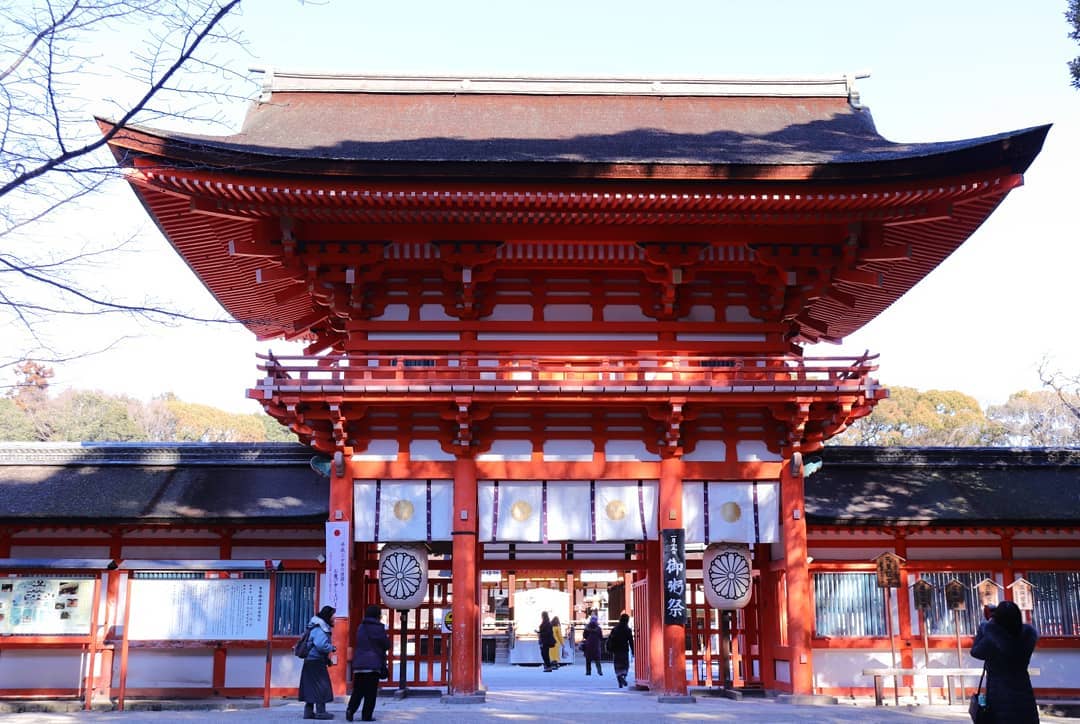
At Shimogamo Shrine, a UNESCO World Heritage Site, the Kemari Hajime on January 4 revives kemari, the court football game of the Heian period. Players must kick without bending at the waist or knees and without showing the soles of their feet, which is harder than it looks. Few places in Japan still play kemari, so it is worth seeing if you are in Kyoto, and children enjoy it too. It is about 10 minutes on foot from Demachiyanagi Station.
A warm indoor stop
Saga Arashiyama Museum of Arts and Culture Arashiyama
This museum in Arashiyama shows Japanese paintings and other art indoors, a welcome break from the cold. In January, try your hand at hyakunin isshu, the traditional card game built on a hundred classic poems. The museum is popular with visitors from abroad and has a cafe and a shop, so you can take your time. It is about 13 minutes on foot from Arashiyama Station.
Warming Kyoto cuisine
A hot Kyoto meal is one of the joys of a winter trip. Some of these restaurants need a reservation, so check before you go.
Gion Uemori Gion
Kyoto is said to be the birthplace of yudofu, simmered tofu, and the city has many specialty restaurants. Gion Uemori is one with a good reputation for flavor. The dining rooms feel upscale, yet the prices are reasonable. Its courses built around yudofu and yuba, tofu skin, are especially praised. It is about 10 minutes on foot from Kawaramachi Station on the Hankyu Line.
Izama Nakagyo
Izama is a Kyoto cuisine restaurant inside the Mitsui Garden Hotel Kyoto Shinmachi Bettei, praised for its food, setting and service alike. Shabu-shabu with medicinal herbs is the popular choice, and seasonal pickles and tofu dishes are worth a try too. A souvenir corner sells gifts for friends and coworkers. It is about 7 minutes on foot from Karasuma Station on the Hankyu Line.
Kinmata Nakagyo
Kinmata, in business for more than 200 years, is a well-known restaurant for seasonal Kyoto cuisine and kaiseki. It is on the pricey side, but worth it on a trip to Kyoto. The menu is wide, with yuba dishes, sashimi and tempura. Note that its opening hours are short. It is about 10 minutes on foot from Shijo Station on the Karasuma subway line.
Yamaguchi Daitei Gion
Yamaguchi Daitei is an izakaya with about 50 years of history, built around an old-style counter. It is loved by locals for its long menu of less familiar dishes, such as hamo pike conger tempura and kasu-jiru, a soup made with sake lees. Prices are reasonable, so it is a good place to try many different things. It is in Gion, near Gion-Shijo Station.
Nakamura Nakagyo
Nakamura is often called one of the finest restaurants of Japanese cuisine, and many guests come from outside Japan. The most popular dish is kuji no sakayaki, tilefish grilled with sake, with plump, tender flesh. When you have eaten the fish, dashi broth is poured over what is left, the house way to enjoy it to the last drop. It is about 15 minutes on foot from Sanjo Station on the Keihan Line.
The places on a map
Hours, prices and events change. Check each place's official website before you go.
More travel guides
 Tokyo Sightseeing by Area: 40 Classic Sights and Lesser-Known Spots from Asakusa to Odaiba40 placesTokyo has much more to see than Skytree, Tokyo Tower and Asakusa. This guide works through six of the city's main…
 Nagoya: 40 Best Places to Visit, from Nagoya Castle and Atsuta Jingu to Osu40 placesNagoya is one of Japan's biggest cities, yet many visitors don't know how much it has to see. Alongside its famous…
 Chichibu: 40 Best Places to Visit, from Nagatoro River Boats and Mitsumine Shrine to Moss Phlox and Icicles40 placesChichibu, the largest city in Saitama Prefecture, is about 90 minutes from central Tokyo. Most of the area is national…
 Niigata Prefecture: 40 Best Places to Visit, from Classic Sights to Hidden Gems40 placesNiigata Prefecture stretches a long way from north to south, and each area has its own scenery, climate and food. The…
 Nagasaki Prefecture: 40 Best Places to Visit, from Unzen Hot Springs to Hirado and Nagasaki City40 placesNagasaki grew up as a port open to the outside world, and the culture of those days still shapes its streets, churches…
 Fukuoka Prefecture: 40 Places to Visit in Kitakyushu, Chikuho and Around Fukuoka City40 placesFukuoka Prefecture is roughly divided into four areas, Kitakyushu, Chikuho, Fukuoka and Chikugo, and each has its own…