
Enoshima: 11 Things to Do on a Day Trip or Date, from the Aquarium to Sunset at Chigogafuchi
11 places · Japanese version
Enoshima is a small island on the Shonan coast and a classic choice for both sightseeing and a date. You can see an aquarium full of jellyfish, climb to a lighthouse that glows after dark, visit a shrine known for love and luck, explore sea caves and watch the sun set over the rocks. Three train lines bring you to the island's doorstep: the Odakyu Line to Katase-Enoshima Station, the Enoden to Enoshima Station and the Shonan Monorail to Shonan-Enoshima Station. Below are 11 places to put on your plan, from the stations and the shore to the far tip of the island.
Near the stations and on the shore
Enoden Enoshima Station Katase
Of the three ways to reach Enoshima, the Enoden is the most fun. The retro little train and the old-fashioned station building set the mood, and the ride itself feels like part of the trip. Start your day here and enjoy the walk from the station toward the island.
Enoshima Aquarium Katase Coast
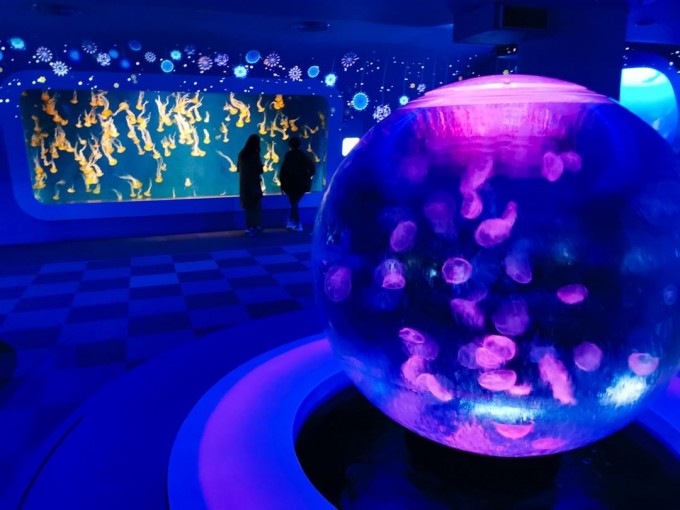
This aquarium stands near the base of the bridge to Enoshima, so it is not on the island itself, but everyone treats it as Enoshima's aquarium. Its huge Sagami Bay tank recreates the bay and holds a school of about 8,000 sardines that reaches to the ceiling. In the Jellyfish Fantasy Hall, jellyfish drift slowly under soft purple light, a calm and romantic room. Spring to autumn is the best time for the outdoor dolphin shows.
Ryuko-ji Katase
This temple stands on the old Tatsunokuchi execution ground, where the monk Nichiren was brought to be beheaded. Legend says a light like a full moon flew in from Enoshima and blinded the executioner, so the execution was called off. His earthen cell remains. On a summer evening each year, about 5,000 candlelit bamboo lanterns line the way from the Nio Gate to the five-story pagoda. It is three minutes on foot from Enoshima Station.
Katase Higashihama Beach Katase
One of the oldest swimming beaches in Japan, with Enoshima right in front of you, the island on your right and the Miura Peninsula on your left. The water is calm and shallow for a long way out, so it suits small children. In season, many beach huts and food stands open. Barbecues, camping and your own fireworks are not allowed. It is about three minutes on foot from Katase-Enoshima Station.
On Enoshima Island
Enoshima Sea Candle Enoshima Island
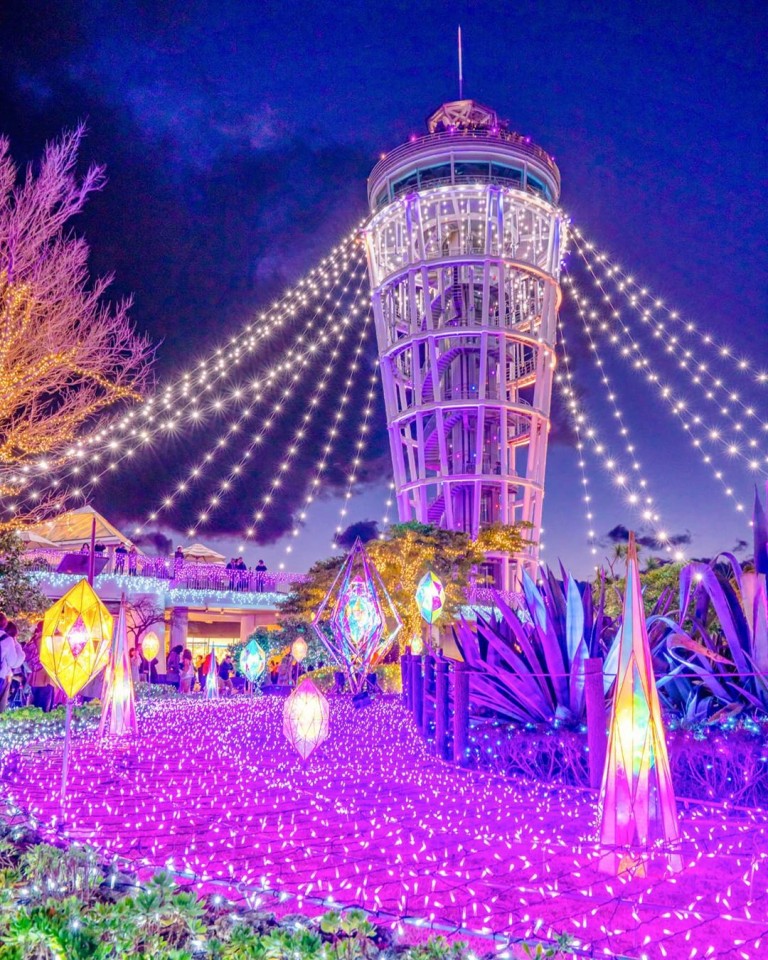
The observation lighthouse at the top of the island is the symbol of Enoshima and can be seen from far off the island. After dark it is lit up, and the lights shine both above you and at your feet, so it is a classic date spot. Come for the sunset and stay for the night view. There is a special light-up in the Christmas season, and on clear nights you may see stars once the lights go off.
Enoshima Samuel Cocking Garden Enoshima Island
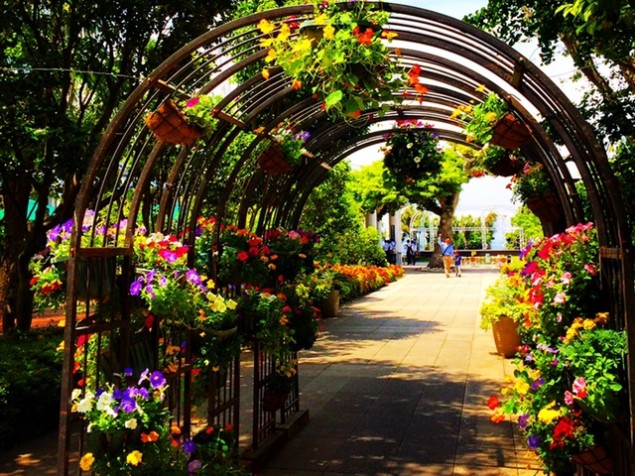
The garden around the Sea Candle mixes Japanese and Western styles and many kinds of plants, and there is a combined ticket with the lighthouse. In January it holds a popular winter tulip event, with about 20,000 tulips that bloom in the cold season, lit up in the evening at some times of the season.
Enoshima Escar Enoshima Island
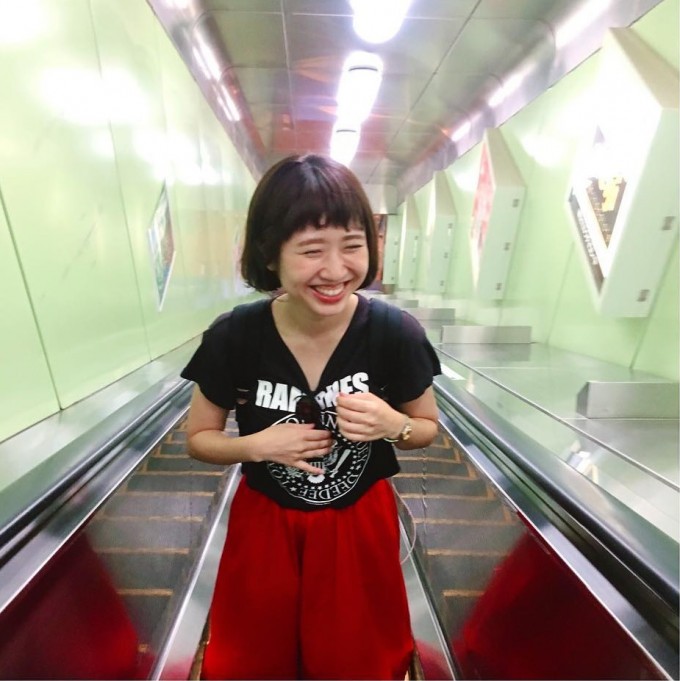
Escar is short for escalator. This paid escalator takes you to the top of the island in just four minutes, compared with 254 steps and about 20 minutes on foot. It runs in three sections, and you can buy a ticket for all of them or only part of the way. It only goes up, so you walk back down. Set tickets with the Sea Candle are sold, as is the eno=pass, a one-day pass for the island's attractions.
Enoshima Shrine Enoshima Island
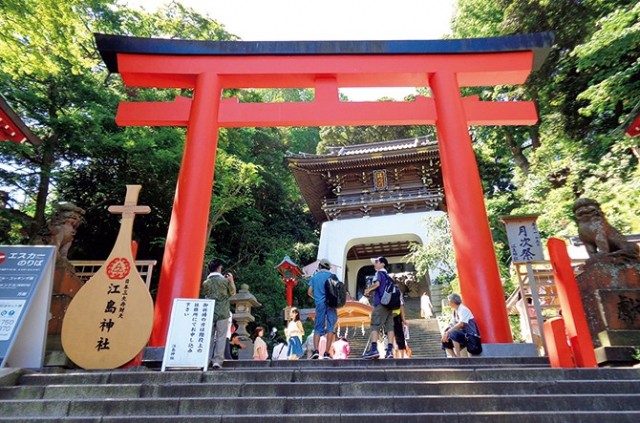
The best-known power spot in Shonan honors Benzaiten, a goddess of the sea and water who is also said to bring happiness and wealth and to help with skill in the arts. Three sister goddesses are enshrined at its three shrines, Okutsunomiya, Nakatsunomiya and Hetsunomiya. In recent years it has become well known as a place to pray for love. It is about 15 minutes on foot from Enoshima Station.
Enoshima Iwaya Caves Enoshima Island
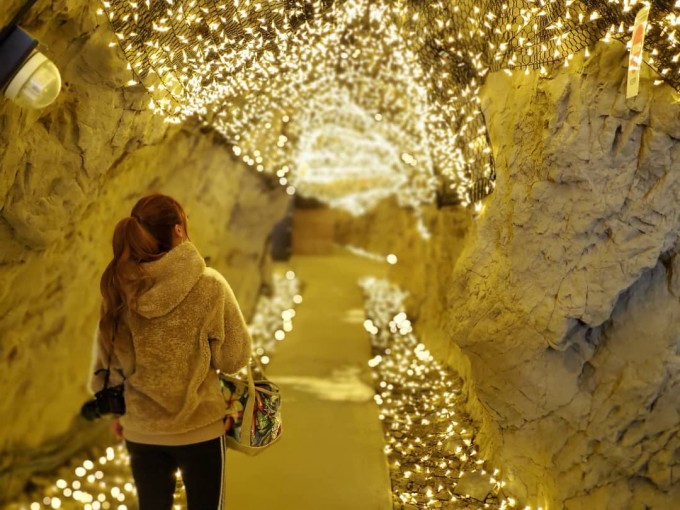
These caves were carved by waves over a very long time. There are two, the first and second caves, with lighting and sound inside that create a mysterious mood, plus displays of Enoshima ukiyo-e prints and figures based on the island's dragon legend. They are known as a love spot: couples who visit are said never to break up.
Lovers' Hill and the Dragon Love Bell Enoshima Island
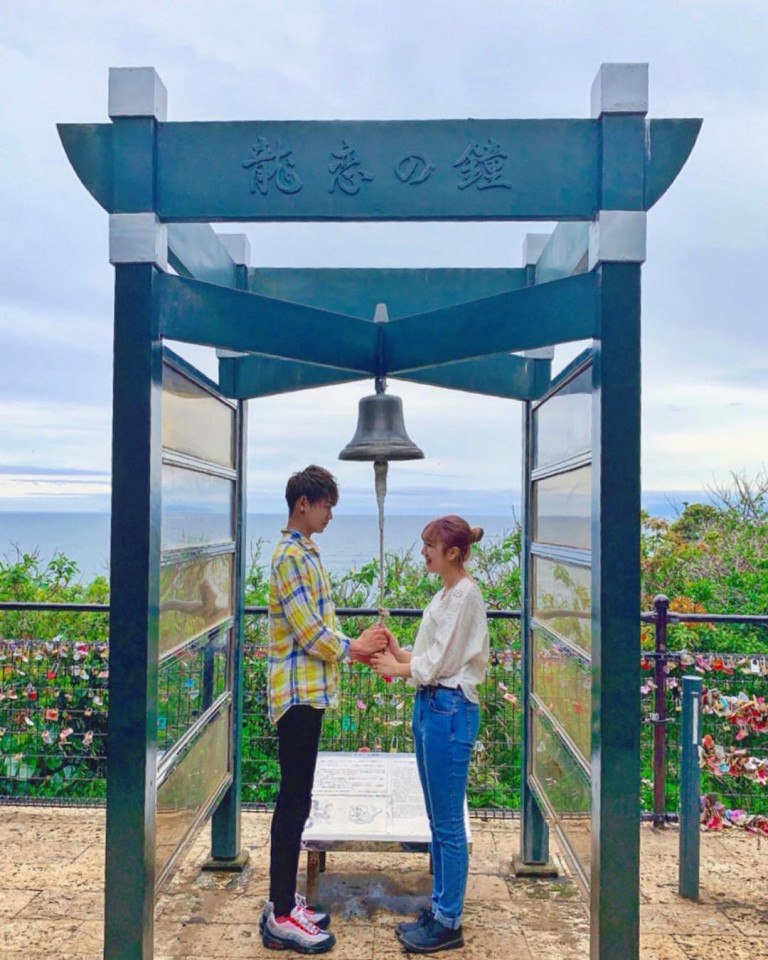
This viewpoint stands in the Ryunogaoka nature forest, just before Okutsunomiya of Enoshima Shrine, and the views are excellent. It is based on Enoshima's old legend of a heavenly maiden and a five-headed dragon. Couples ring the bell, then write their names on a padlock sold at the shop nearby and lock it to the fence, which is now covered with locks, to pray for lasting love.
Chigogafuchi Enoshima Island
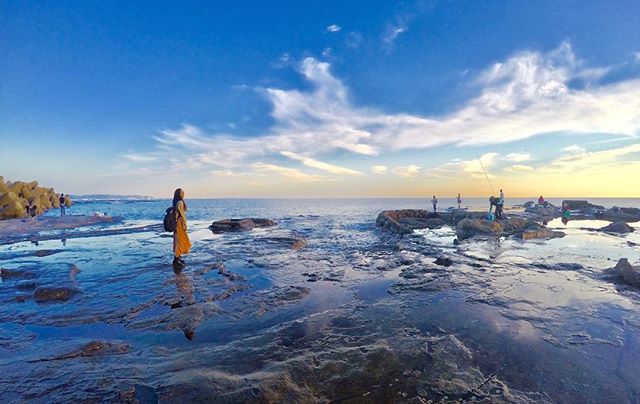
A flat rock shelf on the edge of the island that rose out of the sea. The sunset here is famous and was chosen as one of Kanagawa's 50 best views, so stop on your way back and watch the sky turn red. On sunny days children catch small fish and crabs in the rock pools. The name comes from the sad love story of Shiragiku, a young temple page from Kamakura, which later became a kabuki play.
Tips for your trip
The island has long stairs and a lot of walking, so wear comfortable shoes, or use the Escar to save your legs on the way up. The Iwaya Caves and Chigogafuchi are about 40 to 45 minutes on foot from the stations, so leave enough time if you want to catch the sunset.
Shirasu, or whitebait, is Enoshima's local specialty, and you can even find it in Italian dishes such as whitebait pizza and pasta. You will also find cafes with sea views both near the stations and on the island.
The places on a map
Hours, prices and events change. Check each place's official website before you go.
More travel guides
 Tokyo Sightseeing by Area: 40 Classic Sights and Lesser-Known Spots from Asakusa to Odaiba40 placesTokyo has much more to see than Skytree, Tokyo Tower and Asakusa. This guide works through six of the city's main…
 Nagoya: 40 Best Places to Visit, from Nagoya Castle and Atsuta Jingu to Osu40 placesNagoya is one of Japan's biggest cities, yet many visitors don't know how much it has to see. Alongside its famous…
 Chichibu: 40 Best Places to Visit, from Nagatoro River Boats and Mitsumine Shrine to Moss Phlox and Icicles40 placesChichibu, the largest city in Saitama Prefecture, is about 90 minutes from central Tokyo. Most of the area is national…
 Niigata Prefecture: 40 Best Places to Visit, from Classic Sights to Hidden Gems40 placesNiigata Prefecture stretches a long way from north to south, and each area has its own scenery, climate and food. The…
 Nagasaki Prefecture: 40 Best Places to Visit, from Unzen Hot Springs to Hirado and Nagasaki City40 placesNagasaki grew up as a port open to the outside world, and the culture of those days still shapes its streets, churches…
 Fukuoka Prefecture: 40 Places to Visit in Kitakyushu, Chikuho and Around Fukuoka City40 placesFukuoka Prefecture is roughly divided into four areas, Kitakyushu, Chikuho, Fukuoka and Chikugo, and each has its own…