
Kinkaku-ji (Golden Pavilion)
Zen temple · Kita, Kyoto
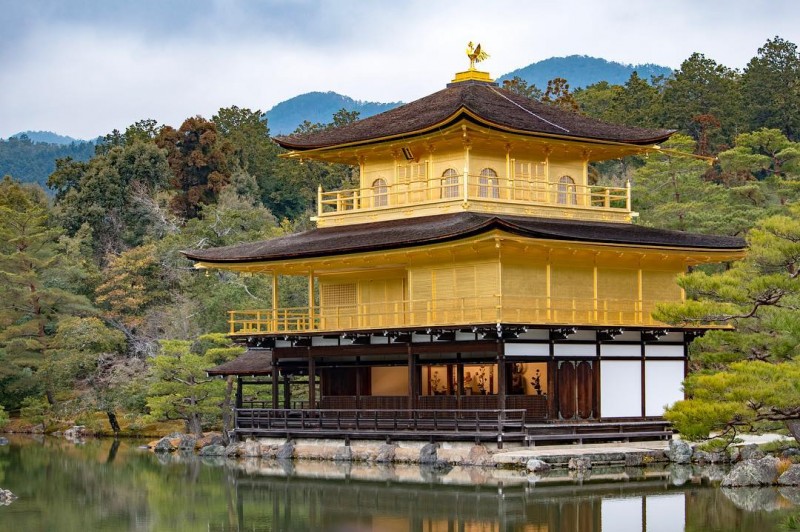 photo by @akira._0211
Kinkaku-ji, officially Rokuon-ji, is the temple in northern Kyoto famous for its pavilion covered in gold leaf. It was built at the order of Ashikaga Yoshimitsu, the third Ashikaga shogun, and was registered as a UNESCO World Heritage Site in 1994. The shining pavilion reflected in its pond draws visitors all year, and the garden holds quieter sights that many people walk straight past.
Good to know
- Japanese name
- 金閣寺(鹿苑寺)
- Address
- 京都府京都市北区金閣寺町1In Japanese, to show a taxi driver or type into a map app.
- Nearest station
- Kitano-Hakubaicho Station
- Access
- About 3 minutes on foot from the Kinkakuji-michi city bus stop
- Hours
- 9:00–17:00
- Closed
- Open every day
- Admission
- Adults and high school students ¥400, elementary and junior high students ¥300
- Official website
- shokoku-ji.jp/k_about.html
Hours and prices can change. Check the official website before you go.
The Golden Pavilion
The temple began in 1397, when Yoshimitsu acquired the land from the Saionji family and built his Kitayama villa. After his death it became a Zen temple, as his will directed, and took its name from his Buddhist name. Today it is a sub-temple of Shokoku-ji. Strictly speaking, Kinkaku is the Shariden, or relic hall, while Kinkaku-ji means the whole temple.
The original pavilion was burned down by a trainee monk in 1950, and the building you see today was rebuilt in 1955. Its second and third floors are covered in gold leaf, and a golden phoenix sits on the roof. It shines on clear days, but rain and snow give it a quieter beauty of its own.
Mirror Pond and the garden
Kyoko-chi, the Mirror Pond, is named for the way it reflects the pavilion; on clear days you can photograph the upside-down Golden Pavilion on the water. Islands such as Ashiwara-jima, Tsuru-jima and Kame-jima dot the pond, so walk around and find your own favorite angle. The pond-stroll garden is a Special Historic Site and Special Place of Scenic Beauty, and its stones, said to be gifts from feudal lords, reflect Yoshimitsu's power.
Sights people miss
Rikushu-no-matsu, a pine trained into the shape of a boat, is easy to miss while you gaze at the pavilion. Grown from a bonsai Yoshimitsu planted, it is over 600 years old and a natural monument of Kyoto. Nearby are two small springs: Ginga-sen, used for Yoshimitsu's tea water, and Ganka-sui, where he washed his hands. Sekka-tei, a thatched tea house rebuilt in 1874, is named for how fine the pavilion looks in the evening sun from its hill.
Tips and getting there
Kyoto summers are hot and humid, so drink plenty of water, and winters are cold, a little colder here than around Kyoto Station. City buses often run late in traffic, so leave extra time. From Kyoto Station, take city bus 101 or 205 to Kinkakuji-michi and walk about 3 minutes, or ride the Karasuma subway line to Kitaoji and catch a bus from the Kitaoji Bus Terminal to the same stop.
Nearby
 Domoto Insho Museum of Fine Arts550m
 Kitano Tenmangu1.0km
 Ryoan-ji Temple1.1km
 Imamiya Shrine1.4km
 Yokai Street1.6km
 Sarasa Nishijin1.6km
Featured in these guides
 40 Best Places to Visit in Kyoto, Picked by Locals: Famous Sights and Hidden Gems40 placesKyoto is packed with historic buildings, and visitors from all over Japan and abroad come to see them. The best-known…
 Kyoto Sightseeing: 32 Popular Spots, from the Classics to Unusual Temples and Shrines32 placesKyoto is one of Japan's best-known travel destinations, and visitors from all over the world come for its historic…snaplaceKyoto in March: 20 Places to Visit, Spring-Only Openings and What to Wear20 placesMarch in Kyoto brings the Doll Festival, the first cherry blossoms and the start of spring. The city is busy all year…
 Kyoto in November: 20 Autumn Leaf Spots, Festivals and Special Openings, Plus What to Wear20 placesNovember is one of the best months to see Kyoto. The weather is mild, the autumn leaves reach their peak, and temples…
Recently viewed
More in Kyoto
Yasaka Koshin-doBuddhist temple Nanzen-jiZen temple
 Fushimi Inari TaishaShinto shrine
 Mikane ShrineShinto shrineJishu ShrineShinto shrine
 Shimogamo ShrineShinto shrine
 Heian ShrineShinto shrineKyoto AquariumAquarium
 Kifune ShrineShinto shrine
 Yasaka ShrineShinto shrine
 Kurama-deraBuddhist temple
 Sanzen-inBuddhist temple