
Shoju-in Temple
Buddhist temple · Ujitawara, Kyoto
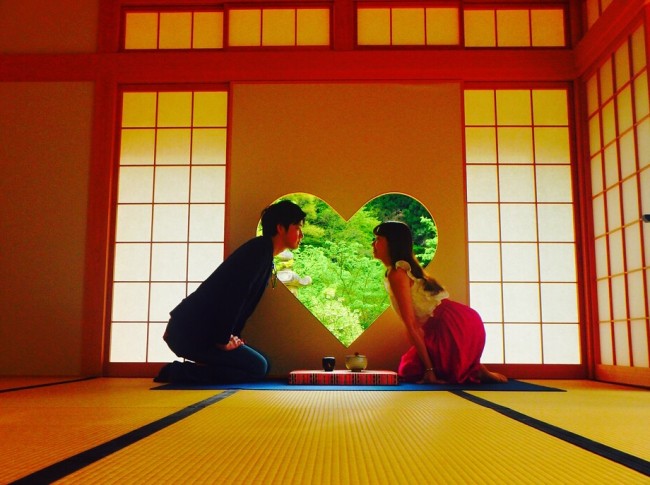 photo by @miho__saito
Shoju-in is a Shingon Buddhist temple in Ujitawara, a quiet tea-growing town in southern Kyoto Prefecture, said to have been founded about 800 years ago. It is famous for a heart-shaped window in its guest hall that frames the garden outside. The mix of a traditional tatami room and a heart shape works surprisingly well, and the view through it changes with each season, making it one of the most photographed temple windows in Kyoto.
Good to know
- Japanese name
- 正寿院
- Address
- 京都府綴喜郡宇治田原町奥山田川上149In Japanese, to show a taxi driver or type into a map app.
- Nearest station
- Keihan Uji Station
- Access
- About 30 min by Keihan bus from Keihan Uji Station to the Okuyamada stop, then about 10 min walk
- Hours
- 9:00–16:30
- Closed
- Open every day
- Admission
- Adults ¥500, junior high and high school students ¥300, elementary school students ¥200
- Official website
- shoujuin.boo.jp
Hours and prices can change. Check the official website before you go.
The heart window and the painted ceiling
The window is called inome-mado. Inome is a heart-like pattern that has long been used at Japanese shrines and temples as a charm against evil and fire. Through it you see the garden, and because the scenery changes with every season, the picture is never quite the same twice. When the sun is out, the window casts a heart-shaped shadow onto the tatami.
Look up, too. The ceiling of the same guest hall is covered with 160 painted panels on the theme of Japan and flowers, including maiko for each of the four seasons and the four guardian beasts, the Blue Dragon, White Tiger, Vermilion Bird and Black Tortoise, in the corners. Lying on your back is a good way to take in the whole grid.
Wind chimes, wishing cords and tea
In summer the temple hangs a great many wind chimes, inside and out, and it is often called the wind chime temple. They come in many designs, including patterns for all 47 prefectures, and you can paint your own chime to take home. Ujitawara is a little cooler than central Kyoto, which adds to the fresh feeling.
On the 8th of each month, visitors can receive a kanai-himo, a colorful cord tied so that its two sides form the character for a wish coming true. Tie it at the Jizo hall or keep it as a charm. Admission includes green tea with a lucky fuku-daruma sweet, served with a view of the garden.
Tips for visiting
The temple is not easy to reach and buses are infrequent, so check the route and timetable in advance and leave plenty of time. Even though it is cooler than the city, take precautions against the heat in summer. Ujitawara is tea country, so a matcha sweet nearby makes a good end to the trip.
Nearby
 Mimuroto-ji10.8km
 Byodo-in11.2km
 Nakamura Tokichi Honten11.7km
 Mount Wakakusa18.7km
 Fushimi Inari Taisha18.7km
 Todai-ji Temple19.4km
Featured in these guides
 40 Best Places to Visit in Kyoto, Picked by Locals: Famous Sights and Hidden Gems40 placesKyoto is packed with historic buildings, and visitors from all over Japan and abroad come to see them. The best-known…
 Kyoto Sightseeing: 32 Popular Spots, from the Classics to Unusual Temples and Shrines32 placesKyoto is one of Japan's best-known travel destinations, and visitors from all over the world come for its historic…
Recently viewed
More in Kyoto
Yasaka Koshin-doBuddhist temple Kitano TenmanguShinto shrine
 Nanzen-jiZen temple
 Mikane ShrineShinto shrine
 Jishu ShrineShinto shrine
 Shimogamo ShrineShinto shrine
 Heian ShrineShinto shrineKyoto AquariumAquarium
 Kifune ShrineShinto shrine
 Yasaka ShrineShinto shrine
 Kurama-deraBuddhist temple
 Sanzen-inBuddhist temple