
Kagawa Prefecture: 15 Best Places to Visit, from Ritsurin Garden and Konpira-san to the Art Island of Naoshima
15 places · Japanese version
Kagawa Prefecture is so famous for its noodles that it promotes itself as the udon prefecture, but there is much more to see than udon. Here are 15 classic sights, grouped by area: the gardens and castle of Takamatsu, the islands of Naoshima and Shodoshima in the Seto Inland Sea, the shrine and temple towns of western Kagawa, and the pine-lined coast of the east. You can even learn to make Sanuki udon yourself.
Takamatsu
Ritsurin Garden Takamatsu
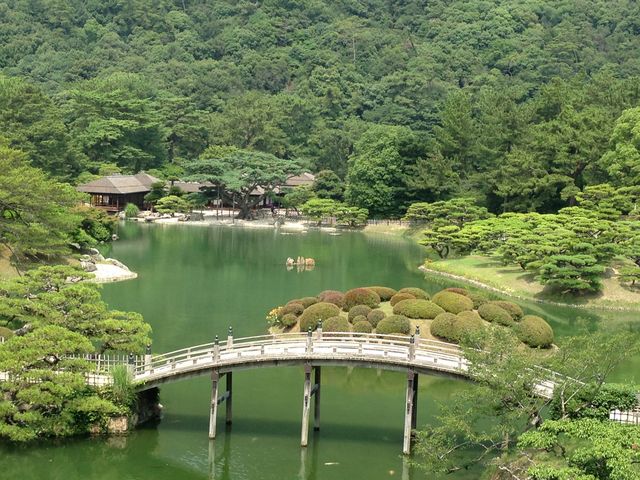
Ritsurin Garden is a daimyo garden and a national Special Place of Scenic Beauty. At about 75 hectares, it is the largest garden in Japan designated as a cultural property. Most of the country's top-rated gardens are meant to be viewed from one spot, but Ritsurin is a stroll garden, with six ponds and thirteen artificial hills laid out for changing views as you walk. The Michelin Green Guide gives it three stars, worth a special journey.
Takamatsu Castle Takamatsu
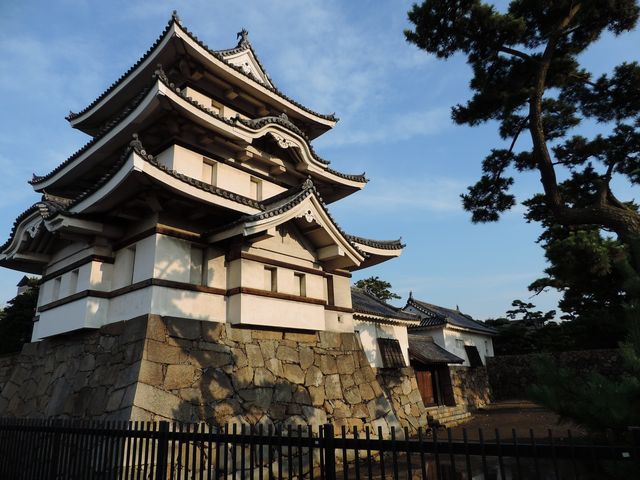
Also called Tamamo Castle, it was built by Ikoma Chikamasa, who became lord of Sanuki in 1587 after Toyotomi Hideyoshi conquered Shikoku. It was later rebuilt by Matsudaira Yorishige. Facing the Seto Inland Sea, its moats are filled with seawater, and sea bream and other sea fish swim in them. You can feed the sea bream, and except from December to February, take a boat around the inner moat for a close look at the base of the keep.
Shin-Yashima Aquarium Yashima
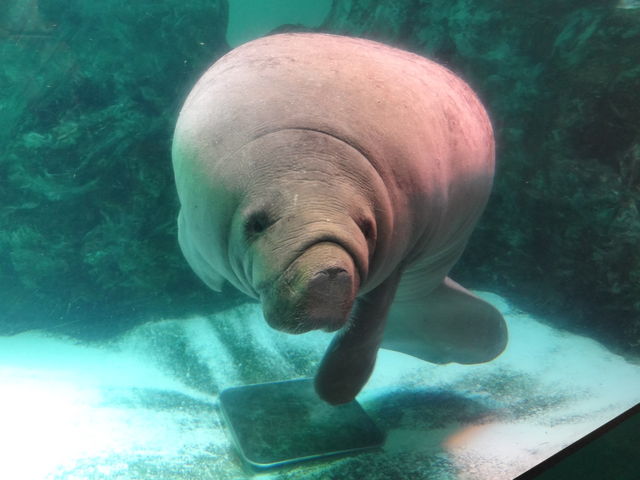
This rare aquarium sits on top of Yashima, a 290-meter plateau. About 80 tanks hold some 130 species, including Humboldt penguins, Baikal seals and Asian small-clawed otters, as well as an American manatee, the animal said to have inspired mermaid legends. Dolphin and seal shows are held every day.
Nakano Udon School Takamatsu
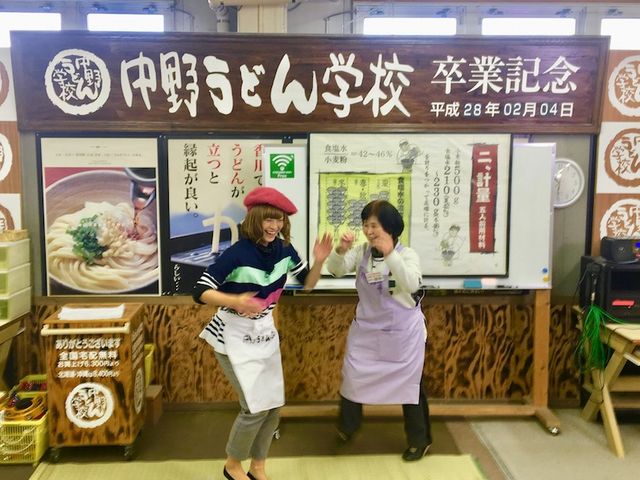
Kagawa means udon, and here you can make Sanuki udon by hand. A teacher guides you through every step: kneading the dough, treading on it with your feet for firmness, rolling it flat and cutting it with a knife. Then you eat your noodles in the dining room or take them home, and you receive a graduation scroll. Classes run between 9 am and 3 pm, and you must book in advance by phone or on the website.
Naoshima and Shodoshima
Naoshima Naoshima
Since the 1990s, the Benesse Art Site Naoshima project has placed contemporary art among the island's nature and culture, making it known as the art island. Chichu Art Museum is built mostly underground to protect the landscape, yet natural light pours in, with works by James Turrell, Walter De Maria and Claude Monet. The Lee Ufan Museum pairs the architect Tadao Ando with the artist Lee Ufan. Ferries take 20 minutes from Okayama and 50 minutes from Takamatsu.
Shodoshima Olive Park Shodoshima
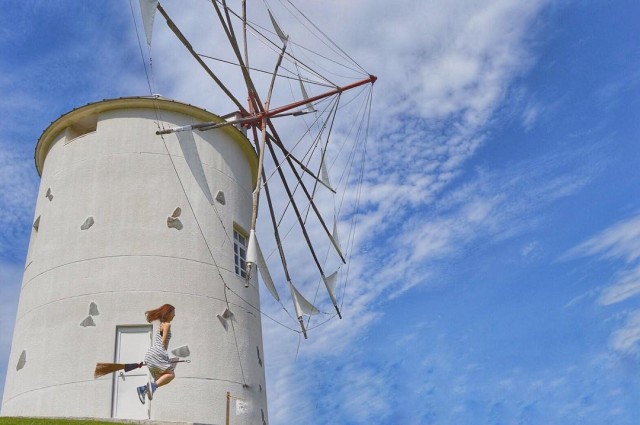
About 2,000 olive trees and more than 130 kinds of herbs grow here, on a hill looking down on the Seto Inland Sea. The Olive Memorial Hall has a gallery on olives, a shop and a restaurant using island food. The park was a filming location for the live-action Kiki's Delivery Service, and you can borrow a magic broom for free and pose like Kiki. The Greek windmill against the blue sea is the favorite photo spot.
Twenty-Four Eyes Movie Village Shodoshima
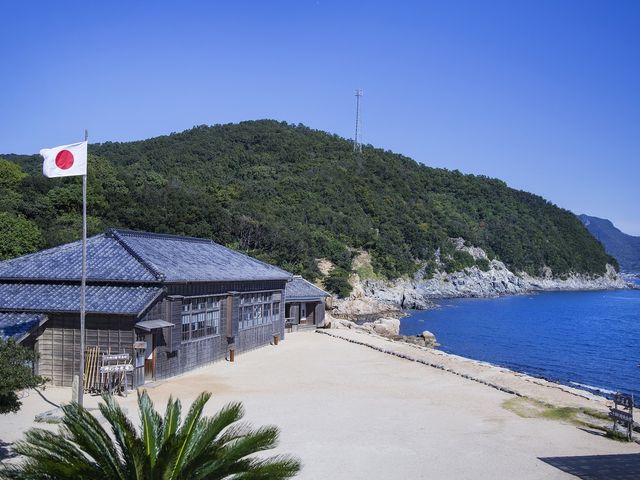
The open-air set built on Shodoshima for the 1987 film Twenty-Four Eyes still stands. There is a book cafe with books and DVDs about the film and the island, a gallery that screens the film all day, and a corner on the golden age of Japanese cinema in the 1950s. Next door, a cafe serves a nostalgic school lunch set on old-fashioned aluminum dishes.
Marukin Soy Sauce Museum Shodoshima
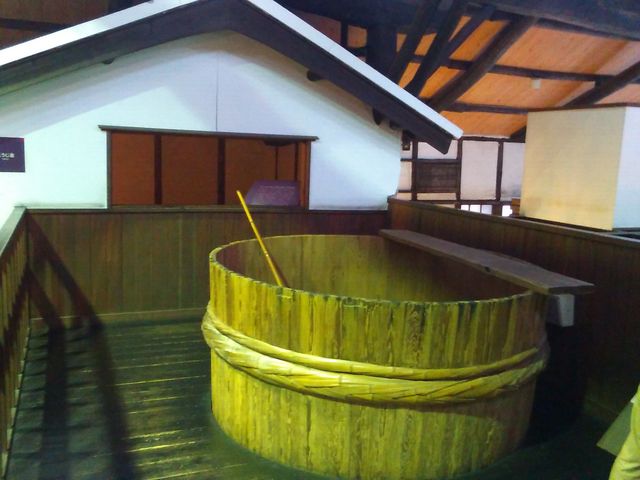
Built in 1987 for the 80th anniversary of Marukin Soy Sauce, this is the largest gassho-style building in Japan and a Registered Tangible Cultural Property. Inside are old soy sauce tools, such as a pole press and huge barrels, and an explanation of the process. From the terrace of the factory next door you can watch the pressing. The shop sells soy sauce soft-serve ice cream you can only get here.
Western Kagawa
Reoma Resort Marugame
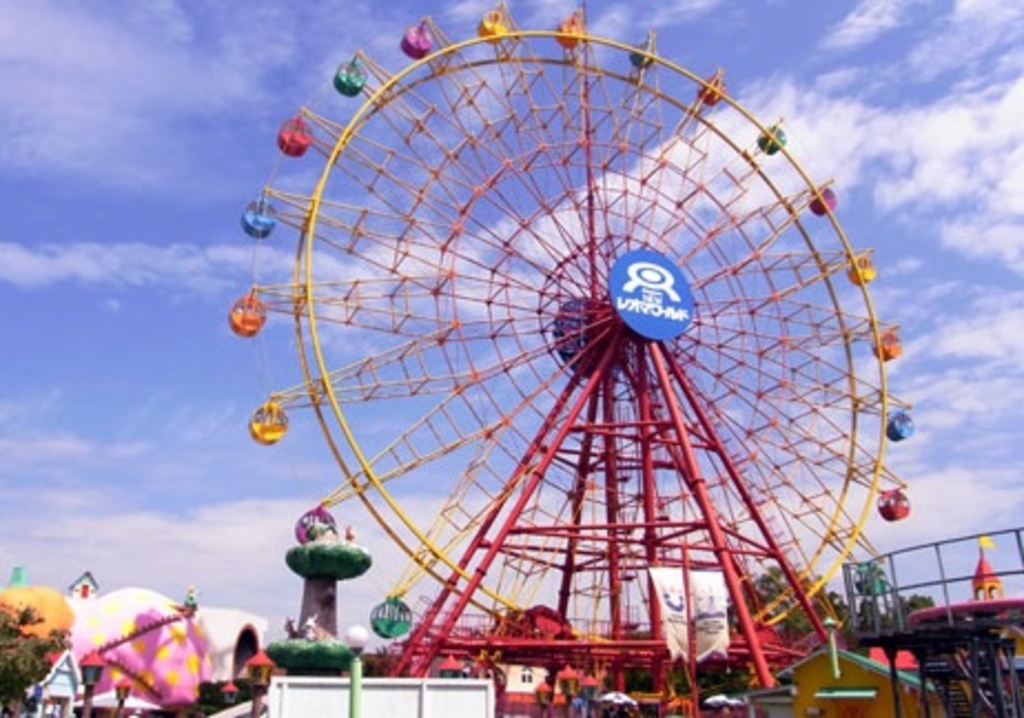
One of the largest theme parks in Shikoku, Reoma Resort has go-karts, a big Ferris wheel and other rides, plus parades with characters and performers and 3D projection mapping, more than you can enjoy in a day. Its flower world blooms with 420,000 plants of 100 kinds across the seasons, its illumination uses 2.5 million lights, and in summer only a large pool area opens with a 260-meter lazy river.
Zenigata Sunae (Coin-Shaped Sand Art) Kanonji
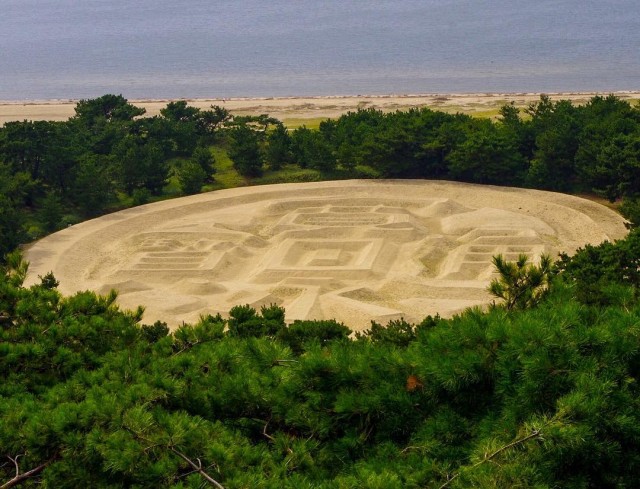
This giant sand drawing of an old Kan'ei Tsuho coin on Ariake Beach is 122 by 90 meters. From the hilltop lookout in Kotohiki Park it looks like a perfect circle. It is said to have been made in a single night in 1633 to welcome the lord Ikoma Takatoshi, and legend says that anyone who sees it will live long and never be short of money. It is lit up nightly until 10 pm, usually in green.
Kotohira-gu Shrine Kotohira
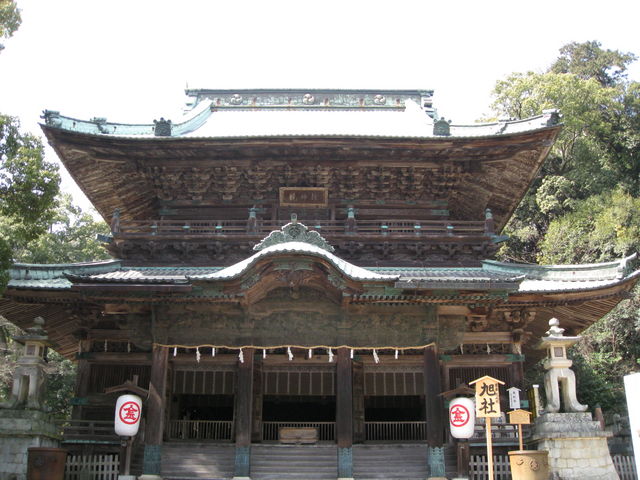
Known since old times as Konpira-san of Sanuki, this shrine halfway up Mount Zozu honors Omononushi no Mikoto and Emperor Sutoku and is revered by sailors and fishermen as a guardian of the sea. The stone stairway is long: 785 steps to the main shrine and 1,368 to the inner shrine. The grounds hold a treasure hall and a study hall that is an Important Cultural Property, and udon shops and souvenir stores line both sides of the approach.
Sanuki Manno Park Manno
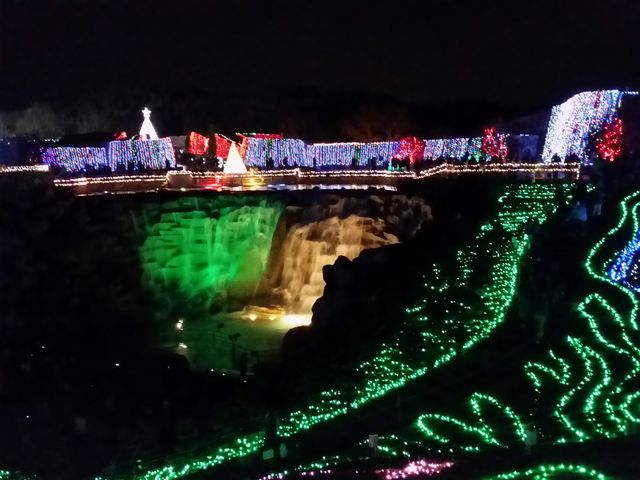
The only national government park in Shikoku, it lies next to Mannoike, the largest irrigation pond in Japan. Big play areas for children include a bouncy dome and a water play plaza, and there is one of the largest auto campsites in Shikoku. From November to January, a winter illumination lights up the park, with a tower of 4,900 champagne glasses and a 9-meter illuminated waterfall.
Zentsu-ji Temple Zentsuji
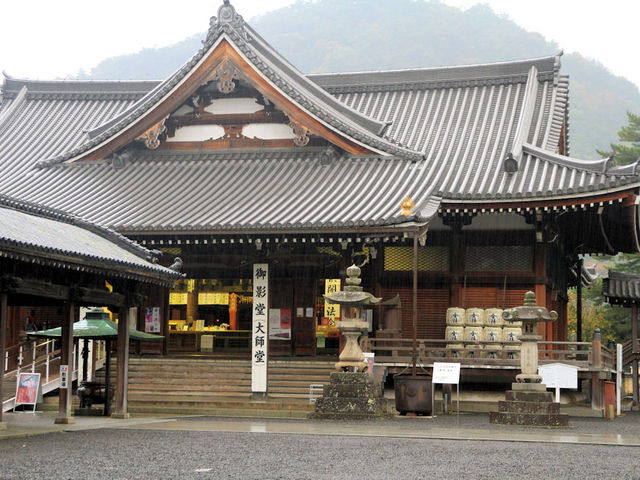
Temple number 75 of the Shikoku 88 Temple Pilgrimage, Zentsu-ji is one of the three great sacred sites of Kobo Daishi, along with Mount Koya and To-ji in Kyoto. He is said to have modeled it on the temple in Chang'an where his teacher lived, and named it after his father. The main hall, rebuilt in 1699 after a fire, is an Important Cultural Property. A free sutra-copying session is held on the 21st of every month from 10 am.
Eastern Kagawa
Shirotori Zoo Higashikagawa
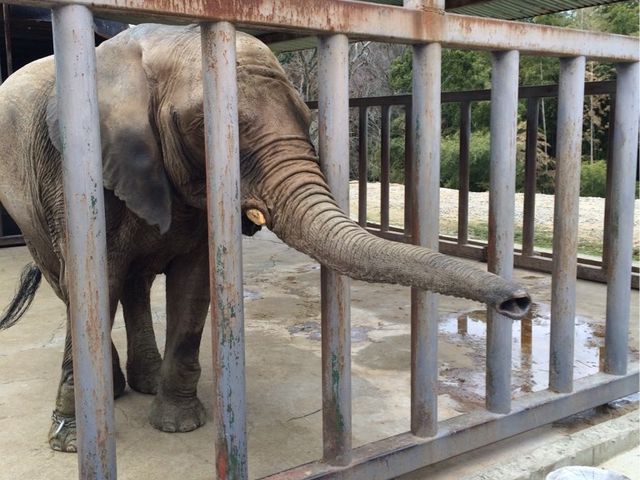
Shirotori Zoo has about 300 animals of 50 species, from lions and zebras to capybaras, and is known for its many white tigers, which are rare in Japan. Lots of animals roam free, with chickens wandering the grounds and peacocks walking as far as the parking lot. Apart from the big predators, you can touch and feed the animals, so you get very close. There are also animal shows.
Tsuda no Matsubara Sanuki
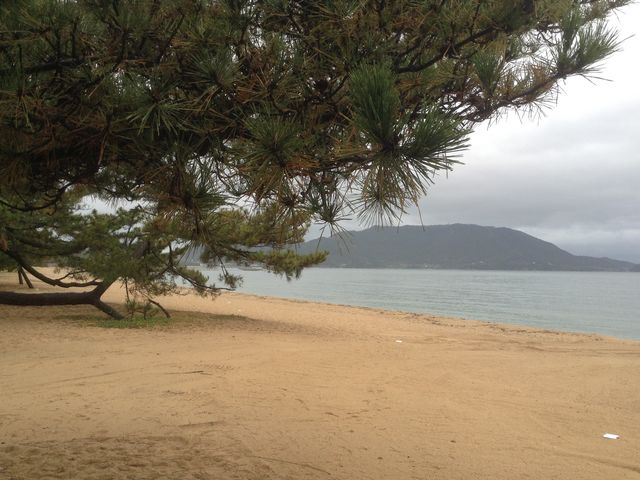
These pines were planted in the Edo period as a windbreak for a Hachiman shrine, and today they stretch about 1 kilometer. Blue sea, green pines and white sand make a beautiful contrast, and it is one of Japan's 100 best beaches. It is popular as a power spot for finding love, with the Seven Lucky Gods, a wish-granting bridge and a pine whose roots are joined. Its swimming beach is the largest in Kagawa and busy every summer.
The places on a map
Hours, prices and events change. Check each place's official website before you go.
More travel guides
 Tokyo Sightseeing by Area: 40 Classic Sights and Lesser-Known Spots from Asakusa to Odaiba40 placesTokyo has much more to see than Skytree, Tokyo Tower and Asakusa. This guide works through six of the city's main…
 Nagoya: 40 Best Places to Visit, from Nagoya Castle and Atsuta Jingu to Osu40 placesNagoya is one of Japan's biggest cities, yet many visitors don't know how much it has to see. Alongside its famous…
 Chichibu: 40 Best Places to Visit, from Nagatoro River Boats and Mitsumine Shrine to Moss Phlox and Icicles40 placesChichibu, the largest city in Saitama Prefecture, is about 90 minutes from central Tokyo. Most of the area is national…
 Niigata Prefecture: 40 Best Places to Visit, from Classic Sights to Hidden Gems40 placesNiigata Prefecture stretches a long way from north to south, and each area has its own scenery, climate and food. The…
 Nagasaki Prefecture: 40 Best Places to Visit, from Unzen Hot Springs to Hirado and Nagasaki City40 placesNagasaki grew up as a port open to the outside world, and the culture of those days still shapes its streets, churches…
 Fukuoka Prefecture: 40 Places to Visit in Kitakyushu, Chikuho and Around Fukuoka City40 placesFukuoka Prefecture is roughly divided into four areas, Kitakyushu, Chikuho, Fukuoka and Chikugo, and each has its own…