
Tottori Prefecture: 15 Must-See Places, from the Sand Dunes to Mount Daisen
15 places · Japanese version
Tottori is best known for its sand dunes, but there is much more to see. Near the dunes you will find giant sand sculptures and a rocky coastline, and across the prefecture there are manga towns, a cliffside temple hall that is a National Treasure, shrines from Japanese myth and a radium hot spring. Here are 15 classic sights, grouped by area: Tottori City and the east, the central area around Kurayoshi and Misasa, and the west around Mount Daisen and Sakaiminato.
Tottori City and the East
Tottori Sand Dunes Tottori City
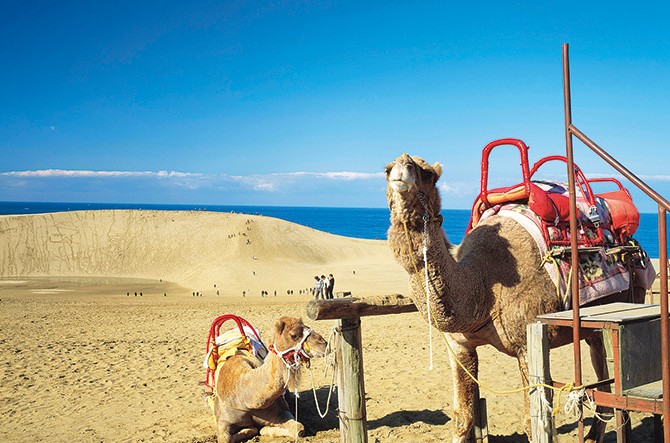
One of Japan's three great sand dunes and the classic sight of Tottori, stretching about 16 kilometers east to west and 2 kilometers north to south. The dunes are famous for wind ripples, the patterns the wind draws in the sand, along with sand curtains and sand pillars. From the ridge called Umanose you can see the sea and the dunes at once. Try hang gliding or paragliding, or a camel ride around the dunes.
The Sand Museum Tottori City
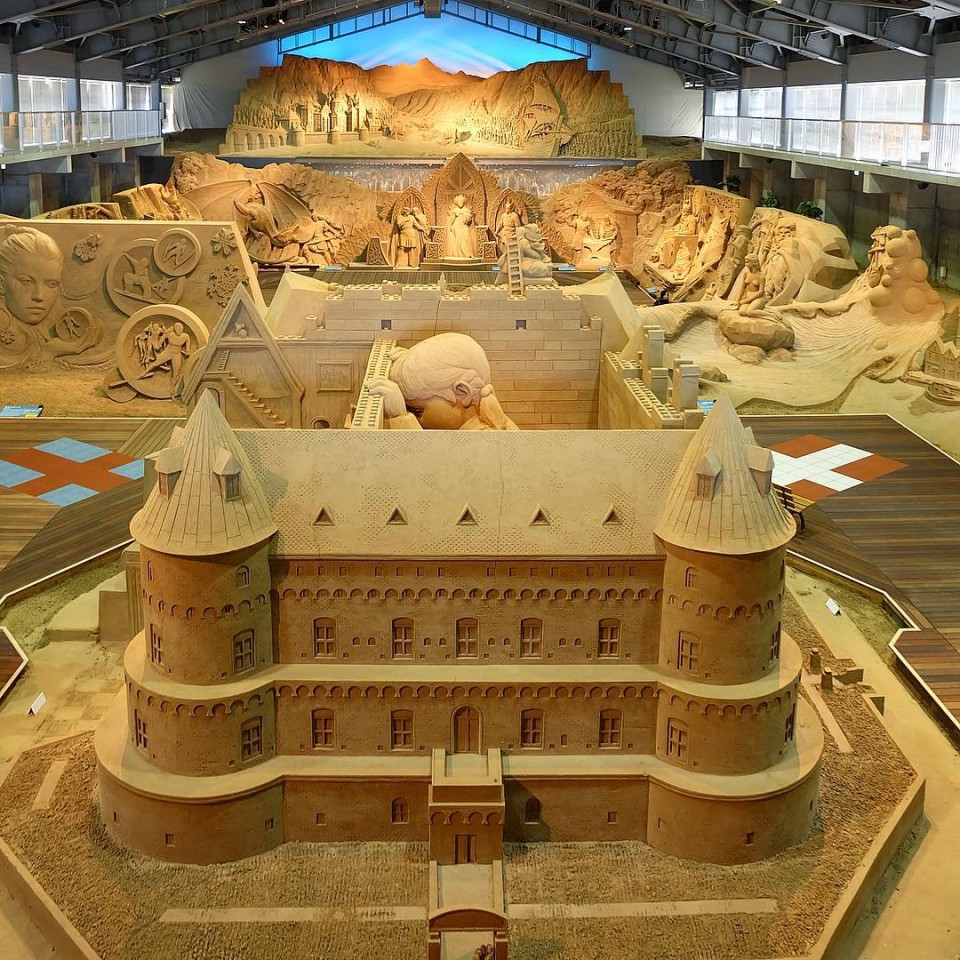
Near the Tottori Sand Dunes, this museum shows sand sculptures by artists from Japan and abroad. Under the theme of traveling the world in sand, each exhibition takes you to a different region, and the theme changes every year. The works are mostly indoors, so the weather does not matter, and they are lit up in the evening. An observation deck with a bell of happiness looks over the dunes. The galleries are barrier-free.
Uradome Coast Iwami
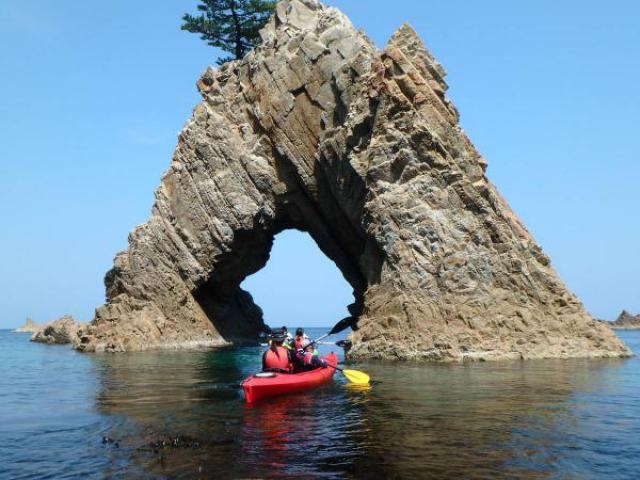
Part of the San'in Kaigan National Park and known as one of Japan's notable geoparks. This ria coast is lined with rocks of all shapes, sheer cliffs and mysterious caves. Sightseeing boats tour the islands, and you can also go sea kayaking, so it suits children and adults alike.
Hakuto Shrine Tottori City
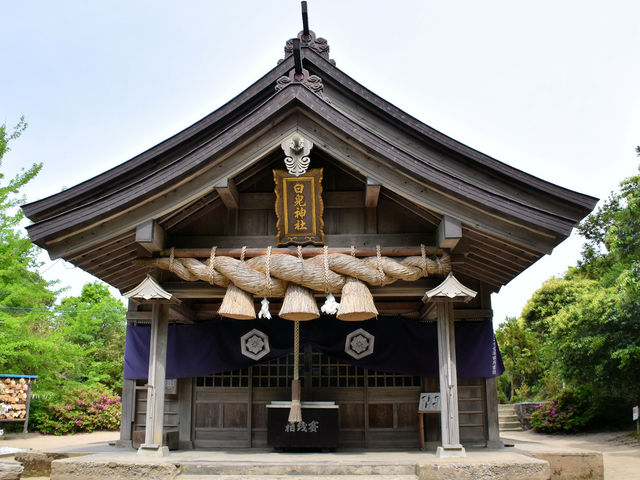
Near the Hakuto Coast, this shrine is the setting of the Hare of Inaba, a legend in the Kojiki in which the god Okuninushi helps a hare that has lost its fur. The hare is enshrined here, and you can still see the pond where it washed its wounds. Because the hare helped Okuninushi win the love of Princess Yagami, the shrine is known for matchmaking, with pink heart-shaped ema plaques, white rabbit fortunes and musubi-ishi stones.
Jinpukaku Tottori City
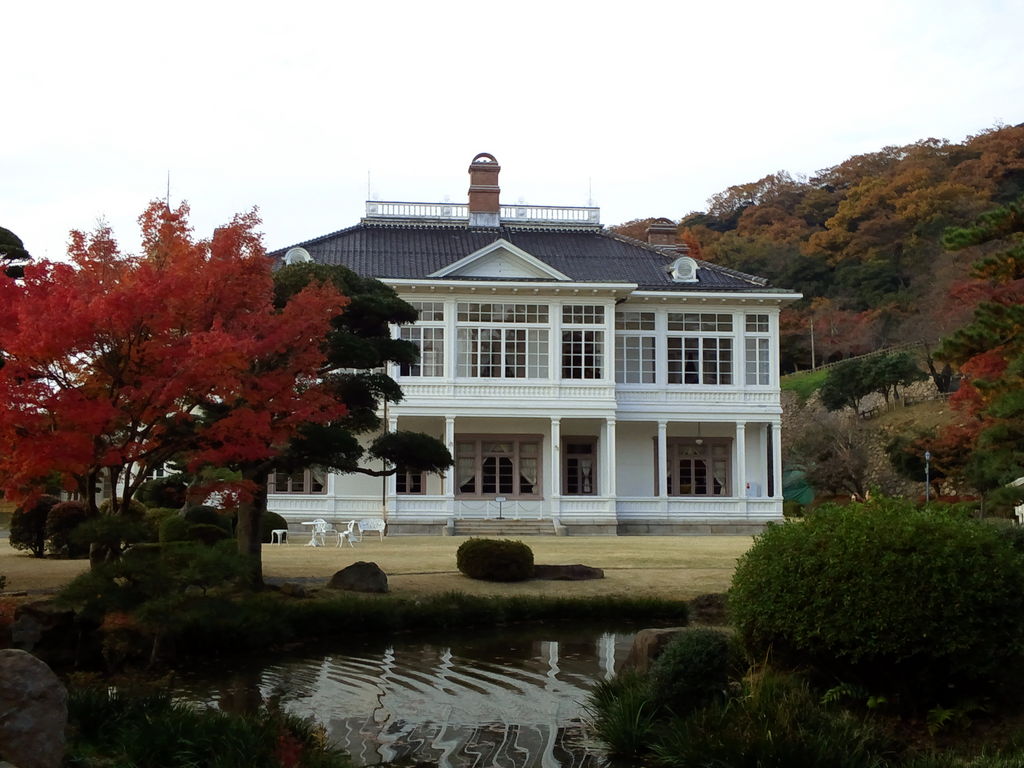
A French Renaissance-style mansion on the site of Tottori Castle in the center of Tottori City, once used as a villa by the Ikeda family, the lords of Tottori. It is a national Important Cultural Property and a rare example of Meiji-era Western architecture. The Crown Prince once stayed here, and the rooms are richly decorated, with mantelpieces and a spiral staircase. Stroll the Horyuin Garden, a traditional Japanese garden, and see exhibits on the Ikeda family.
Central Tottori: Hokuei, Kurayoshi and Misasa
Gosho Aoyama Manga Factory Hokuei
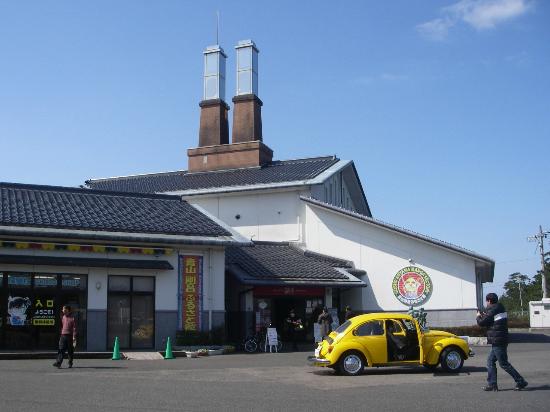
Gosho Aoyama, creator of Detective Conan, comes from Hokuei, and this museum in his hometown shows original drawings of the manga. It is full of hands-on tricks that spark your curiosity, and the shop sells Detective Conan goods. Around town, Conan Bridge and Conan Street have bronze statues and reliefs of the characters, so the manga is everywhere you look.
Mansho-ji Kurayoshi
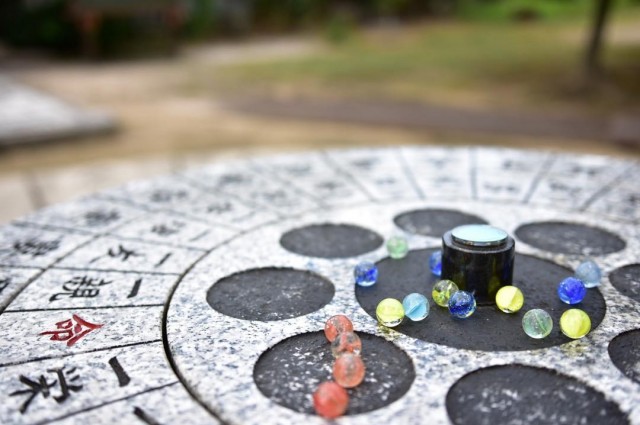
A Soto Zen temple founded in the Edo period, and the family temple of Arao Shima, chief retainer of the Ikeda domain of Tottori. In the grounds is the Kuyo star fortune board, about 8 meters across: find your star, buy its charm and read your fortune for personality, love and relationships. It is known for luck in love, and appears in Jiro Taniguchi's manga A Distant Neighborhood as the temple where the hero slips back in time.
Sanbutsu-ji Nageiredo Misasa
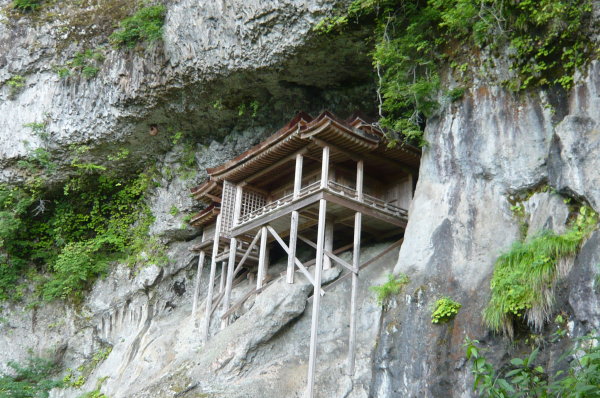
A temple hall set into a rock face in the cliff-hanging style of the Heian period, and a National Treasure. Legend says En no Ozunu threw the hall into the rock with his powers, hence the name Nageiredo, the thrown-in hall. You cannot go inside. To get closer, take the mountain trail, where straw sandals are sold; the area has many dangerous spots. You can also view it through a telescope at the worship point or from the opposite mountain.
Misasa Onsen Misasa
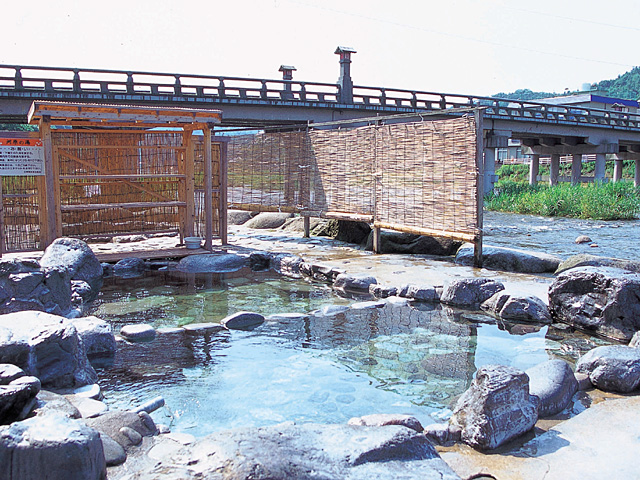
A hot spring town long used as a place to stay and heal in the San'in region. The water is a radium spring containing radon, and people come for stiff shoulders and back pain. Legend says a man named Okubo Samanosuke spared a white wolf, and the Bodhisattva Myoken then appeared in his dream and showed him where to find the spring.
Western Tottori: Mount Daisen and Sakaiminato
Mount Daisen Daisen
A mountain about 1,700 meters high, long loved as Hoki Fuji because it recalls Mt. Fuji, and counted among Japan's 100 famous mountains. The area around it is full of nature: camping, autumn leaves and gathering wild mountain vegetables are all popular. Many people climb it, and there are several trails to the top.
Daisen Makiba Milk no Sato Daisen
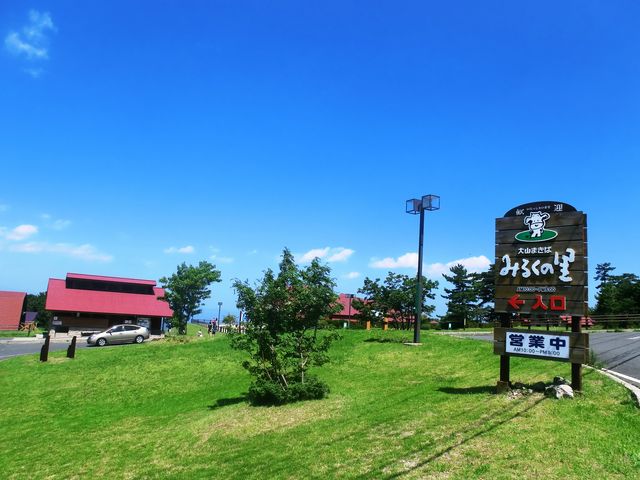
Tottori is known for dairy products such as Shirobara milk, much of it from farms at the foot of Mount Daisen. At this farm on the lower slopes, cows graze in peaceful pastures. A restaurant serves dishes made with fresh dairy products, the shop sells souvenirs, and sweets-making classes are held by reservation.
Tottori Hanakairo Flower Park Nanbu
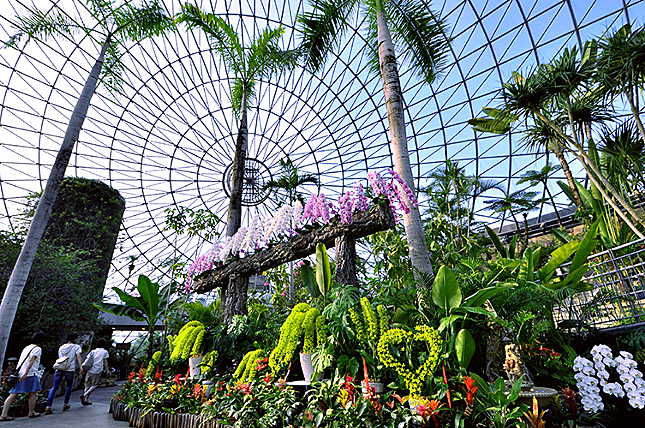
A flower park at the foot of Mount Daisen, with views of the mountain. The highlight is the Flower Dome, a greenhouse about 21 meters high showing more than 1,000 orchids and rare tropical plants, kept warm even in winter. A covered observation corridor circles the park, so you can walk around without an umbrella. There is also a Flower Valley inspired by Dutch gardens, a European garden and a floating flower bed with carp and medaka fish.
Daisen-ji Enryu-in Daisen
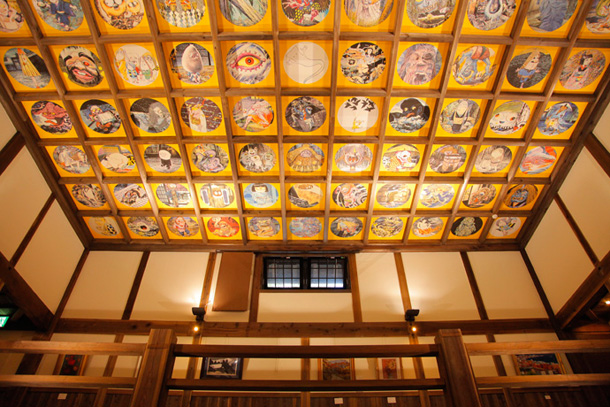
A Tendai temple whose main hall ceiling holds more than 100 paintings of yokai from GeGeGe no Kitaro, including Medama-oyaji. One of them, a crow tengu of sacred Mount Daisen, was drawn by Mizuki Shigeru for this temple. A popular way to see them is to lie on your back on the floor of the hall and look up. The temple hands out a booklet explaining the paintings.
Mizuki Shigeru Road Sakaiminato
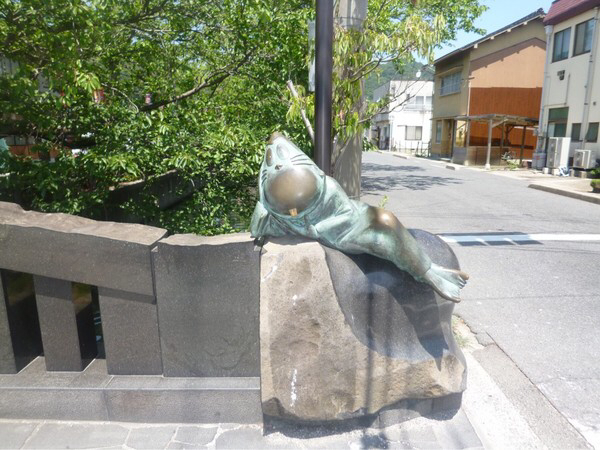
Sakaiminato is where Mizuki Shigeru, creator of GeGeGe no Kitaro, grew up, and this street in his honor runs from Sakaiminato Station to the Mizuki Shigeru Memorial Museum. It is lined with well over 150 bronze statues of yokai. Benches make it feel like a small park, so you can rest while hunting for your favorite yokai, and shops sell Kitaro-themed sweets.
Yokai Shrine Sakaiminato
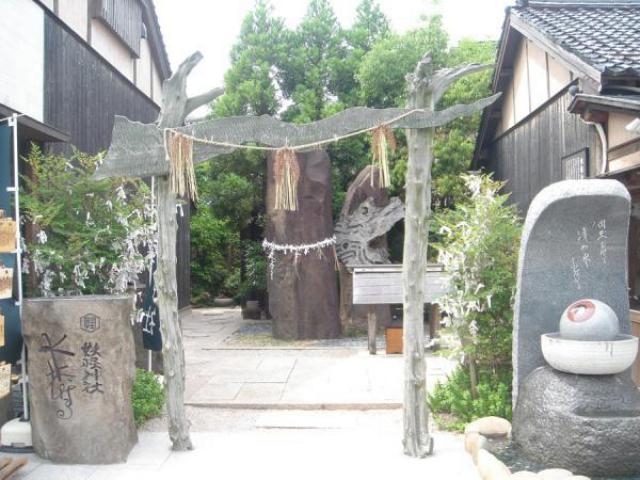
A shrine along Mizuki Shigeru Road, loved as the home of yokai. Look for the torii gate shaped like Ittan-momen, the flying cloth yokai, and the purifying water poured by Medama-oyaji. Weddings are also held here.
The places on a map
Hours, prices and events change. Check each place's official website before you go.
More travel guides
 Tokyo Sightseeing by Area: 40 Classic Sights and Lesser-Known Spots from Asakusa to Odaiba40 placesTokyo has much more to see than Skytree, Tokyo Tower and Asakusa. This guide works through six of the city's main…
 Nagoya: 40 Best Places to Visit, from Nagoya Castle and Atsuta Jingu to Osu40 placesNagoya is one of Japan's biggest cities, yet many visitors don't know how much it has to see. Alongside its famous…
 Chichibu: 40 Best Places to Visit, from Nagatoro River Boats and Mitsumine Shrine to Moss Phlox and Icicles40 placesChichibu, the largest city in Saitama Prefecture, is about 90 minutes from central Tokyo. Most of the area is national…
 Niigata Prefecture: 40 Best Places to Visit, from Classic Sights to Hidden Gems40 placesNiigata Prefecture stretches a long way from north to south, and each area has its own scenery, climate and food. The…
 Nagasaki Prefecture: 40 Best Places to Visit, from Unzen Hot Springs to Hirado and Nagasaki City40 placesNagasaki grew up as a port open to the outside world, and the culture of those days still shapes its streets, churches…
 Fukuoka Prefecture: 40 Places to Visit in Kitakyushu, Chikuho and Around Fukuoka City40 placesFukuoka Prefecture is roughly divided into four areas, Kitakyushu, Chikuho, Fukuoka and Chikugo, and each has its own…