
22 Best Places to Visit in Aomori: Nebuta, Hot Springs, Lakes and Castles
22 places · Japanese version
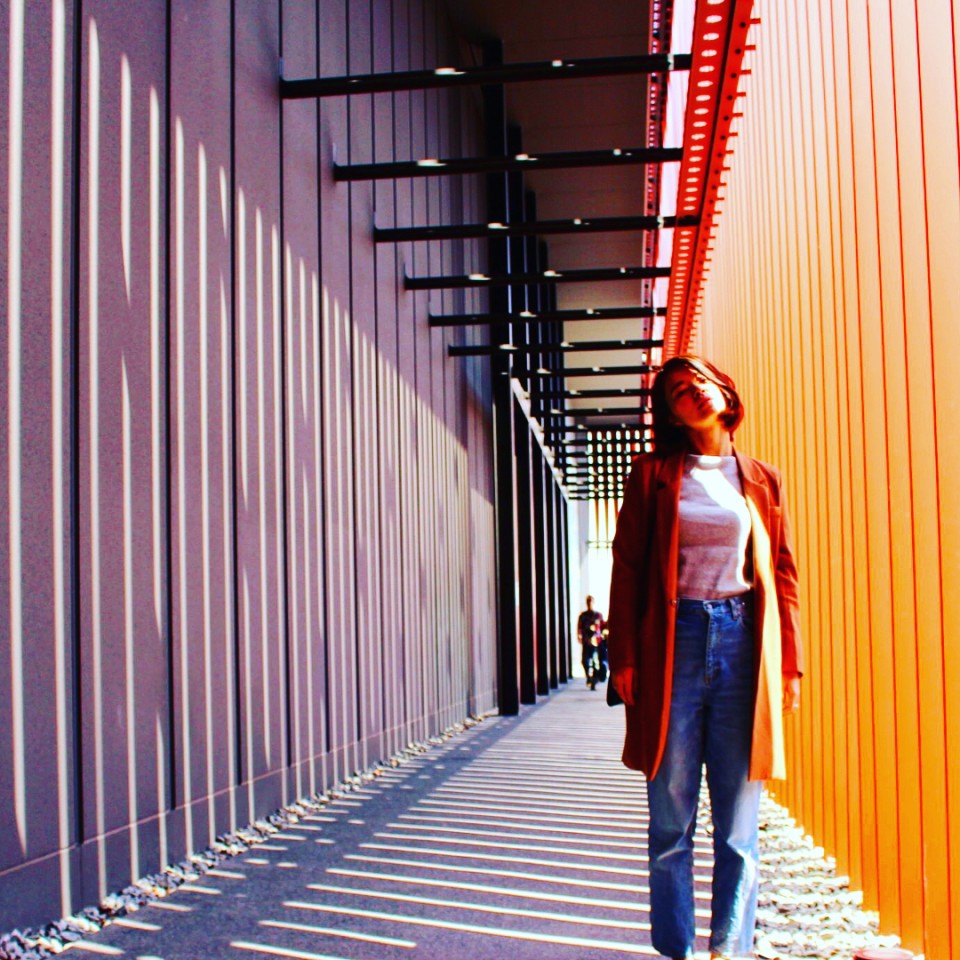
Aomori is famous for its apples, but there is much more to see: the Nebuta festival, the undersea Seikan Tunnel, ancient Jomon ruins, beech forests and mountain streams, and hot springs by the sea. This guide gathers 22 classic places worth a visit, grouped by area, from Aomori City and the Hakkoda mountains to Hirosaki and the Tsugaru Plain, the Tsugaru Peninsula, the Sea of Japan coast, and Towada and Hachinohe in the south.
Aomori City and the Hakkoda Mountains
Nebuta Museum Wa Rasse Aomori City
The Nebuta Festival, held every August, is Aomori's biggest festival, and at Wa Rasse you can experience it all year round. The festival floats carry huge, brightly colored figures made of paper over a frame, and here large nebuta are on display so you can see them up close. You can also try dancing like the haneto, the festival dancers, which is fun for the whole family.
Sannai-Maruyama Site Aomori City
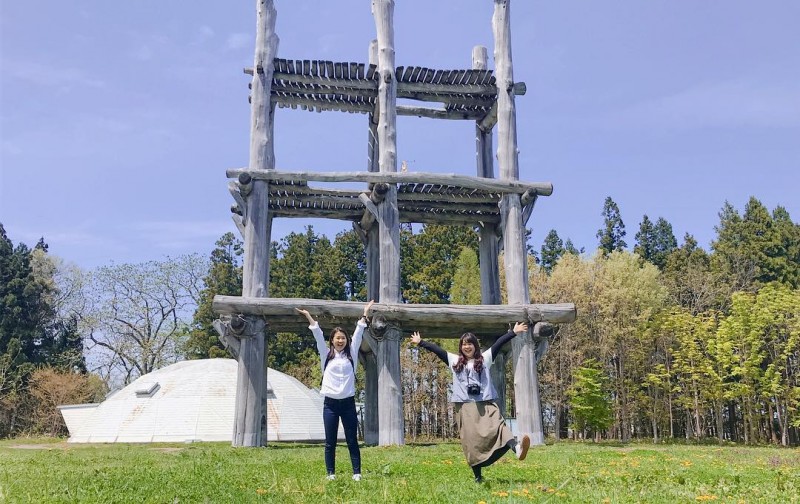
This is one of the largest Jomon-period settlement sites in Japan. You can see the post holes of a large pillar-supported building and step inside rebuilt pit dwellings. The Sanmaru Museum on site displays finds from the dig, such as green jade, a large flat clay figure about 30 centimeters tall, crystal arrowheads, chestnut wood from the pillar holes, and a small Jomon-era pouch about the size of a smartphone.
Aomori Museum of Art Aomori City
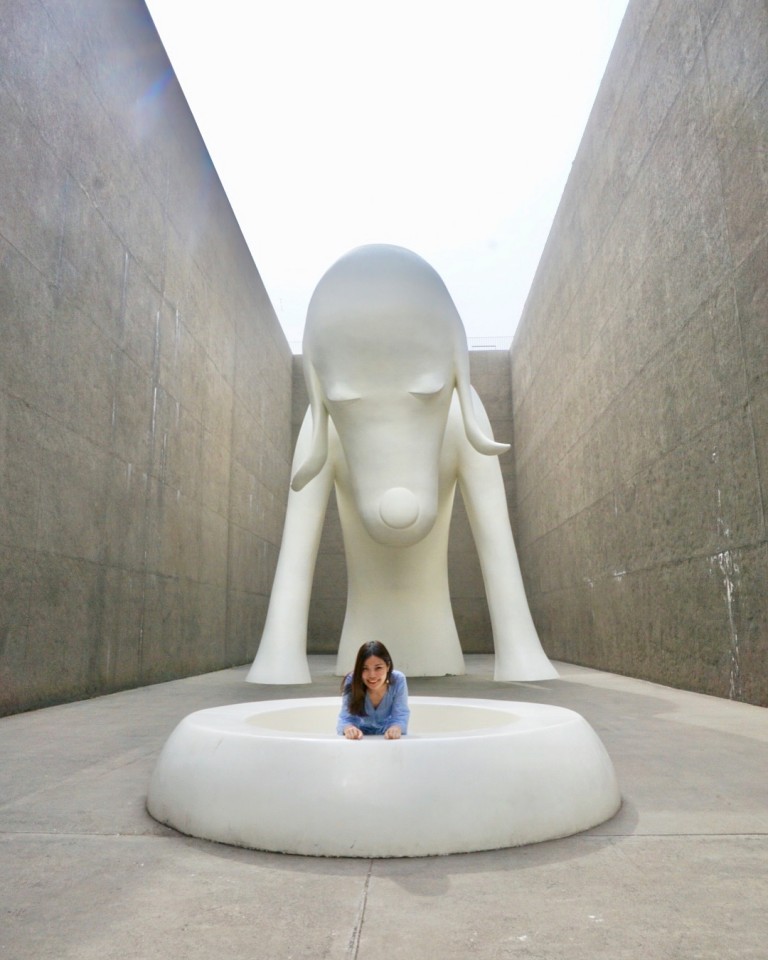
Next to the Sannai-Maruyama Site, this pure white museum was designed with ideas taken from the excavation. A large white dog sculpture, Aomori-ken, greets visitors. The museum's symbol mark, based on a tree and the letter a, appears in glowing blue neon on the outside, expressing blue trees growing together into a forest. Besides art, it hosts workshops for children, concerts and other events.
Asamushi Aquarium Aomori City
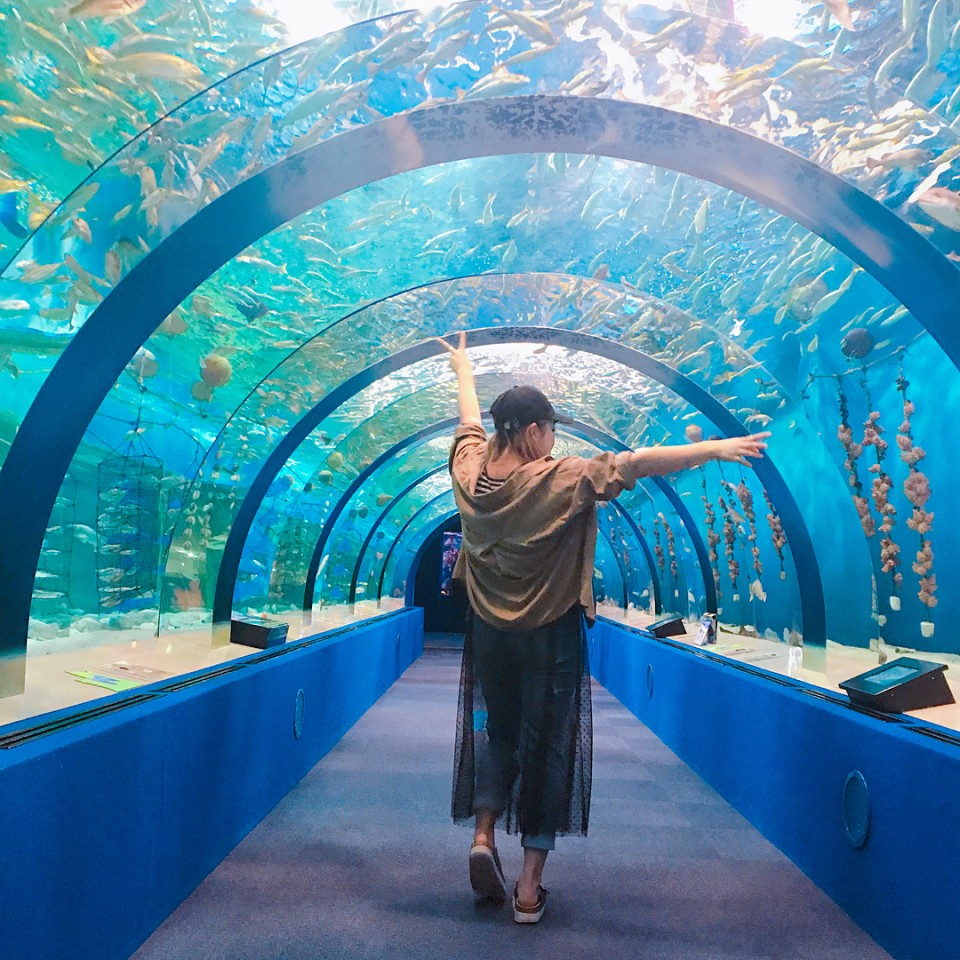
The aquarium aims to be a place to play, have fun and learn. First comes a 4-meter-deep undersea tunnel that recreates Mutsu Bay. At the dolphin show, special seats at the same spot as the trainers let you watch from their point of view. Hands-on tours let you feed sea turtles and even touch a giant isopod from the deep sea.
Aomori Tourist Apple Orchard Aomori City
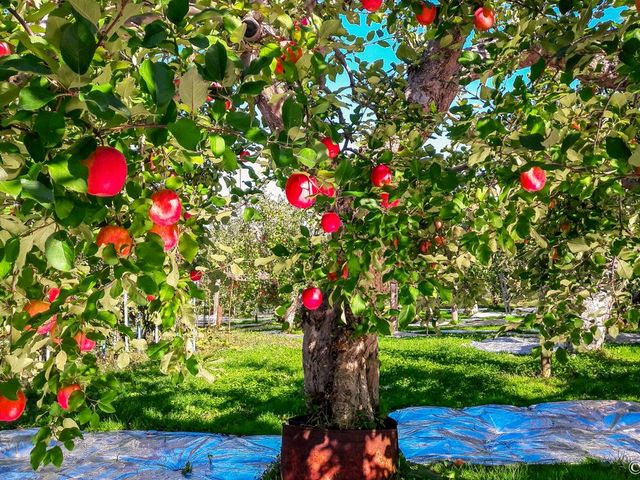
Aomori produces more apples than anywhere else in Japan, and this orchard sits at the foot of the Hakkoda mountains. The big difference between day and night temperatures here helps grow tasty apples. You can pick your own apples at a very reasonable price.
Hakkoda Mountains Hakkoda
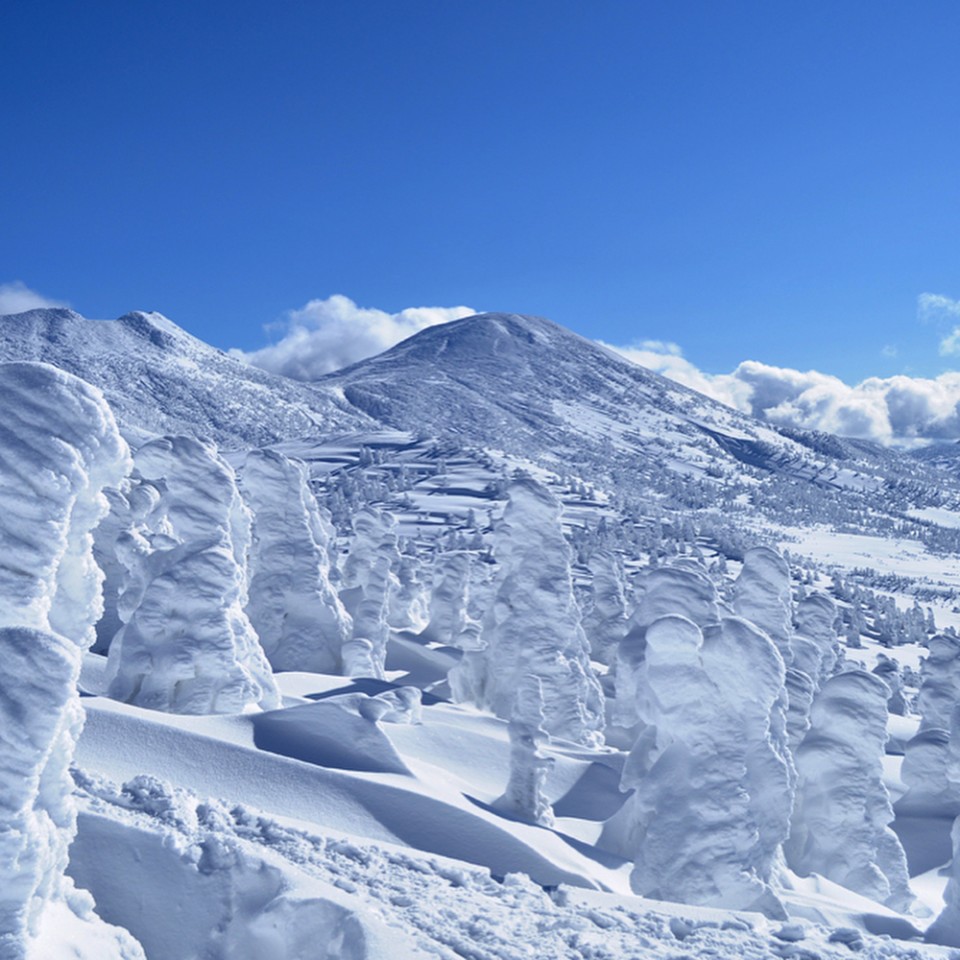
Hakkoda is not one mountain but the name for the range rising south of Aomori City. The highest peak is Hakkoda Odake at 1,584 meters, and Hakkoda is one of Japan's 100 Famous Mountains. Its broad wetlands change color with the seasons: fresh green, autumn leaves and snow. The Hakkoda Ropeway gives you about 10 minutes of mountain views from the air, and for a few days in mid-August it runs later for sunset views on clear days.
Sukayu Onsen Hakkoda
At 900 meters above sea level, Sukayu is the best-known hot spring in the Hakkoda area, with more than 300 years of history. Its famous Hiba Sennin-buro is a huge mixed-gender bath made of hiba wood, with times reserved for women only. People come for long healing stays, and the inn has a separate building for them where guests can cook for themselves.
Hirosaki and the Tsugaru Plain
Hirosaki Castle Hirosaki
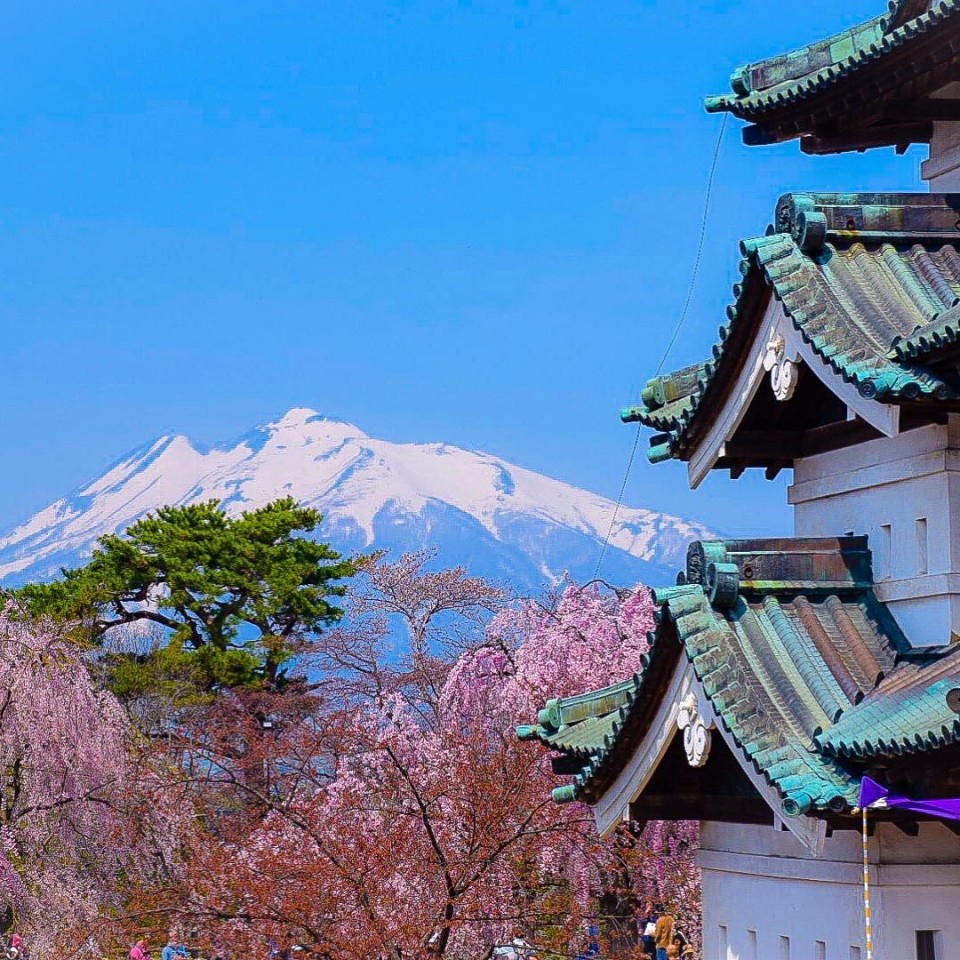
Planned by Tsugaru Tamenobu, who unified the Tsugaru region, the castle was built in 1611 by the second lord, Nobuhira. The main tower burned in 1627 and was rebuilt in 1810. It is a national Important Cultural Property and one of Aomori's best-known sights. From the tower you look over Hirosaki Park, one of Japan's top three cherry blossom spots, and during the yearly Hirosaki Cherry Blossom Festival the outer moat turns pink with fallen petals.
Seibien Garden Hirakawa
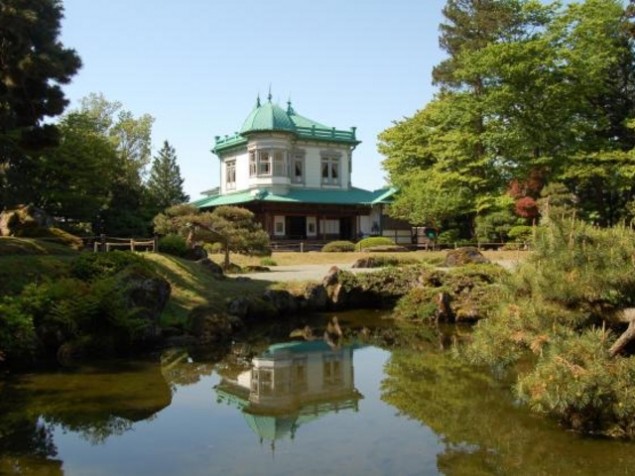
Seibien is a Kyoto-style garden laid out in the Meiji era by the garden designer Teiju Obata, in the Oishi Bugaku-ryu style unique to the Tsugaru region. It is a nationally designated Place of Scenic Beauty. In the southwest of the garden stands Seibikan, a beautiful building mixing Japanese and Western styles, said to be the model for the house in the Studio Ghibli film Arrietty.
Inakadate Rice Paddy Art Inakadate
Inakadate is a quiet farming village on the Tsugaru Plain, and its rice paddy art draws attention from around the world. Farmers plant rice of different colors to create giant pictures and letters, using the fields as a canvas. The look changes with the weather and the growth of the rice, and the best time is July to August, when the plants are tall and the colors are clear.
Tsugaru Kokeshi Museum Kuroishi
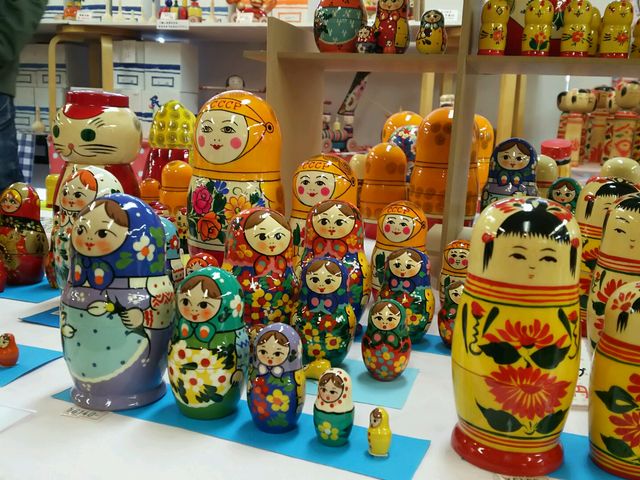
Kuroishi is the home of Tsugaru kokeshi, one of the 11 traditional styles of these wooden dolls. The museum displays about 4,000 traditional kokeshi, and you can take photos with a giant kokeshi 4.21 meters tall and a huge wooden daruma. Craftsmen demonstrate how kokeshi are made, and you can paint your own. The craft center next door has a free foot bath and serves Kuroishi tsuyu yakisoba.
Tsuru no Mai Bridge Tsuruta
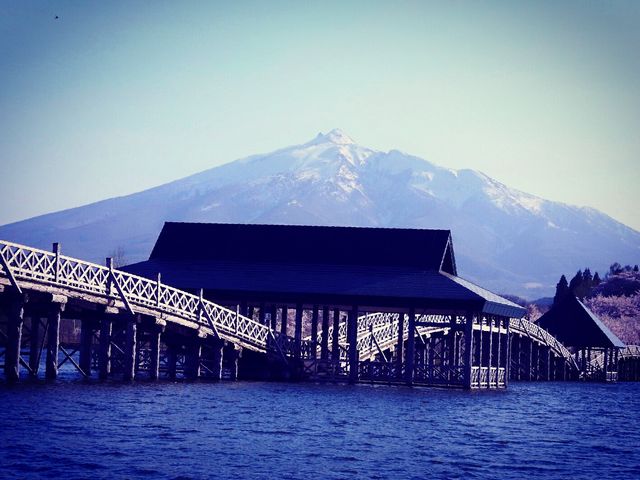
Spanning Lake Tsugaru Fujimi, this is the longest wooden triple-arch bridge in Japan, 300 meters long and built of local hiba wood. With Mount Iwaki behind it, the bridge is said to look like a crane about to take flight. Crossing it is said to bring a long life. At dawn and sunset its reflection on the lake makes the scene even more beautiful.
Kanagi and the Tsugaru Peninsula
Tsugaru Shamisen Kaikan Kanagi, Goshogawara
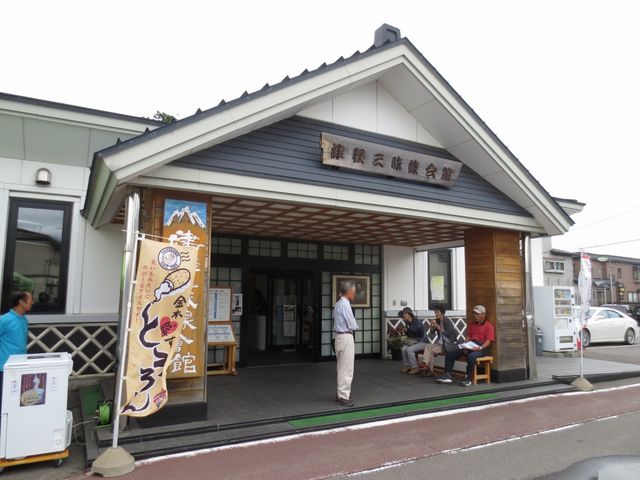
A 7-minute walk from Kanagi Station on the Tsugaru Railway, this hall offers live performances of the powerful Tsugaru shamisen. Videos introduce the history and folk arts of Kanagi, the birthplace of the Tsugaru shamisen. With a reservation, you can try playing the instrument under a professional player.
Dazai Osamu Memorial Hall Shayokan Kanagi, Goshogawara
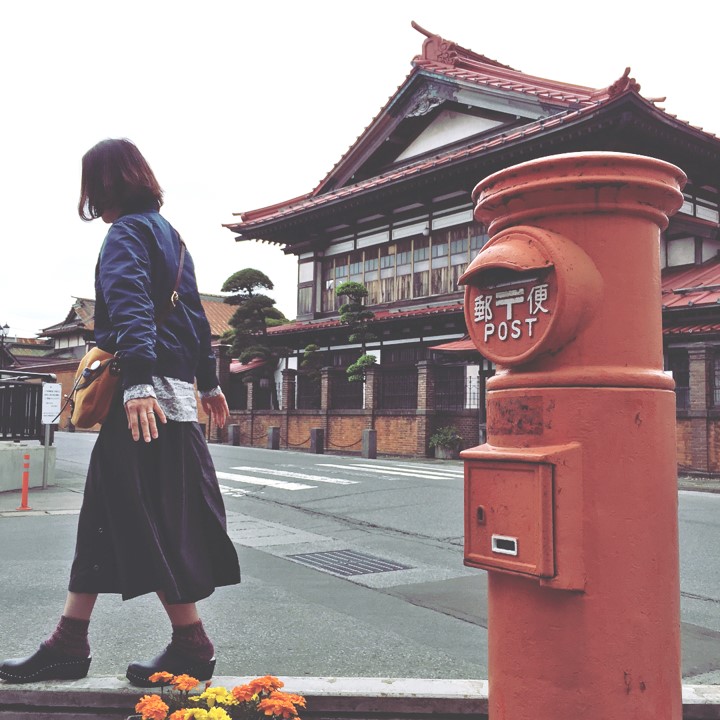
The writer Dazai Osamu grew up in this huge house, built by his father, Tsushima Gen'emon. With 11 rooms downstairs, 8 upstairs, outbuildings and a garden with a pond, it is now a national Important Cultural Property. Dazai wrote that his father built a very big house with no charm, just big. Walking through it gives you a feel for how he grew up.
Lake Jusanko Goshogawara
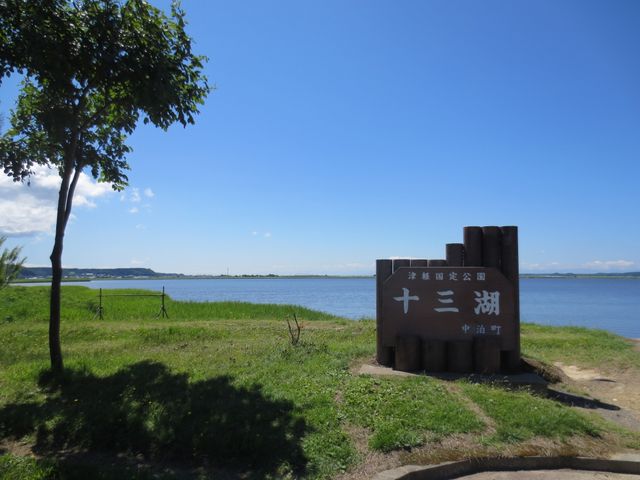
In the northwest of the Tsugaru Peninsula, Jusanko is a lagoon where seawater and fresh water mix. The mineral-rich water is ideal for Yamato shijimi clams, harvested here in large numbers and known for their rich flavor. At Shijimi-tei Naraya by the lake, the shijimi ramen made with clam broth is popular.
Seikan Tunnel Museum Sotogahama
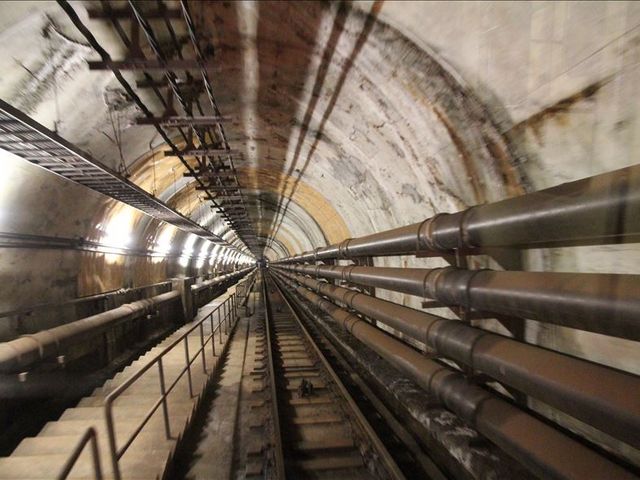
The Seikan Tunnel links Honshu and Hokkaido under the sea. It took 42 years from planning to completion and runs 53.85 kilometers, the longest undersea tunnel in the world. The museum recreates the hard construction work with sound, video and models. On the Taiken Kodo tour you go down into a working tunnel used during construction, 140 meters below sea level.
Shirakami-Sanchi and the Sea of Japan Coast
Aoike Pond (Juniko Lakes, Shirakami-Sanchi) Fukaura
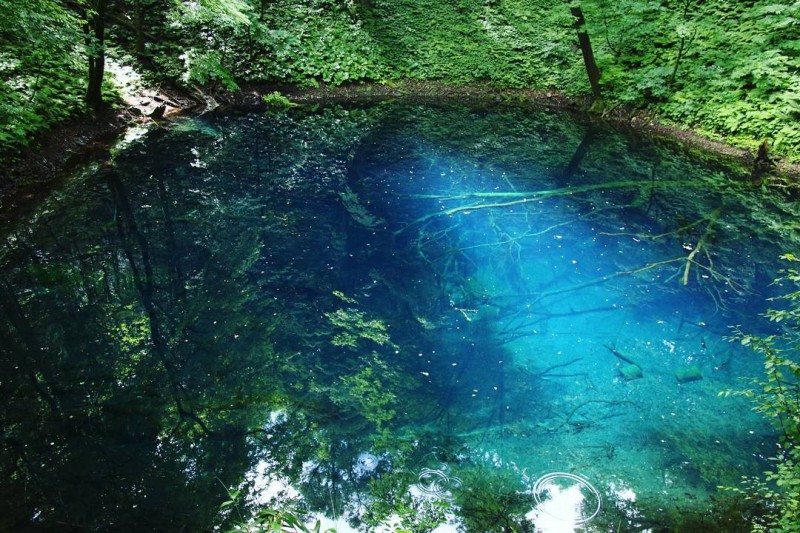
Shirakami-Sanchi, a World Natural Heritage site, has one of the largest virgin beech forests in the world. Some parts need a permit to enter, but the walking trails around the Juniko Lakes do not. On an easy hike you can visit Aoike, the Blue Pond, where the light turns the water a deep blue and the forest around it creates a magical scene.
Furofushi Onsen Fukaura
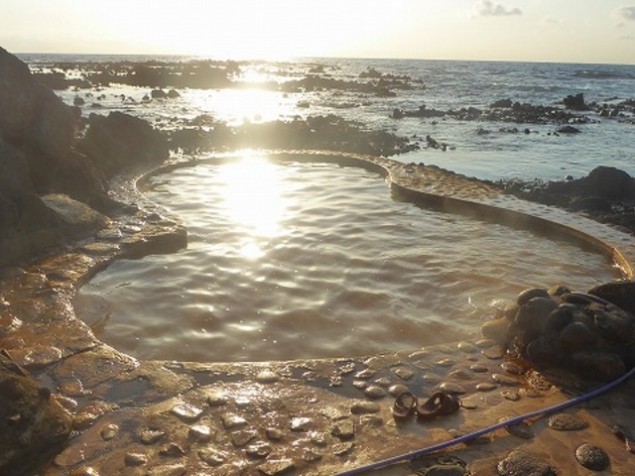
This inn on the Sea of Japan is the closest hot spring to Cape Koganezaki. The large bath in the new wing looks out at the waves, and a panoramic open-air bath lets you feel the sea breeze. The famous outdoor bath sits so close to the shore that the sea seems ready to pour in, and at sunset it glows gold. Day visitors can also use the baths without staying the night.
Gono Line West coast
This JR local line connects the towns of the west coast between Higashi-Noshiro Station in Akita and Kawabe Station in Aomori. It is famous for its scenery, with views of the Sea of Japan and the Shirakami mountains from the train. The Resort Shirakami sightseeing train is popular: all seats are reserved, the windows are large, and there is an observation space.
Towada, Oirase and Hachinohe
Oirase Stream Towada
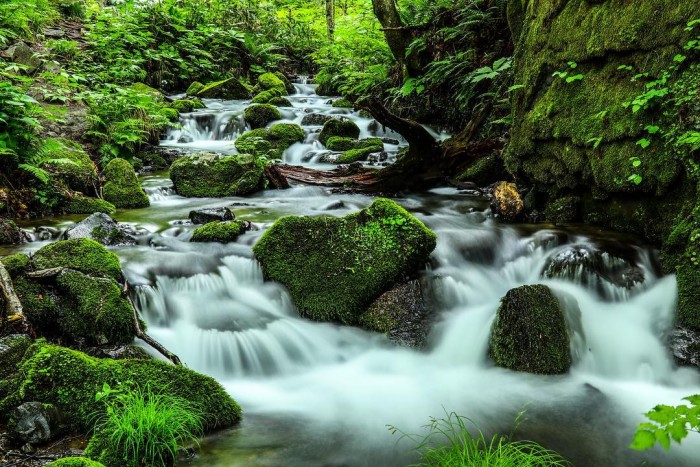
In Towada-Hachimantai National Park, the Oirase Stream is the only river flowing out of Lake Towada, and the name covers about 14 kilometers of water from the lake shore. A walking path follows it. Walking from Yakeyama toward Nenokuchi on the lake, the current grows stronger. At the viewpoint called Ashura no Nagare, the water rushes wildly between mossy rocks.
Towada Art Center Towada
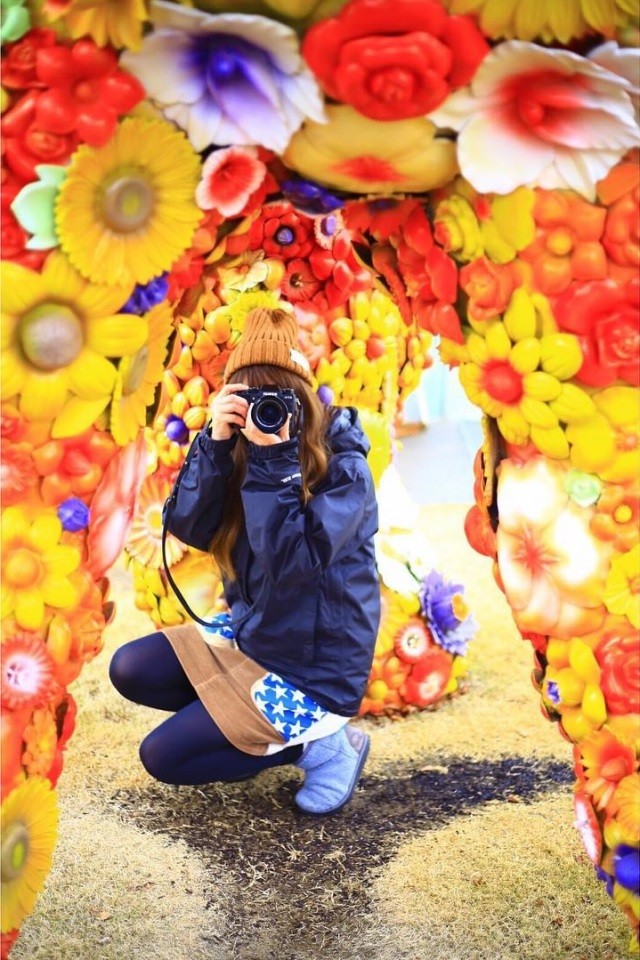
Facing Kanchogai Street in Towada, this contemporary art museum shows permanent works you can only see here. In front stands Flower Horse, a lively horse covered in flowers. Big glass walls make the building itself look like a display for the town. Across the street, the art square has a large colorful polka-dot pumpkin by Yayoi Kusama.
Hasshoku Center Hachinohe
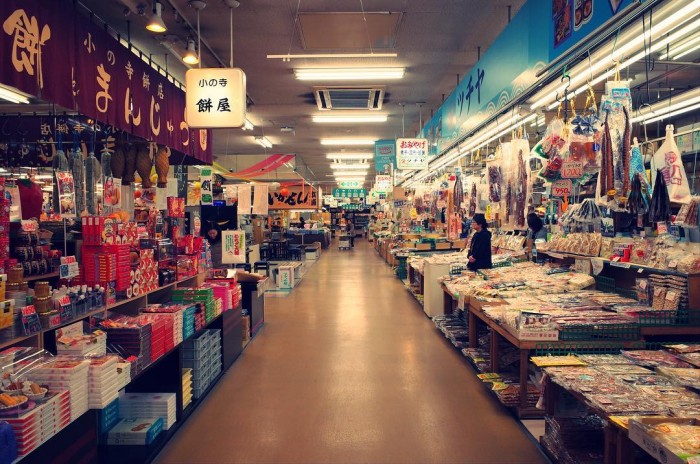
This food market is packed with just-landed seafood and seasonal produce. At Shichirin-mura you grill the shellfish, shrimp and fish you buy over charcoal and eat them on the spot, and other food areas serve rice bowls heaped with sea urchin and salmon roe. There are plenty of souvenirs, and a play area for children makes it easy for families.
The places on a map
Hours, prices and events change. Check each place's official website before you go.
More travel guides
 Tokyo Sightseeing by Area: 40 Classic Sights and Lesser-Known Spots from Asakusa to Odaiba40 placesTokyo has much more to see than Skytree, Tokyo Tower and Asakusa. This guide works through six of the city's main…
 Nagoya: 40 Best Places to Visit, from Nagoya Castle and Atsuta Jingu to Osu40 placesNagoya is one of Japan's biggest cities, yet many visitors don't know how much it has to see. Alongside its famous…
 Chichibu: 40 Best Places to Visit, from Nagatoro River Boats and Mitsumine Shrine to Moss Phlox and Icicles40 placesChichibu, the largest city in Saitama Prefecture, is about 90 minutes from central Tokyo. Most of the area is national…
 Niigata Prefecture: 40 Best Places to Visit, from Classic Sights to Hidden Gems40 placesNiigata Prefecture stretches a long way from north to south, and each area has its own scenery, climate and food. The…
 Nagasaki Prefecture: 40 Best Places to Visit, from Unzen Hot Springs to Hirado and Nagasaki City40 placesNagasaki grew up as a port open to the outside world, and the culture of those days still shapes its streets, churches…
 Fukuoka Prefecture: 40 Places to Visit in Kitakyushu, Chikuho and Around Fukuoka City40 placesFukuoka Prefecture is roughly divided into four areas, Kitakyushu, Chikuho, Fukuoka and Chikugo, and each has its own…