
Nara Prefecture: 24 Best Places to Visit, from the Great Buddha and Deer Park to Yoshino and Asuka
24 places · Japanese version
Nara Prefecture has about 1,400 temples and some 2,000 shrines, many of them World Heritage sites, historic sites or Important Cultural Properties. Beyond the Great Buddha of Todai-ji, the deer of Nara Park, Horyu-ji and Kasuga Taisha, you can stroll old streets, see cherry blossoms in spring and autumn leaves in fall, and learn about the earliest chapters of Japanese history as you go. Here are 24 classic sights, grouped by area, from the mountains of Yoshino in the south to the city of Nara in the north.
Yoshino and the southern mountains
The south of the prefecture is a land of deep mountains and clear rivers. A car makes it much easier to get around.
Mount Yoshino Yoshino
Mount Yoshino has been famous for cherry blossoms since ancient times. About 30,000 trees of some 200 kinds cover the ridges and valleys, a sight called Hitome Senbon, a thousand trees at a glance. They usually bloom from early to late April, opening in turn from the lower slopes to the upper ones and on to Oku Senbon, so the season lasts a long time. Hydrangeas, autumn leaves and snow bring visitors in other seasons too.
Tanize Suspension Bridge Totsukawa
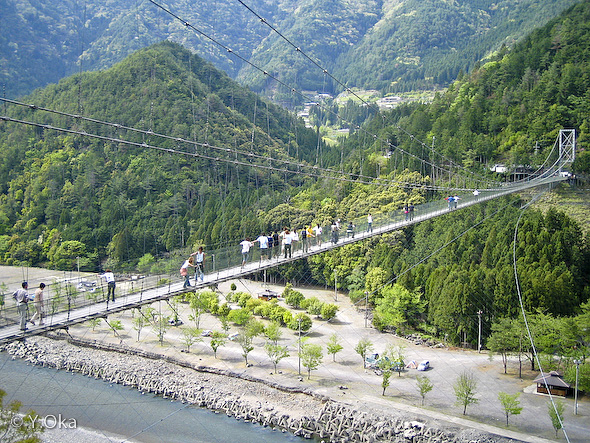
In Totsukawa, the largest village in Japan, this bridge was built for daily life and is the longest of its kind in the country: 297.7 meters long and 54 meters high. It sways with every step, so crossing it is a thrill and a walk in the air at the same time. Below flows the clear Totsukawa River, surrounded by mountains. Every year on August 4, drummers play taiko on the swaying bridge.
Dorokyo Gorge Totsukawa
Dorokyo is a great gorge that crosses the borders of Mie, Wakayama and Nara, split into Shimo-doro, Kami-doro and Oku-doro. Shimo-doro, also called Doro-hatcho, is lined with huge and oddly shaped rocks, and the gorge is a national Special Place of Scenic Beauty and Natural Monument. Cobalt-blue water flows between steep cliffs. You can tour it on a traditional river boat from Tado in Totsukawa, or see it from the water on a sightseeing jet boat.
Goyomatsu Limestone Cave Tenkawa
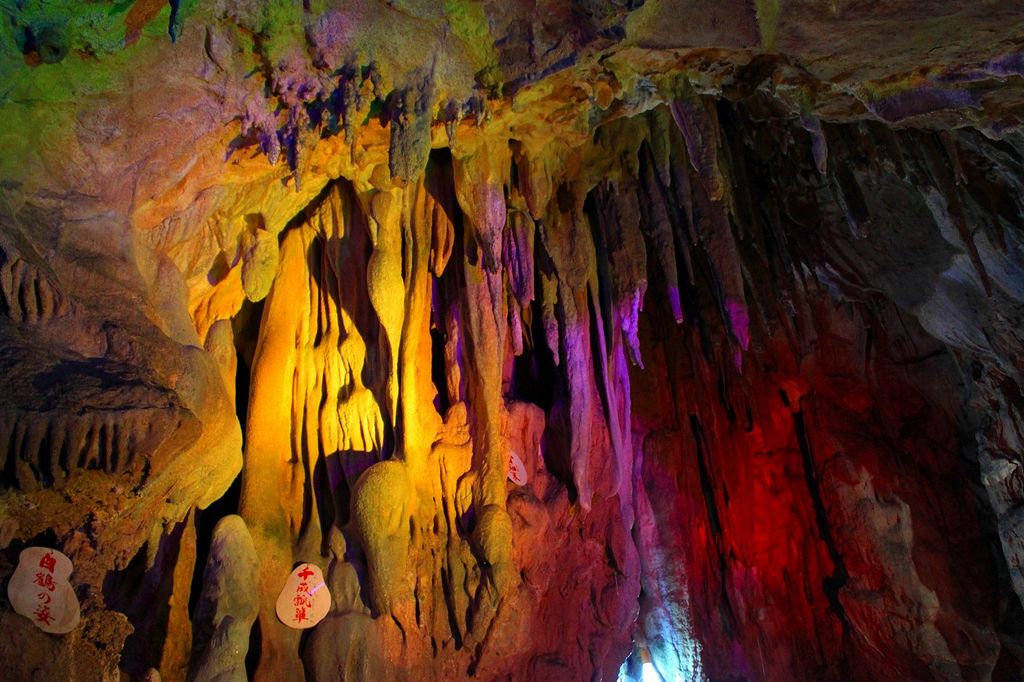
This cave has two entrances and a two-level structure. It was found in 1929 and is named after the man who discovered it, Akai Goyomatsu. Lights pick out stone pillars, stalactites and stalagmites, and the scene is quite magical. The highlight is the Great Golden Pillar, 8 meters tall. You reach the entrance on a small trolley, almost like a ride. It is about 80 minutes by car from the Shinjo interchange.
Mitarai Valley Tenkawa
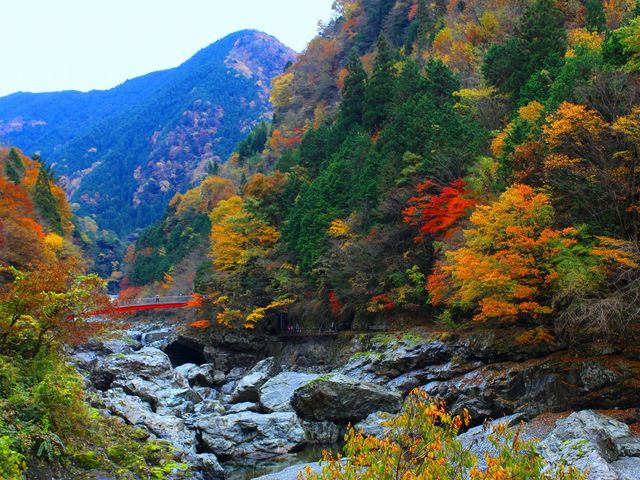
Mitarai Valley is praised as one of the most beautiful places in the Kinki region in every season. A clear, deep green stream winds between rocks of all sizes, and a walking path follows the river, with a suspension bridge that gives a dramatic view of the gorge. Autumn leaves are especially vivid, usually at their best from early to mid November. It is about 90 minutes by car from the Katsuragi interchange, and there is paid parking.
Sakurai and Asuka
Tanzan Shrine Sakurai
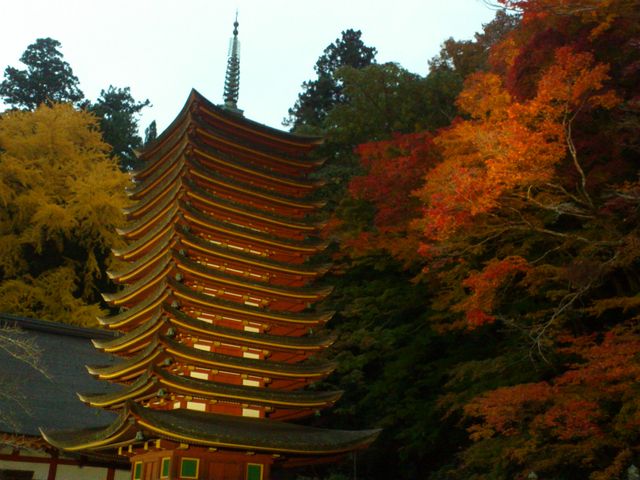
Tanzan Shrine is set around a thirteen-story pagoda, the only wooden one of its kind in the world. It is known as the place where the plan for the Taika Reform was made, and it enshrines Fujiwara no Kamatari. In spring and autumn a kemari festival recreates the ancient court game of kicking a ball. Cherry blossoms in spring and autumn leaves in fall are famous here. It is about 25 minutes by car from Sakurai Station.
Omiwa Shrine Sakurai
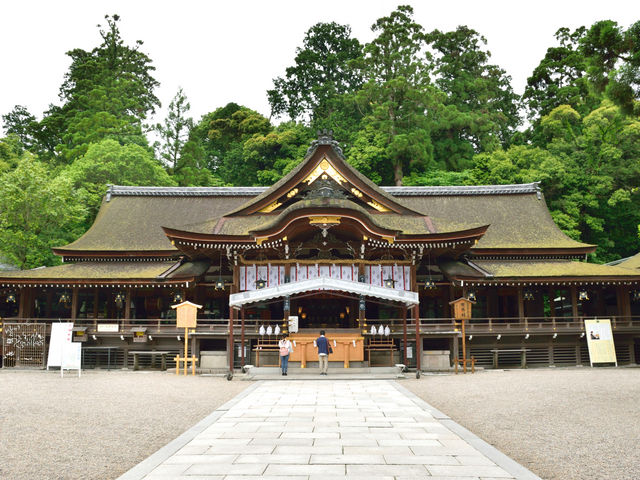
Omiwa Shrine is said to be the oldest shrine in Japan. It has no main sanctuary, because Mount Miwa itself is worshipped as the deity. Behind the worship hall, the Mitsu-torii, a triple torii, marks the boundary between the hall and the sacred mountain. You can climb the mountain if you register first at Sai Shrine, one of its subsidiary shrines. It is a 5-minute walk from Miwa Station.
Hase-dera Temple Sakurai
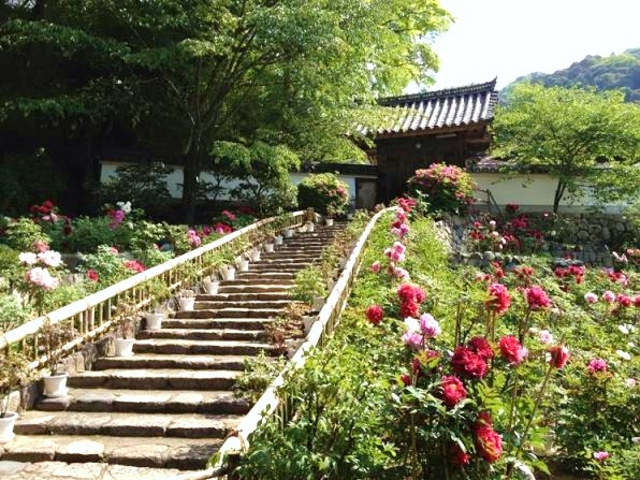
Hase-dera is the head temple of the Buzan school of Shingon Buddhism and the eighth temple of the Saigoku pilgrimage to 33 Kannon temples. It is called the temple of flowers, and crowds come above all for the peonies, which have their own festival every year, as well as for the wisteria and the autumn leaves. It is a little away from the main sights of Nara, a 15-minute walk from Hasedera Station.
Ishibutai Kofun Asuka
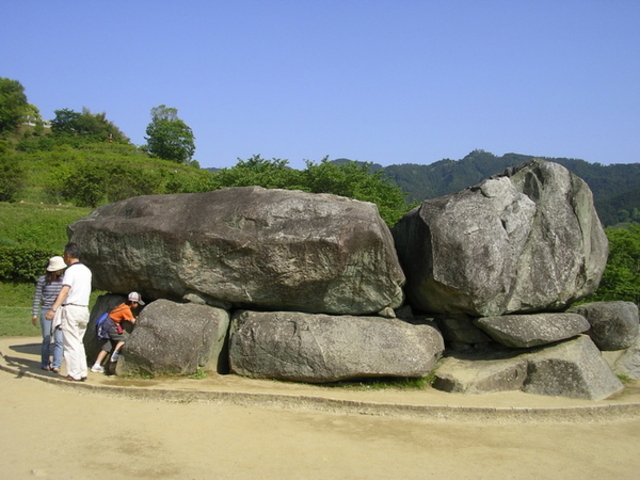
Ishibutai is the best-known ancient tomb in Asuka, thought to date from the early 7th century and said to be the tomb of the powerful Soga no Umako. Its earth mound was lost long ago, leaving one of the largest stone chambers in Japan open to the sky. Its granite stones weigh about 2,300 tons, and the flat top looks like a stage, which gave it its name. It is a 30-minute bus ride from Kashiharajingu-mae Station.
Ikaruga and Yamatokoriyama
Koriyama Castle Ruins Yamatokoriyama
The ruins of Koriyama Castle are a well-known cherry blossom spot. The castle was built by Tsutsui Junkei, and later Toyotomi Hideyoshi's younger brother Hidenaga ruled here. When stone ran short for the walls, stone Jizo statues, gravestones and pagodas from temples were used instead, and many can still be seen, such as the upside-down Jizo set into the walls of the keep base. It is about 15 minutes on foot from Koriyama Station.
Horyu-ji Temple Ikaruga
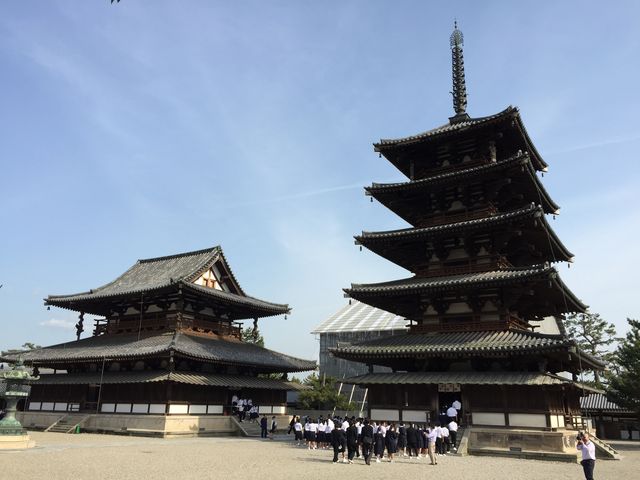
Horyu-ji, linked to Prince Shotoku, is said to have been founded in 607 and is famous as the oldest wooden architecture in Japan. It is divided into the Western Precinct around the Main Hall and five-story pagoda, and the Eastern Precinct around the Yumedono. Do not just admire the pagoda from afar; walk up and see it close. It is about 20 minutes on foot from Horyuji Station.
Hokki-ji Temple Ikaruga
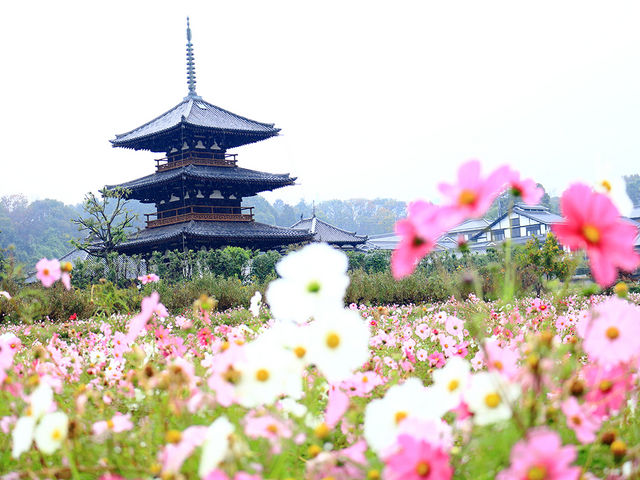
Hokki-ji was made into a temple from the Okamoto Palace of Prince Shotoku. Its three-story pagoda, a National Treasure and part of the World Heritage Site, was built in 706 and is the oldest surviving pagoda of its type. In autumn, cosmos bloom around the temple, and the pagoda seen over the flowers is a lovely sight that has appeared in commercials. It is about 15 minutes by car from the Horyuji interchange.
Chugu-ji Temple Ikaruga
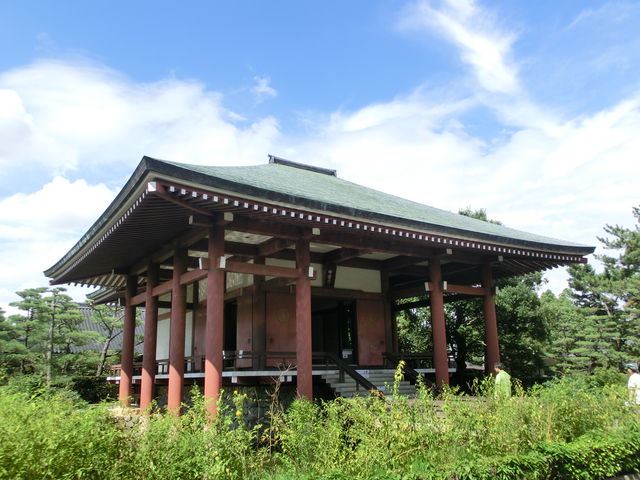
Next to the Eastern Precinct of Horyu-ji, Chugu-ji is the oldest nunnery in Japan, said to have been founded by Prince Shotoku for his mother. Its main hall stands in a pond. The temple's National Treasure, a 7th-century seated bodhisattva with a finger to its cheek, is called one of the world's three great smiles, along with the Mona Lisa and the Sphinx. In spring, yellow yamabuki flowers bloom in the garden.
Nara city
Most of the famous sights of Nara city are within walking distance of Kintetsu-Nara Station, in and around Nara Park.
Todai-ji Temple Nara Park
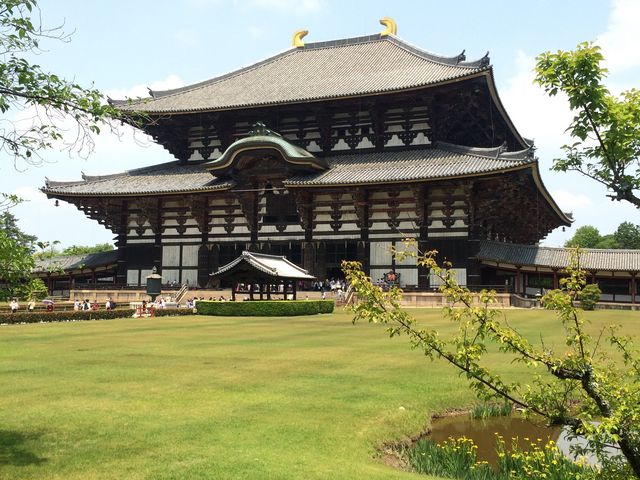
Todai-ji was built in the 8th century by Emperor Shomu, who poured the strength of the whole country into it. Its principal image is the Rushana Buddha, the Great Buddha of Nara, and its size is overwhelming. One pillar in the Great Buddha Hall has a hole the same size as the Buddha's nostril, and squeezing through it is said to bring good luck. It is about 20 minutes on foot from Kintetsu-Nara Station.
Kasuga Taisha Nara Park
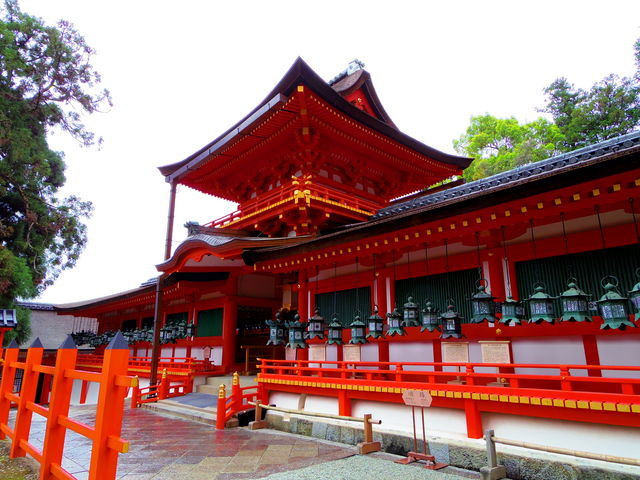
Kasuga Taisha was founded in 768 for the guardian god of the Nakatomi clan, later the Fujiwara, and is the head shrine of about 1,000 Kasuga shrines across Japan. Because a god is said to have arrived riding a white deer, deer are its sacred messengers. Look for the Kasuga-zukuri style of five small shrines side by side. Fans of Spirited Away may like to know that the character Kasuga-sama was modeled on a cloth dance mask kept here.
Nara Park Nara Park
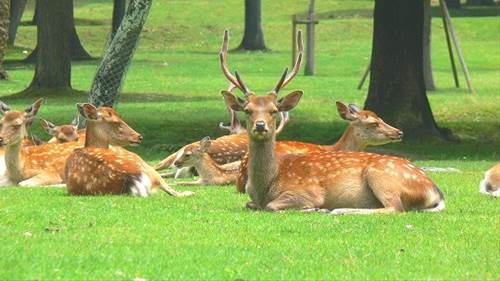
This vast park holds temples, shrines, historic sites, museums and Mount Wakakusa. About 1,200 deer, a national Natural Monument, live here, and cherry, maple, plum, crape myrtle and other trees color the park through the year. The deer are very friendly, so take a moment to meet them. The park is a 5-minute walk from Kintetsu-Nara Station.
Mount Wakakusa Nara Park
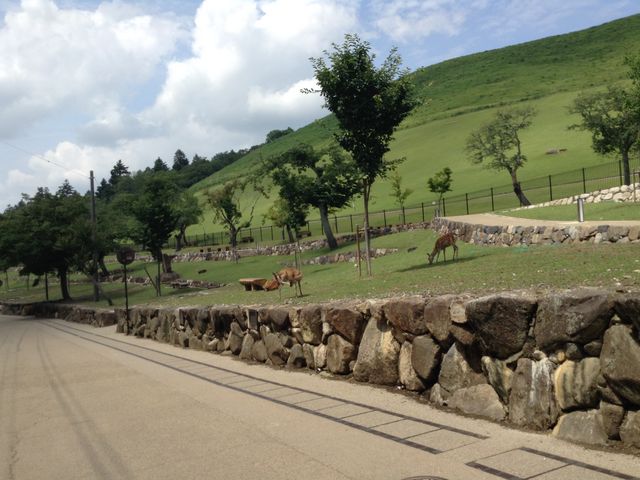
At the back of Nara Park, this 342-meter hill is covered in grass, and you will see deer all over its slopes. The top looks out over the whole city, and the night view makes it a popular date spot. It is famous for Yamayaki on the fourth Saturday of January, when the whole slope is set on fire after a fireworks display. It is about 30 minutes on foot from Kintetsu-Nara Station.
Kofuku-ji Nara Park
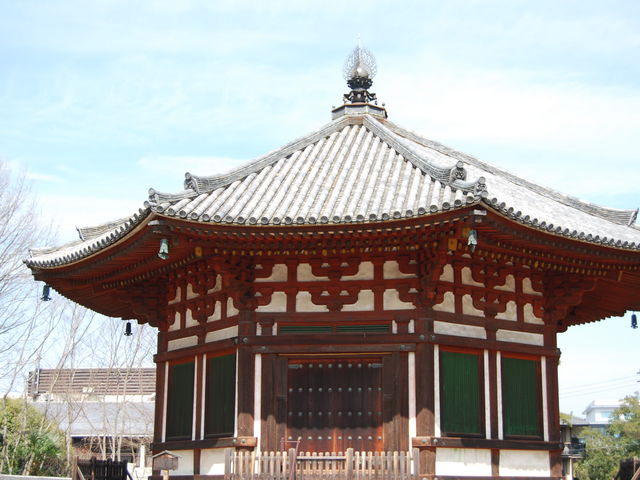
Kofuku-ji was the family temple of the Fujiwara clan, linked to Fujiwara no Kamatari and his son Fuhito, and held great power from ancient times into the Middle Ages. It is home to the famous Ashura statue, and its Nanendo hall is the ninth temple of the Saigoku pilgrimage. Its five-story pagoda against a blue sky on a fine day is a beautiful sight. It is about 5 minutes on foot from Kintetsu-Nara Station.
Yakushi-ji Temple Nishinokyo
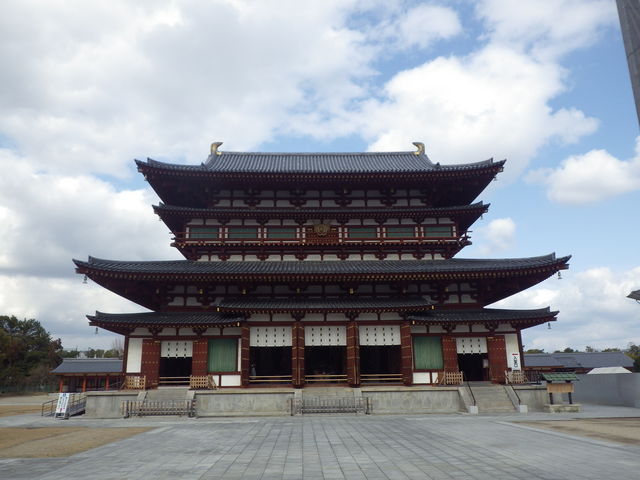
Yakushi-ji was founded by Emperor Tenmu and the monks Dosho and Giin, and its principal image is the Medicine Buddha. The Yakushi triad in the golden hall is a National Treasure and counted among the finest Buddhist sculpture of the 7th and 8th centuries. Much of the temple has been restored, so the buildings look clean and bright, and the wide grounds hold the lecture hall, golden hall and more. It is right by Nishinokyo Station.
Toshodai-ji Temple Nishinokyo
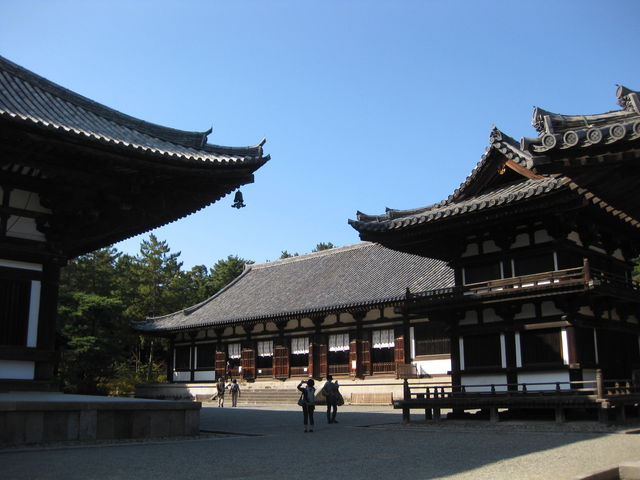
Toshodai-ji was opened in 759 by the Chinese monk Ganjin as a training hall for people studying the Buddhist precepts, after he overcame many hardships to reach Japan. It is quieter than Horyu-ji or Todai-ji, but just as impressive. Every year on May 19, the Uchiwa-maki ceremony, held for more than 750 years, scatters lucky fans over the crowd. From the station, take a Nara Kotsu bus about 17 minutes to the Toshodaiji stop.
Gango-ji Temple Naramachi
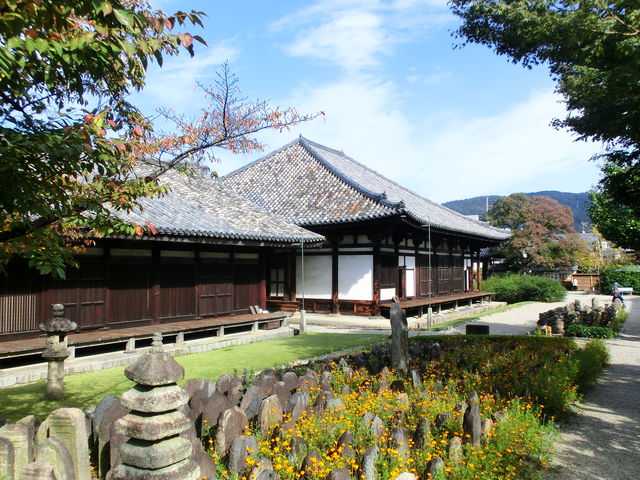
One of the Seven Great Temples of Nara and a World Heritage temple, Gango-ji stands in a corner of the old Naramachi district. Look at the roof of the main hall: it still uses tiles from the Asuka and Nara periods. The main hall, the Zenshitsu and a detailed small five-story pagoda are National Treasures. It is about 15 minutes on foot from Kintetsu-Nara Station. Eating and drinking are not allowed on the grounds.
Naramachi Naramachi
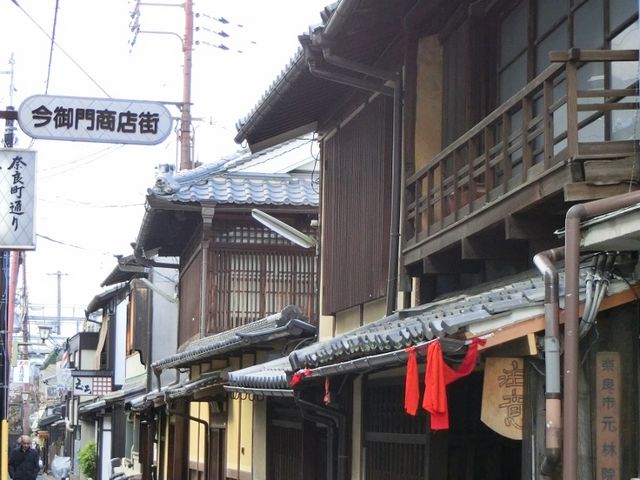
Naramachi is the area around the old grounds of Gango-ji, and its narrow lanes still keep the look of the late Edo and Meiji periods. Restaurants, cafes, goods shops and inns fill renovated townhouses, and the streets feel nostalgic and calm. At a restored townhouse you can see the latticed fronts, box staircases and inner gardens of old Nara homes up close. It is about 13 minutes on foot from Kintetsu-Nara Station.
Heijo Palace Site Nara
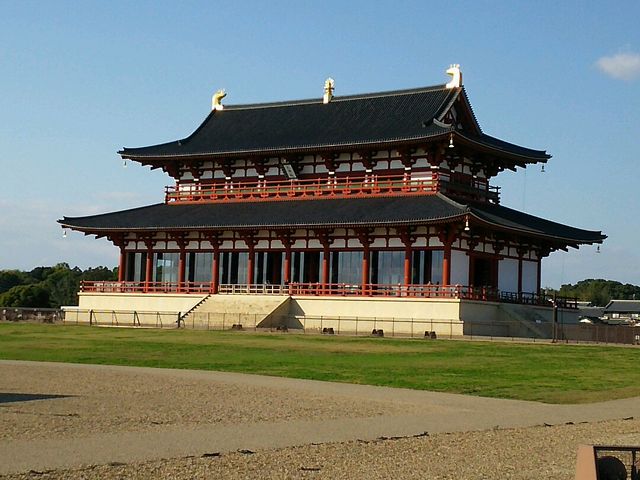
This was the imperial palace of Heijo-kyo, the capital from 710, said to be modeled on Chang'an in China, and is part of the World Heritage Site. The huge grounds hold Suzakumon Gate, the East Palace Garden, a site museum and the rebuilt Daigokuden, the largest hall of the palace and the main highlight. The Tenpyo festival each spring, summer and autumn brings the culture of the era to life. It is about 15 minutes on foot from Yamato-Saidaiji Station.
Isuien Garden Nara Park
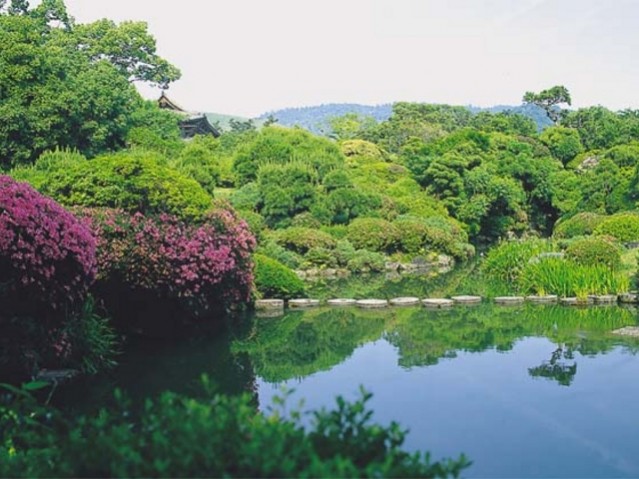
Between Todai-ji and Kofuku-ji, Isuien is the only pond-stroll garden in the city of Nara. It has two parts: a front garden from the early Edo period around the Sanshutei teahouse, and a Meiji-era rear garden that borrows Mount Wakakusa and the Nandaimon gate of Todai-ji as its backdrop. You can have lunch or matcha while looking out on the garden. It is about 15 minutes on foot from Kintetsu-Nara Station and has no parking.
The places on a map
Hours, prices and events change. Check each place's official website before you go.
More travel guides
 Tokyo Sightseeing by Area: 40 Classic Sights and Lesser-Known Spots from Asakusa to Odaiba40 placesTokyo has much more to see than Skytree, Tokyo Tower and Asakusa. This guide works through six of the city's main…
 Nagoya: 40 Best Places to Visit, from Nagoya Castle and Atsuta Jingu to Osu40 placesNagoya is one of Japan's biggest cities, yet many visitors don't know how much it has to see. Alongside its famous…
 Chichibu: 40 Best Places to Visit, from Nagatoro River Boats and Mitsumine Shrine to Moss Phlox and Icicles40 placesChichibu, the largest city in Saitama Prefecture, is about 90 minutes from central Tokyo. Most of the area is national…
 Niigata Prefecture: 40 Best Places to Visit, from Classic Sights to Hidden Gems40 placesNiigata Prefecture stretches a long way from north to south, and each area has its own scenery, climate and food. The…
 Nagasaki Prefecture: 40 Best Places to Visit, from Unzen Hot Springs to Hirado and Nagasaki City40 placesNagasaki grew up as a port open to the outside world, and the culture of those days still shapes its streets, churches…
 Fukuoka Prefecture: 40 Places to Visit in Kitakyushu, Chikuho and Around Fukuoka City40 placesFukuoka Prefecture is roughly divided into four areas, Kitakyushu, Chikuho, Fukuoka and Chikugo, and each has its own…